


Cyclone Batsirai killed at least 10 people and displaced nearly 48,000 when it struck Madagascar overnight, the Madagascan National Office of Risk and Disaster Management said on Sunday.
The cyclone later weakened, but not before wreaking havoc in the Indian Ocean island nation, which is still reeling from a deadly tropical storm earlier this year.
Parts of the country were lashed with heavy rains and wind before the cyclone made landfall in Mananjary.

Photo: Reuters
It uprooted trees, destroyed buildings and forced residents to weigh down flimsy corrugated iron roofs along its path, reporters said.
The rain would cause flooding across parts of the country, the Madagascan National Meteorological Office said on Sunday.
Batsirai made landfall late on Saturday as an “intense tropical cyclone,” packing winds of 165kph, said Faly Aritiana Fabien of the disaster management agency.
His colleague responsible for risk management, Paolo Emilio Raholinarivo, listed 10 dead, but gave no further details.
However, the meteorological office — which had warned of “significant and widespread damage” — on Sunday said that Batsirai had weakened.
The cyclone’s average wind speed had almost halved to 80kph, while the strongest gusts had scaled back to 110kph from the 235kph recorded when it made landfall, Meteo Madagascar said.
“Mananjary is completely destroyed, no matter where you go everything is destroyed,” said one resident named Faby.
Another man, Fana, was certain that “almost 95 percent of the city has been destroyed.”
Inland, in Antsirabe, 365km northwest of Mananjary, the storm uprooted large trees in the town’s public park.
The Meteo-France weather service had earlier predicted that Batsirai would pose a “very serious threat” to Madagascar.
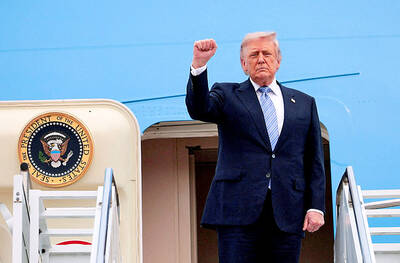
US-CHINA SUMMIT: MOFA welcomed US reassurance of no change in its Taiwan policy; Trump said he did not comment when Xi talked of opposing independence US President Donald Trump yesterday said he has not made a decision on whether to move forward with a major arms package for Taiwan after hearing concerns about it from Chinese President Xi Jinping (習近平). Trump’s comments on Taiwan came as he flew back to Washington after wrapping up critical talks in which both leaders said important progress was made in stabilizing US-China relations even as deep differences persist between the world’s two biggest powers on Iran and Taiwan. “I will make a determination,” Trump said, adding: “I’ll be making decisions. But, you know, I think the last thing we need right
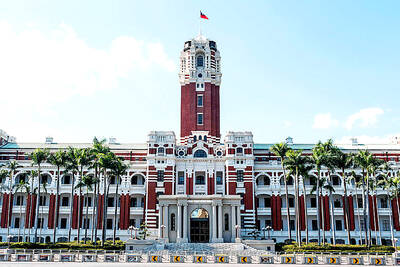
SECURITY: Taipei presses the US for arms supplies, saying the arms sales are not only a reflection of the US security commitment to Taiwan but also serve as a mutual deterrent against regional threats Taiwan is committed to preserving the cross-strait “status quo” and contributing to regional peace and stability, the Presidential Office said yesterday. “It is an undeniable fact that the Republic of China is a sovereign and independent democratic nation,” Presidential Office spokeswoman Karen Kuo (郭雅慧) reiterated, adding that Beijing has no right to claim sovereignty over Taiwan. The statements came after US President Donald Trump warned against Taiwanese independence. Trump wrapped up a state visit to Beijing on Friday, during which Chinese President Xi Jinping (習近平) had pressed him not to support Taiwan. Taiwan depends heavily on US security backing to deter China from carrying
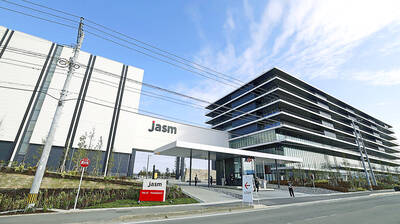
The subsidiary of Taiwan Semiconductor Manufacturing Co (TSMC, 台積電) in Kumamoto, Japan, turned a profit in the first quarter of this year, marking the first time the first fab of the unit has become profitable since mass production started at the end of 2024. According to the contract chipmaker’s financial statement released on Friday, Japan Advanced Semiconductor Manufacturing Inc (JASM), a joint venture running the fab in Kumamoto, posted NT$951 million (US$30.19 million) in profit in the January-to-March period, compared with a loss of NT$1.39 billion in the previous quarter, and a loss of NT$3.25 billion in the first quarter of
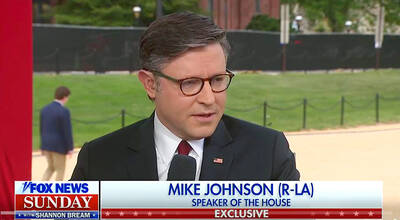
RESOLUTE BACKING: Two Republican senators are planning to introduce legislation that would impose immediate sanctions on China if it attempts to invade Taiwan US House of Representatives Speaker Mike Johnson on Sunday reaffirmed US congressional support for Taiwan, saying the US and “all freedom-loving people” have a stake in preventing China from seizing Taiwan by force. Johnson made the remarks in an interview with Fox News Sunday on US President Donald Trump’s summit with Chinese President Xi Jinping (習近平) last week. In an interview that aired on Friday on Fox News, just as Trump wrapped up a high-stakes visit to China, he said he has yet to green-light a new US$14 billion arms package to Taiwan and that it “depends on China.” “It’s a very good


 RSS
RSS