


Japanese Prime Minister Fumio Kishida has picked a critic of China’s treatment of the Uighurs to be his aide for human rights issues, a move that could increase friction between Asia’s two biggest economies.
Kishida is to name former Japanese minister of defense Gen Nakatani to be his special adviser on human rights issues, a government spokesman told reporters yesterday.
The appointment is expected later this week when a special parliamentary session convenes.
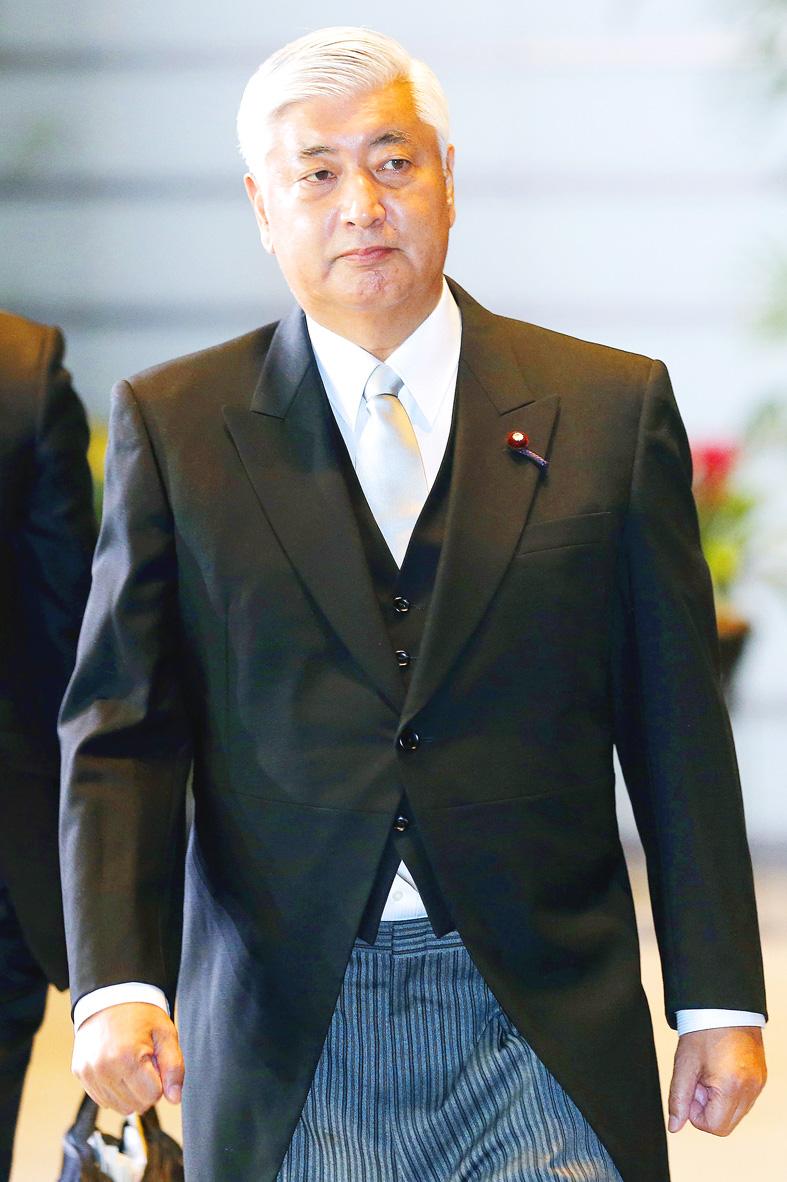
Photo: Bloomberg
Nakatani, who cochairs a cross-party group of lawmakers on China policy, has been an advocate for Japan joining other major democracies in imposing sanctions on China and others over suspected human rights abuses. He has been drafting legislation to make such actions happen.
“I hope to use the experience and knowledge I’ve gained as a politician who has worked intensely on issues involving human rights,” Nakatani told reporters yesterday after meeting Kishida.
Last year, Nakatani was among a group of senior lawmakers from eight democracies, including the US, who launched a cross-parliamentary alliance to counter what they said was the threat China’s growing influence poses to global trade, security and human rights.
Kishida helped guide his ruling Liberal Democratic Party (LDP) in keeping its majority in parliament in an Oct. 31 election, with foreign policy pledges calling for Japan to speak out on suspected human rights abuses by China in Hong Kong and Xinjiang, where most Uighur Muslims live.
“The appointment of officials by the Japanese government is an internal affair of Japan. I have no comment. I would like to stress that China’s internal affairs brook no foreign interference,” Chinese Ministry of Foreign Affairs spokesman Wang Wenbin (汪文斌) told a regular news briefing in Beijing.
China denies mistreating its Uighur Muslim minority, describing its policies as an effort to prevent extremism, fight terrorism and reduce poverty. It has bristled at criticism of its suspected rights abuses as politically motivated.
Japan is stuck in the awkward position of being deeply entwined with China, its largest trading partner, even as it relies on the US for defense as its sole military ally.
Washington’s calls for a renewed focus on human rights has presented a challenge for Tokyo, which has often sought to maintain ties with US adversaries and traditionally keeps criticism of other countries low-key.
Yet Kishida, a former foreign minister who has served as prime minister for about a month, launched his bid to be leader of Japan’s ruling party with a focus on China.
In an interview with Bloomberg News in September, he said that the Taiwan Strait might be the next major diplomatic problem after China’s clampdown on democratic freedoms in Hong Kong.
Nakatani supported Kishida in the race for LDP leadership, Kyodo News reported.
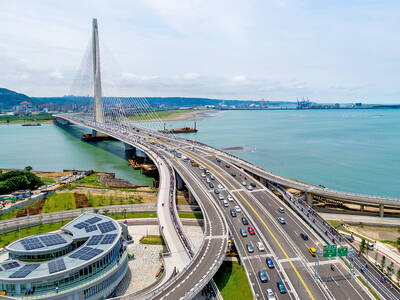
The Ministry of Transportation and Communications yesterday inaugurated the Danjiang Bridge across the Tamsui River in New Taipei City, saying that the structure would be an architectural icon and traffic artery for Taiwan. Feted as a major engineering achievement, the Danjiang Bridge is 920m long, 211m tall at the top of its pylon, and is the longest single-pylon asymmetric cable-stayed bridge in the world, the government’s Web site for the structure said. It was designed by late Iraqi-British architect Zaha Hadid. The structure, with a maximum deck of 70m, accommodates road and light rail traffic, and affords a 200m navigation channel for boats,
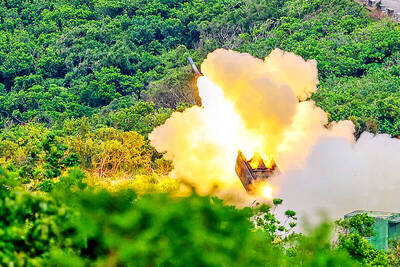
PRECISION STRIKES: The most significant reason to deploy HIMARS to outlying islands is to establish a ‘dead zone’ that the PLA would not dare enter, a source said A High Mobility Artillery Rocket System (HIMARS) would be deployed to Penghu County and Dongyin Island (東引) in Lienchiang County (Matsu) to force the Chinese military to retreat at least 100km from the coastline, a military source said yesterday. Taiwan has been procuring HIMARS and Army Tactical Missile Systems (ATACMS) from the US in batches. Once all batches have been delivered, Taiwan would possess 111 HIMARS units and 504 ATACMS, which have a range of 300km. Considering that “offense is the best defense,” the military plans to forward-deploy the systems to outlying islands such as Penghu and Dongyin so that

Taiwan Semiconductor Manufacturing Co (TSMC, 台積電), the world’s largest foundry service provider, yesterday said that global semiconductor revenue is projected to hit US$1.5 trillion in 2030, after the figure exceeds US$1 trillion this year, as artificial intelligence (AI) demand boosts consumption of token and compute power. “We are still at the beginning of the AI revolution, but we already see a significant impact across the whole semiconductor ecosystem,” TSMC deputy cochief operating officer Kevin Zhang (張曉強) said at the company’s annual technology symposium in Hsinchu City. “It is fair to say that in the past decade, smartphones and other mobile devices were
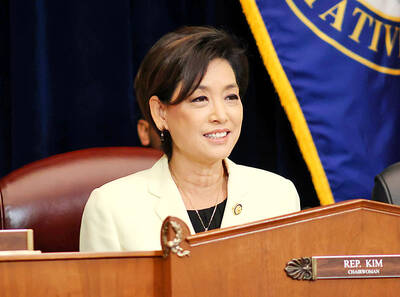
‘CLEAR MESSAGE’: The bill would set up an interagency ‘tiger team’ to review sanctions tools and other economic options to help deter any Chinese aggression toward Taiwan US Representative Young Kim has introduced a bill to deter Chinese aggression against Taiwan, calling for an interagency “tiger team” to preplan coordinated sanctions and economic measures in response to possible Chinese military or political action against Taiwan. “[Chinese President] Xi Jinping [習近平] has directed the People’s Liberation Army to be ready to invade Taiwan by 2027. China has a plan. America should have one too,” Kim said in a news release on Thursday last week. She introduced the “Deter PRC [People’s Republic of China] aggression against Taiwan act” to “ensure the US has a coordinated sanctions strategy ready should


 RSS
RSS