


Taiwan is to introduce a digital COVID-19 immunization certificate that would be similar to the EU’s immunization passport, Minister of Health and Welfare Chen Shih-chung (陳時中) told a meeting of the legislature’s Social Welfare and Environmental Hygiene Committee yesterday.
Democratic Progressive Party Legislator Lai Hui-yuan (賴惠員) asked Chen about a COVID-19 immunization certificate as 70 percent of the population is expected to receive at least the first dose of a vaccine by the end of this month.
“We have completed the planning for a digital immunization certificate, which is modeled on that created by the European Union. We will ask the Ministry of Foreign Affairs to assist in matters related to bilateral certification of immunization documents between Taiwan and other nations,” Chen said.
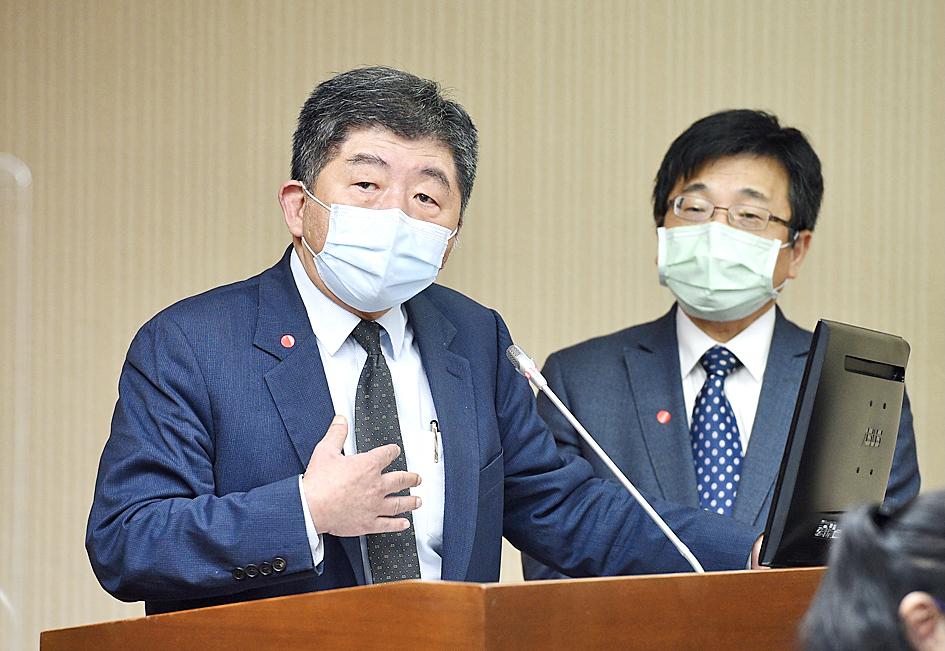
Photo: Peter Lo, Taipei Times
Several issues need to be addressed before the government launches the immunization certificate, he said.
“We have to ensure that other nations can identify an authentic and valid Taiwanese immunization certificate and vice versa. We must also ascertain which vaccine brands are accepted by other nations,” he added.
Vaccines that have secured emergency use authorization from the Food and Drug Administration or emergency use listing at the WHO would be taken into consideration, unless there is substantial evidence showing that a vaccine cannot adequately protect people from contracting the disease, Chen said.
The health ministry would also scrutinize if any vaccines have a high breakthrough infection rate, he said.
The WHO has listed emergency use vaccines manufactured by Moderna, AstraZeneca and Pfizer-BioNTech, as well as those produced by Chinese firms Sinopharm and Sinovac.
Chinese Nationalist Party (KMT) Legislator Yeh Yu-lan (葉毓蘭) asked Chen for a time line for the government to gradually reopen the nation’s borders, given that many other nations have adopted policies to coexist with COVID-19.
The government would only consider reopening borders when at least 70 percent of the population has received a first dose of a vaccine and 60 percent have received two doses, as this is the way to protect against an outbreak of COVID-19, Chen said.
“We will not have enough capacity to handle COVID-19 patients if the borders are completely opened. As such, we must manage people arriving in the nation based on the health risks they pose to the local community, which would depend on the vaccine they have received and the state of the pandemic in the nation they have arrived from,” he said.
Chen also dismissed the possibility of allowing people to quarantine at home.
Of the 110,000 people who had entered Taiwan since August, 176 had tested positive for COVID-19, of which 136 were breakthrough infections, he added.
“Although they had mild symptoms, there is no guarantee that people who contract COVID-19 from them would also experience mild symptoms,” Chen said.
Since June 27, Taiwan has required all arrivals to quarantine for 14 days either at a designated hotel or government center.
Previously, arrivals were able to choose to quarantine at home if they lived alone or if everyone else who lived there was also in quarantine.
The stricter quarantine requirements were a response to the global spread of the more infectious Delta variant of SARS-CoV-2.
Additional reporting by CNA
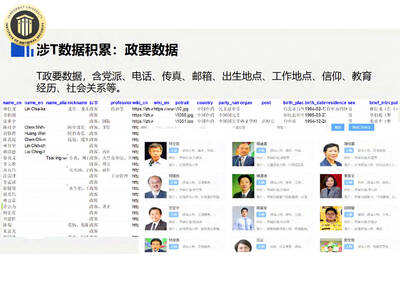
NETWORK-MAPPING PROJECT: The database contains 170 detailed files of Taiwanese politicians and about 23 million records of household registration data in Taiwan China has developed a network-mapping project targeting political figures and parties in Taiwan to monitor public opinion during elections and to craft tailored influence campaigns aimed at dividing Taiwanese society, according to documents leaked by Chinese technology firm GoLaxy (中科天璣). The documents, collected by Taipei-based Doublethink Lab, showed a database was specifically created to gather detailed information on Taiwanese political figures, including their political affiliations, job histories, birthplaces, residences, education, religion and a brief biography about them. Several notable Taiwanese politicians are in the database, including President William Lai (賴清德), former president Tsai Ing-wen (蔡英文), Minister of Foreign Affairs Lin Chia-lung (林佳龍),
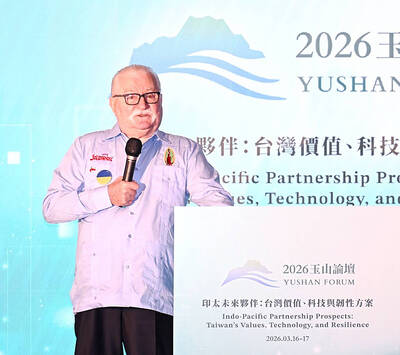
RECOGNITION: Former Fijian prime minister Mahendra Chaudhry said that Taiwan’s New Southbound Policy serves as a stabilizing force in the Indo-Pacific region Taiwan can lead the unification of the Chinese people, Nobel Peace Prize laureate and former Polish president Lech Walesa said in Taipei yesterday, adding that as the world order is changing, peaceful discussion would find good solutions, and that the use of force and coercion would always fail. Walesa made the remarks during his keynote address at a luncheon of the Yushan Forum in Taipei, titled “Indo-Pacific Partnership Prospects: Taiwan’s Values, Technology and Resilience,” organized by the Taiwan-Asia Exchange Foundation with the Ministry of Foreign Affairs. Walesa said that he had been at the forefront of a big peaceful revolution and “if
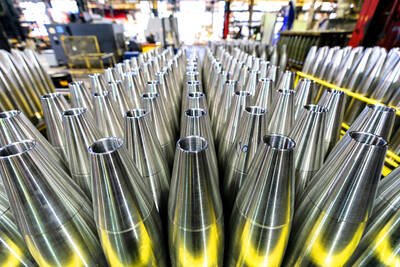
UPGRADED MISSILE: The Chungshan Institute of Science and Technology is reportedly to conduct a live-fire test of the Hsiung Feng III anti-ship missile on Thursday next week The US Army is planning to build new facilities to boost explosives production and strengthen its supply chain, a move aimed at addressing munitions shortages and supporting obligations to partners including Taiwan, Ukraine and Israel, Defense News reported. The army has issued a sources sought notice for a proposed Center of Excellence at the Blue Grass Army Depot in Kentucky, the report said. The facility would serve as a hub within the US industrial base for the production of key military explosives, including research department explosives (RDX) and high melting explosives (HMX), while also supporting research and development of next-generation materials. The proposed
SOUTH KOREA DISPUTE: If Seoul continues to ignore its request, Taiwan would change South Korea’s designation on its arrival cards, the foreign ministry said If South Korea does not reply appropriately to a request to correct Taiwan’s name on its e-Arrival card system before March 31, the government would take corresponding measures to change how South Korea is labeled on the online Taiwan Arrival Card system, the Ministry of Foreign Affairs said yesterday. South Korea’s e-Arrival card system lists Taiwan as “China (Taiwan)” in the “point of departure” and “next destination” fields. Taipei has asked Seoul to change the wording. Since March 1, South Koreans who hold government-issued Alien Resident Certificates (ARC) have been identified as from “South Korea” rather than the “Republic of Korea,” the


 RSS
RSS