


The Chinese Ministry of Foreign Affairs yesterday warned against “political manipulation” of the WHO’s renewed probe into the origins of SARS-CoV-2.
The WHO on Wednesday said its newly formed advisory group on dangerous pathogens might be “our last chance” to determine the origins of COVID-19, while urging China to provide data from early cases.
It released a proposed list of 26 experts to advise it on the next steps in the search for the virus’ origins after its earlier efforts were attacked for going too easy on China, where the first cases were detected in late 2019.
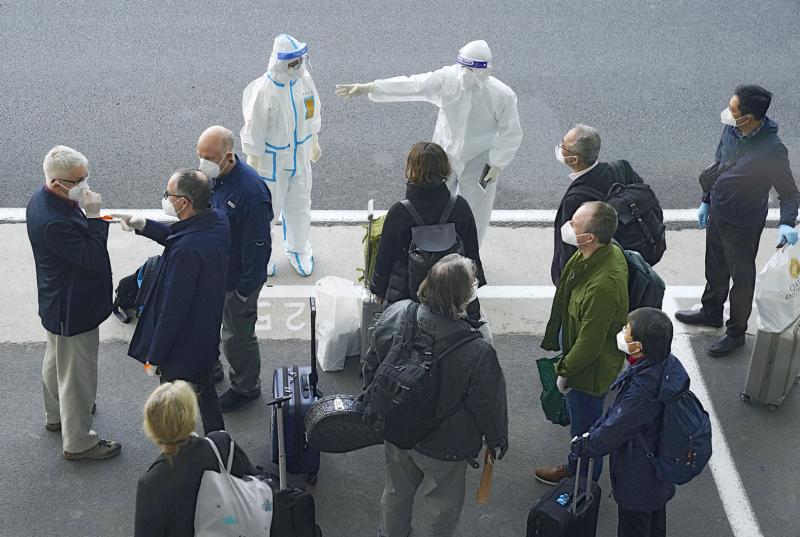
Photo: AP
A WHO-led team spent four weeks in and around Wuhan earlier this year with Chinese scientists, and said in a joint report in March that the virus had probably been transmitted from bats to humans through another animal, but further research was needed.
WHO Director-General Tedros Adhanom Ghebreyesus has said the investigation was hampered by a dearth of raw data pertaining to the first days of the outbreak and has called for lab audits.
Ministry spokesman Zhao Lijian (趙立堅) said China would “continue to support and participate in global scientific tracing and firmly oppose any forms of political manipulation.”
“We hope that all parties concerned, including the WHO secretariat and the advisory group, will effectively uphold an objective and responsible scientific attitude,” Zhao told reporters at a daily briefing.
The first human cases of COVID-19 were reported in the central Chinese city of Wuhan in December 2019. China has repeatedly dismissed theories that the virus leaked from one of its laboratories and has said no more visits are needed.
The proposed members of the WHO’s Scientific Advisory Group on the Origins of Novel Pathogens include Marion Koopmans, Thea Fischer, Hung Nguyen and Chinese animal health expert Yang Yungui (楊運桂), who took part in the joint investigation in Wuhan.
WHO Health Emergencies Program executive director Mike Ryan said the new panel might be the last chance to establish the origin of SARS-CoV-2, “a virus that has stopped our whole world.”
The WHO was seeking to “take a step back, create an environment where we can again look at the scientific issues,” he said. “This is our best chance, and it may be our last chance to understand the origins of this virus.”
Maria van Kerkhove, WHO technical lead on COVID-19, said she hopes that there would be further WHO-led international missions to China which would engage the country’s cooperation.
“More than three dozen recommended studies” must still to be carried out to determine how the virus crossed from the animal species to humans, she said.

CREDIT-GRABBER: China said its coast guard rescued the crew of a fishing vessel that caught fire, who were actually rescued by a nearby Taiwanese boat and the CGA Maritime search and rescue operations do not have borders, and China should not use a shipwreck to infringe upon Taiwanese sovereignty, the Coast Guard Administration (CGA) said yesterday. The coast guard made the statement in response to the China Coast Guard (CCG) saying it saved a Taiwanese fishing boat. The Chuan Yu No. 6 (全漁6號), a fishing vessel registered in Keelung, on Thursday caught fire and sank in waters northeast of Diaoyutai Islands (釣魚台). The vessel left Keelung’s Badouzih Fishing Harbor (八斗子漁港) at 3:35pm on Sunday last week, with seven people on board — a 62-year-old Taiwanese captain surnamed Chang (張) and six
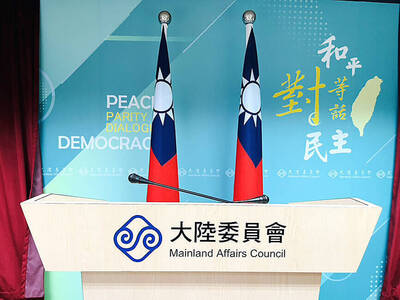
RISKY BUSINESS: The ‘incentives’ include initiatives that get suspended for no reason, creating uncertainty and resulting in considerable losses for Taiwanese, the MAC said China’s “incentives” failed to sway sentiment in Taiwan, as willingness to work in China hit a record low of 1.6 percent, a Ministry of Labor survey showed. The Directorate-General of Budget, Accounting and Statistics (DGBAS) also reported that the number of Taiwanese workers in China has nearly halved from a peak of 430,000 in 2012 to an estimated 231,000 in 2024. That marked a new low in the proportion of Taiwanese going abroad to work. The ministry’s annual survey on “Labor Life and Employment Status” includes questions respondents’ willingness to seek employment overseas. Willingness to work in China has steadily declined from

The Legislative Yuan’s Finance Committee yesterday approved proposed amendments to the Amusement Tax Act (娛樂稅法) that would abolish taxes on films, cultural activities and competitive sporting events, retaining the fee only for dance halls and golf courses. The proposed changes would set the maximum tax rate for dance halls and golf courses at 50 and 20 percent respectively, with local governments authorized to suspend the levies. Article 2 of the act says that “amusement tax shall be levied on tickets sold or fees charged by amusement places, facilities or activities” in six categories: “Cinema; professional singing, story-telling, dancing, circus, magic show, acrobatics

The number of pet cats in Taiwan surpassed that of pet dogs for the first time last year, reaching 1,742,033, a 32.8 percent increase from 2023, the Ministry of Agriculture said yesterday, citing a survey. By contrast, the number of pet dogs declined slightly by 1.2 percent over the same period to 1,462,528, the ministry said. Despite the shift, households with dogs still slightly outnumber those with cats by 1.2 percent. However, while the number of households with multiple dogs has remained relatively stable, households keeping more than two cats have increased, contributing to the overall rise in the feline population. The trend


 RSS
RSS