


Taiwan has no intention of initiating military conflict, but would not shy away from defending its democracy and way of life, President Tsai Ing-wen (蔡英文) said yesterday.
Tsai made the remarks during a speech at the annual Yushan Forum in Taipei, which this year focused on international collaboration in public health and economic revival in areas affected by the COVID-19 pandemic.
Tsai said that Taiwan can play a critical role in the development of peace and prosperity in the Indo-Pacific region, especially at a time when the world is still trying to find its footing after the pandemic.
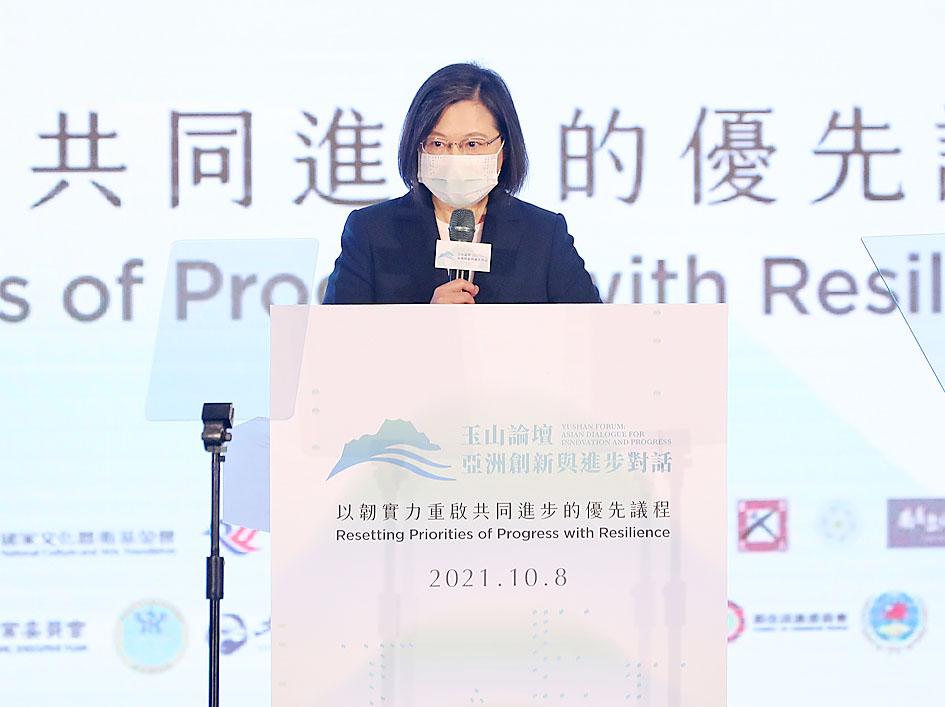
Photo: CNA
The nation has much to offer to the world, including the restructuring of global supply chains, as it boasts a strong high-tech industry, with focus on semiconductors, biotechnology and renewable resources, as well as a highly trained workforce, she said.
Taiwan also has much to offer in education, public health and natural disaster prevention, she added.
The region requires peace and stability to prosper, Tsai said, highlighting the role of a transparent and liberal environment.
Taiwan is in the fastest-developing region in the world, and the pace of its development would shape the 21st century, she said.
However, the region’s increasing prosperity is not without its challenges, and rising tensions and conflict between different systems of government could severely affect the global economy and international security, Tsai said.
Taiwan would collaborate with regional entities to ensure stability, Tsai added.
Its collaboration with key regional players has prevented military conflicts from erupting in the Taiwan Strait and in the East and South China seas, she said.
Taiwan does not seek military conflict and would work with its neighbors to maintain stability and peace, she said, adding that predictable behavior is key to mutually beneficial relations.
“We will do our utmost to defend our freedom and our democratic way of life,” Tsai said.
In the post-pandemic era, Taiwan’s New Southbound Policy is its main regional policy, helping the nation boost links with partners such as the US, Australia, India, Japan and ASEAN countries, Tsai said.
Taiwan might not be a large country, but it has an important place in the region, she said.
Taiwanese would not bend to external threats, as the nation is determined to be an indispensable member in the region, she said.
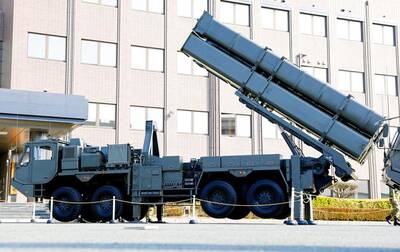
Japan has deployed long-range missiles in a southwestern region near China, the Japanese defense minister said yesterday, at a time when ties with Beijing are at their lowest in recent years. The missiles were installed in Kumamoto in the southern region of Kyushu, as Japan is attempting to shore up its military capacity as China steps up naval activity in the East China Sea. “Standoff defense capabilities enable us to counter the threat of enemy forces attempting to invade our country ... while ensuring the safety of our personnel,” Japanese Minister of Defense Shinjiro Koizumi said. “This is an extremely important initiative for

MORE POPULAR: Taiwan Pass sales increased by 59 percent during the first quarter compared with the same period last year, the Tourism Administration said The Tourism Administration yesterday said that it has streamlined the Taiwan Pass, with two versions available for purchase beginning today. The tourism agency has made the pass available to international tourists since 2024, allowing them to access the high-speed rail, Taiwan Railway Corp services, four MRT systems and four Taiwan Tourist Shuttles. Previously, five types of Taiwan Pass were available, but some tourists have said that the offerings were too complicated. The agency said only two types of Taiwan Pass would be available, starting from a three-day pass with the high-speed rail and a three-day pass with Taiwan Railway Corp. The former costs NT$2,800

POLLS CONCERNS: There are concerns within the KMT that a Cheng Li-wun-Xi Jinping meeting could trigger a voter backlash in elections in November Chinese Nationalist Party (KMT) Chairwoman Cheng Li-wun (鄭麗文) accepted an invitation from Chinese President Xi Jinping (習近平) to visit next month, her party and Chinese state media reported yesterday. Cheng, who took up her role in November last year, “gladly accepted” the invitation to lead a delegation to China, the KMT said in a statement, confirming a Xinhua news agency report. Cheng “looks forward to joint efforts by both parties to advance the peaceful development of cross-strait relations, promote cross-strait exchanges and cooperation, and work for peace in the Taiwan Strait and greater well-being for people on both sides,” the statement said. Chinese
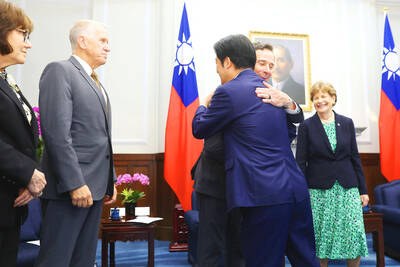
SIGNIFICANT TO THE WORLD: The delegation’s visit aims to send a clear message that bipartisan support for Taiwan is consistent, US Senator Jeanne Shaheen said The US Senate’s bipartisan support for Taiwan remains strong and Taiwan-US ties would continue for decades to come, a US Senate delegation said in Taipei yesterday, while calling on the legislature to swiftly pass a special defense budget bill. A US delegation led by Democratic US Senator Jeanne Shaheen and Republican US Senator John Curtis — both members of the US Senate Committee on Foreign Relations — arrived in Taiwan yesterday for a two-day visit. The other senators of the delegation included Senate Taiwan Caucus cochair Thom Tillis and Senate Committee on Armed Services senior member Jacky Rosen. Shaheen told a news


 RSS
RSS