


Taiwan is to establish a “Taiwanese Representative Office in Lithuania,” the first office in Europe to be called Taiwanese, the Ministry of Foreign Affairs announced yesterday.
“It is an important diplomatic breakthrough,” President Tsai Ing-wen (蔡英文) wrote on Facebook, thanking diplomatic personnel for the significant achievement.
To expand the nation’s relations with central and eastern Europe, especially with Baltic nations, the government decided to establish the office in Vilnius, Minister of Foreign Affairs Joseph Wu (吳釗燮) told an online news conference.
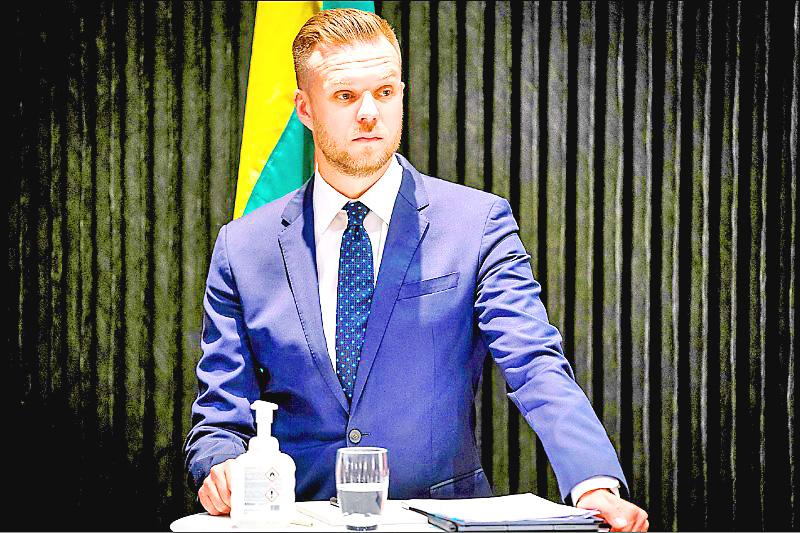
Photo: Reuters
The plan signals progress in Taiwan-Europe relations, as it has been 18 years since the nation last opened an office on the continent, the Taipei Representative Office in Bratislava, Slovakia, Wu said.
Taiwan and Lithuania are both situated on the front lines of defending democracy and freedom, he said.
A member of the EU and NATO, Lithuania is known for its strength in lasers, biotechnology, satellites and information technology, as well as agriculture and furniture, Wu said.
When the Taiwan Representative Office in the Republic of Somaliland opened last year, it was the first to use the name “Taiwan,” he said.
The planned office in Vilnius would be the first in Europe that is called “Taiwanese,” a nomenclature similar to the names of the British Office Taipei, the French Office in Taipei, the German Institute Taipei and the American Institute in Taiwan (AIT), he added.
The nation’s representative offices in countries without formal relations mostly use the word “Taipei,” such as the Taipei Economic and Cultural Representative Office in the US. Embassies in nations with formal ties use “Republic of China.”
The ministry is seeking a suitable location for the planned office, Wu said when asked about the inauguration date.
“Freedom-loving people should look out for each other,” he said, quoting Lithuanian Minister of Foreign Affairs Gabrielius Landsbergis, who on June 22 confirmed that his government planned to donate 20,000 doses of the AstraZeneca COVID-19 vaccine to Taiwan.
Lithuania plans to establish a trade office in Taiwan by the end of this year.
Following the news conference, the AIT issued a statement backing the plan to establish the office in Lithuania.
“All countries should be free to pursue closer ties and greater cooperation with Taiwan, a leading democracy, a major economy, and a force for good in the world,” the AIT said. “The United States remains committed to supporting Taiwan in a manner consistent with the US ‘one China’ policy as Taiwan strengthens its international partnerships and works to address global challenges, including COVID-19, investment screening, and supply chain resilience.”
The Taipei Mission in the Republic of Latvia is currently responsible for promoting relations with Baltic nations, including Lithuania and Estonia.
A video released by the mission yesterday showed Representative to Latvia Eric Huang (黃鈞耀) meeting Matas Maldeikis, chairman of the Lithuanian Parliamentary Group for Relations with Taiwan, in front of Vilnius Cathedral, making a toast with Taiwanese bubble tea purchased at a local shop.
Taiwan and Lithuania share many parallels in history and geopolitics, and the office’s establishment would open a new chapter of bilateral economic cooperation and send a clear message that democracies must cooperate in the current geopolitical turbulence, Maldeikis said in the video.
Taiwan maintains formal diplomatic relations with 15 allies, with the Vatican being the only one in Europe.
Since taking office in May 2016, Tsai’s administration has lost seven diplomatic allies.
Taiwan last year opened the office in Somaliland and the Taipei Representative Office in France’s new branch in Aix-en-Provence. It also resumed operations at the Taipei Economic and Cultural Office in Guam after a hiatus of three years.
Taiwan Semiconductor Manufacturing Co (TSMC, 台積電), the world’s largest foundry service provider, yesterday said that global semiconductor revenue is projected to hit US$1.5 trillion in 2030, after the figure exceeds US$1 trillion this year, as artificial intelligence (AI) demand boosts consumption of token and compute power. “We are still at the beginning of the AI revolution, but we already see a significant impact across the whole semiconductor ecosystem,” TSMC deputy cochief operating officer Kevin Zhang (張曉強) said at the company’s annual technology symposium in Hsinchu City. “It is fair to say that in the past decade, smartphones and other mobile devices were
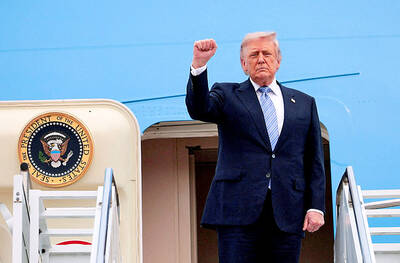
US-CHINA SUMMIT: MOFA welcomed US reassurance of no change in its Taiwan policy; Trump said he did not comment when Xi talked of opposing independence US President Donald Trump yesterday said he has not made a decision on whether to move forward with a major arms package for Taiwan after hearing concerns about it from Chinese President Xi Jinping (習近平). Trump’s comments on Taiwan came as he flew back to Washington after wrapping up critical talks in which both leaders said important progress was made in stabilizing US-China relations even as deep differences persist between the world’s two biggest powers on Iran and Taiwan. “I will make a determination,” Trump said, adding: “I’ll be making decisions. But, you know, I think the last thing we need right
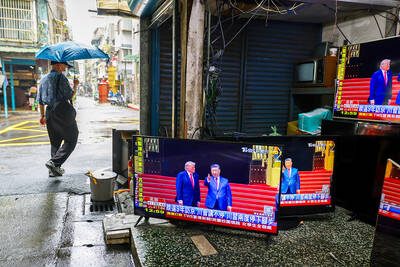
TAIWAN ISSUE: US treasury secretary Scott Bessent said on the first day of meetings that ‘it wouldn’t be a US-China summit without the Taiwan issue coming up’ There were no surprises on the first day of the summit between US President Donald Trump and Chinese President Xi Jinping (習近平), the Mainland Affairs Council (MAC) said yesterday, as the government reiterated that cross-strait stability is crucial to the Asia-Pacific region, as well as the world. As the two presidents met for a highly anticipated summit yesterday, Chinese state media reported that Xi warned Trump that missteps regarding Taiwan could push their two countries into “conflict.” Trump arrived in China with accolades for his host, calling Xi a “great leader” and “friend,” and extending an invitation to visit the White House
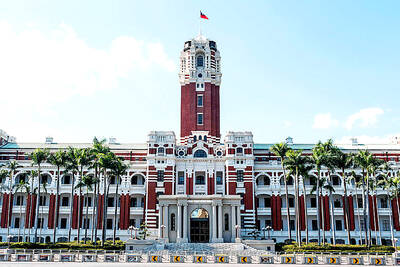
SECURITY: Taipei presses the US for arms supplies, saying the arms sales are not only a reflection of the US security commitment to Taiwan but also serve as a mutual deterrent against regional threats Taiwan is committed to preserving the cross-strait “status quo” and contributing to regional peace and stability, the Presidential Office said yesterday. “It is an undeniable fact that the Republic of China is a sovereign and independent democratic nation,” Presidential Office spokeswoman Karen Kuo (郭雅慧) reiterated, adding that Beijing has no right to claim sovereignty over Taiwan. The statements came after US President Donald Trump warned against Taiwanese independence. Trump wrapped up a state visit to Beijing on Friday, during which Chinese President Xi Jinping (習近平) had pressed him not to support Taiwan. Taiwan depends heavily on US security backing to deter China from carrying


 RSS
RSS