


The Central Epidemic Command Center (CECC) yesterday reported 320 locally transmitted COVID-19 infections, 166 backlogged cases and 21 deaths.
Minister of Health and Welfare Chen Shih-chung (陳時中), who heads the center, said that among the 320 local infections, 169 are male and 151 are female, from under the age of five to over 90.
They began displaying symptoms from May 7 to Friday, he said.
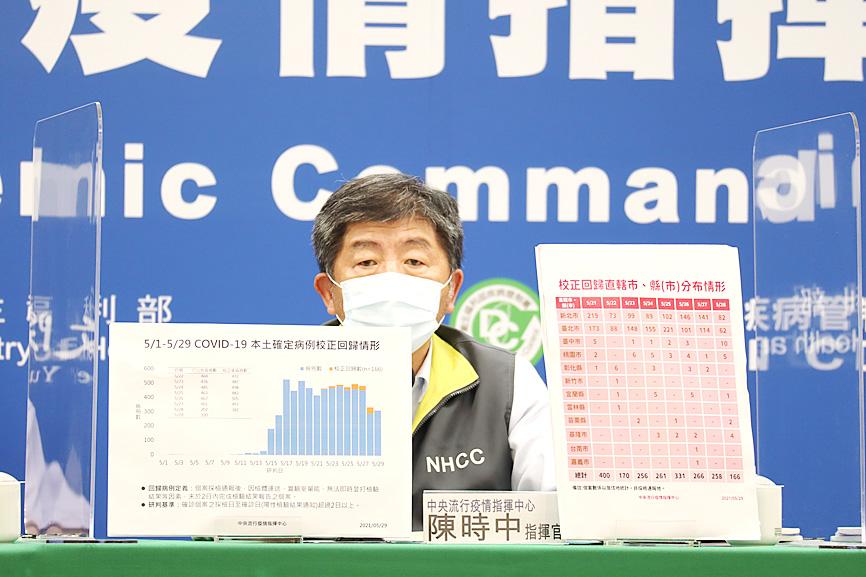
Photo courtesy of the Central Epidemic Command Center
Of the 486 cases reported yesterday, 224 live in New Taipei City, followed by Taipei with 168 cases, Taichung with 33, Taoyuan with 19, Keelung with 14, Taitung and Yilan counties with five each, and Hualien and Chiayi counties with four each, while six other cities and counties had one to three cases each.
Among them, 36 had visited Taipei’s Wanhua District (萬華), two were linked to a cluster involving hostess teahouses in Wanhua, 158 cases had clear infection sources, while 49 cases had an unclear connection to previous cases and 241 were under investigation.
“The case counts in areas other than Taipei and New Taipei City are increasing, and the areas are expanding, too,” Chen said, adding that the number of cases linked to teahouses in Wanhua or with a history of travel to Wanhua is dropping, indicating that the virus is spreading beyond people from the original hotspots.
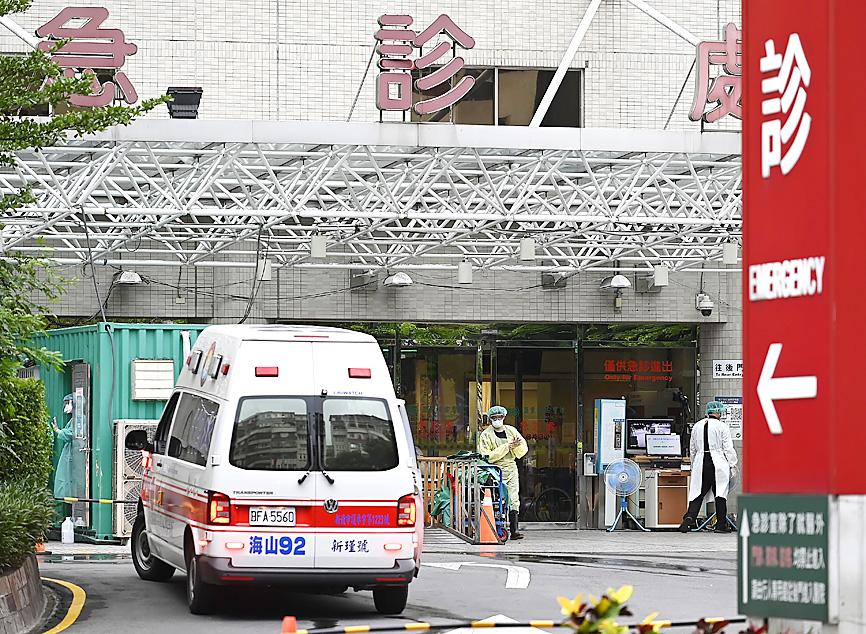
Photo: Chen Chih-chu, Taipei Times
Looking at the daily case counts with the added backlogged cases shows that the COVID-19 situation has not rapidly worsened, but the case counts have been about the same over the past few days, not showing much improvement, so people should still practice level 3 enhanced disease prevention measures, Chen said.
Contact tracing has found that many of the confirmed cases visited traditional markets or evening markets before they were diagnosed with COVID-19, so people should be especially careful, Chen said.
People should not visit markets when they are likely to be crowded, wear a mask, practice good hand hygiene after handling cash, and wash their hands thoroughly after returning home, he said.
Of the 21 deaths, 13 were men and eight were women. They were between the ages of 30 and 100, and died between Sunday last week and Friday. They began experiencing symptoms from May 11 to Tuesday and tested positive from Monday last week to yesterday.
One of the people who died was a 36-year-old man from New Taipei City with several family members who had been diagnosed with COVID-19 before him. He tested positive on Wednesday and was to be transported to a centralized quarantine facility on Thursday, but he was found on Thursday morning experiencing out-of-hospital cardiac arrest and was pronounced dead after being taken to a hospital.
He is the youngest person in Taiwan to have died from COVID-19, Centers for Disease Control Deputy Director-General Chuang Jen-hsiang (莊人祥), who the is CECC’s spokesperson, said on Friday.
Chuang yesterday said that of the 21 deaths reported yesterday, 19 had underlying health conditions, and of 87 deaths reported since May 11, three had died at home.
Asked why one person died on Sunday, but their test result was only reported yesterday, Chuang said that when a person dies of COVID-19, the hospital conducts preliminary contact tracing before reporting the case to the CECC.
Upon receiving the report of the death, the CECC also conducts basic contact tracing, so there is usually a gap between the time of death and when it is reported by the center, he said, adding that the center would try to reduce that gap.

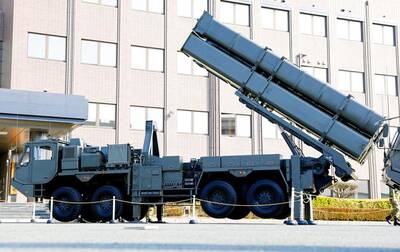
Japan has deployed long-range missiles in a southwestern region near China, the Japanese defense minister said yesterday, at a time when ties with Beijing are at their lowest in recent years. The missiles were installed in Kumamoto in the southern region of Kyushu, as Japan is attempting to shore up its military capacity as China steps up naval activity in the East China Sea. “Standoff defense capabilities enable us to counter the threat of enemy forces attempting to invade our country ... while ensuring the safety of our personnel,” Japanese Minister of Defense Shinjiro Koizumi said. “This is an extremely important initiative for

MORE POPULAR: Taiwan Pass sales increased by 59 percent during the first quarter compared with the same period last year, the Tourism Administration said The Tourism Administration yesterday said that it has streamlined the Taiwan Pass, with two versions available for purchase beginning today. The tourism agency has made the pass available to international tourists since 2024, allowing them to access the high-speed rail, Taiwan Railway Corp services, four MRT systems and four Taiwan Tourist Shuttles. Previously, five types of Taiwan Pass were available, but some tourists have said that the offerings were too complicated. The agency said only two types of Taiwan Pass would be available, starting from a three-day pass with the high-speed rail and a three-day pass with Taiwan Railway Corp. The former costs NT$2,800

NEW LOW: The council in 2024 based predictions on a pessimistic estimate for the nation’s total fertility rate of 0.84, but last year that rate was 0.69, 17 percent lower An expected National Development Council (NDC) report expects the nation’s population to drop below 12 million by 2065, with the old-age dependency ratio to top 100 percent sooner than 2070, sources said yesterday. The council is slated to release its latest population projections in August, using an ultra-low fertility model, the sources said. The previous report projected that Taiwan’s population would fall to 14.37 million by 2070, but based on a new estimate of the total fertility rate (TFR) — the average number of children born to a woman over her lifetime — the population is expected to reach 12 million by

COUNTERING HOSTILITY: The draft bill would require the US to increase diplomatic pressure on China and would impose sanctions on those who sabotage undersea cable networks US lawmakers on Thursday introduced a bipartisan bill to bolster the resilience of Taiwan’s submarine cables to counter China’s hostile activities. The proposal, titled the critical undersea infrastructure resilience initiative act, was cosponsored by Republican representatives Mike Lawler and Greg Stanton, and Democratic Representative Dave Min. US Senators John Curtis and Jacky Rosen also introduced a companion bill in the US Senate, which has passed markup at the chamber’s Committee on Foreign Relations. The House’s version of the bill would prioritize the deployment of sensors to detect disruptions or potential sabotage in real-time and enhance early warning capabilities through global intelligence sharing frameworks,


 RSS
RSS