


The Central Epidemic Command Center (CECC) yesterday reported 287 new local COVID-19 infections, 170 backlogged local cases and six deaths.
Of the local infections, 138 are male and 149 are female, and the onset of symptoms or testing dates ranged from May 6 to Saturday, it said.
Most of the cases live in Taipei and New Taipei City: 142 in New Taipei City, including 32 in Banciao District (板橋), and 77 cases in Taipei, including 38 in Wanhua District (萬華), the center said.
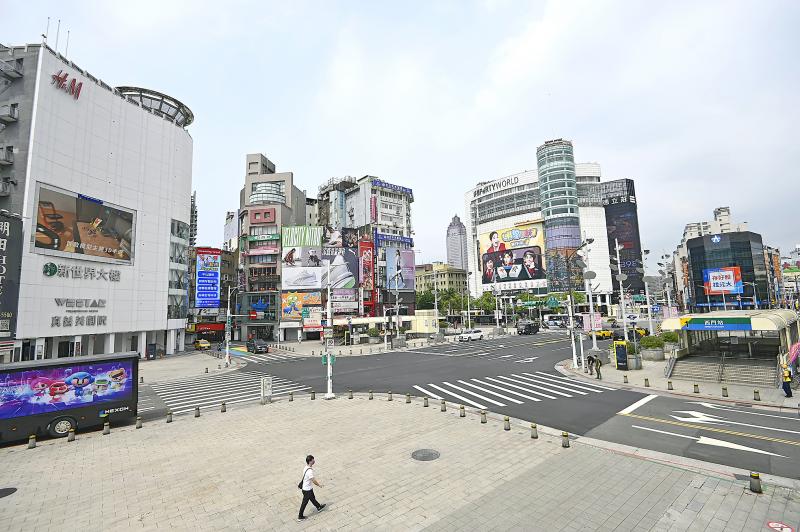
Photo: Chen Chih-chu, Taipei Times
Twenty-three cases are from Taoyuan, eight each from Pingtung and Nantou counties, and the remainder are from 11 other municipalities, including Chiayi County and Chiayi City, which each had their first confirmed cases, it said.
Of the 170 backlogged cases, 84 are male and 86 are female, with the onset of symptoms or testing dates ranging from April 25 to Saturday, the CECC said.
Of those, 88 live in Taipei, including 48 in Wanhua, 73 live in New Taipei City, including 17 in Banciao, six live in Changhua County, and one each in Hsinchu City and Yilan and Yunlin counties, it said.
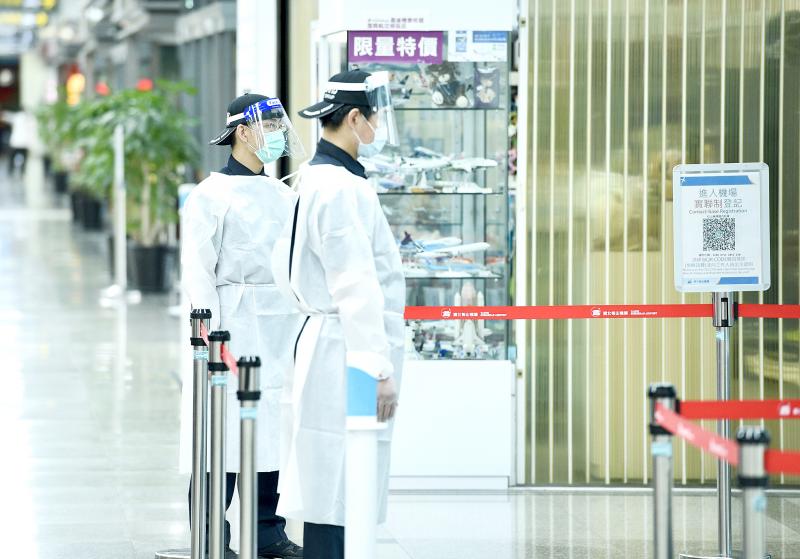
Photo: Peter Lo, Taipei Times
Among the 457 cases reported yesterday, 161 had recently visited Wanhua, 160 are linked to previously reported clusters or have a clear infection source, 70 have an unclear connection to previous cases and 66 are being investigated, CECC data showed.
The dead are five men and one woman, aged between 50 and 90 years old, the center said.
They developed symptoms from May 10 to Thursday, were diagnosed with COVID-19 from May 17 to Saturday, and they died on Thursday or Friday, said Minister of Health and Welfare Chen Shih-chung (陳時中), who heads the center.
Five of them had a chronic illness, he added.
Due to a spike in demand for COVID-19 testing over the past week, the period between conducting a test and confirming an infection has surpassed two days, leading to tens of thousands of pending test results.
The center on Saturday for the first time reported 400 backlogged local cases, sparking debate on whether the practice is appropriate.
Chen said that the center has simplified the reporting procedure by reducing the 22 required items to only eight for each case.
Yesterday, he said that the center would also subsidize laboratories up to NT$5 million (US$178,955) for purchases of a high-throughput real-time polymerase chain reaction (PCR) instrument to speed up testing.
Test recipients can check their PCR test results by using the “My Health Bank” (健康存摺) function in the National Health Insurance Administration’s (NHIA) mobile app (全民健保行動快易通), he said.
NHIA Director-General Lee Po-chang (李伯璋) said a PCR test can take up to three days to produce results, and that the new service would enable hospitals and testing stations to upload the test results to the NHI MediCloud system.
Test recipients can check results as soon as they come out, rather than waiting to be informed through a telephone call, he said.
Chen said that although rapid testing is conducted only in some testing stations in the six special municipalities, mostly in Taipei and New Taipei City, the test positivity rates in the past week peaked at 5.8 percent on May 15, dropping to 2.1 percent on Wednesday, before rebounding to 3.4 percent yesterday.
The upcoming week is an important observation period for deciding whether the COVID-19 warning should remain at level 3, Chen said.
In addition to positivity rates, daily confirmed cases and distribution of cases, there are other indicators to be considered, he said.
Chen also said that the standards for home quarantine and home isolation have been relaxed to allow “one person per room,” instead of “one person per household,” to free up rooms at enhanced quarantine hotels and centralized quarantine facilities for confirmed cases with mild symptoms.

‘NO SECURITY RISK’: The Railway Bureau reassured the public that the technicians’ activities were limited to technical guidance and did not involve sensitive systems The Railway Bureau yesterday said it had invited eight Chinese technicians to assist with an airport MRT construction project. The bureau issued the confirmation after an Internet user said Chinese nationals had entered the construction zone of Taiwan Taoyuan International Airport’s Terminal 3 project. They asked why “individuals from an enemy state” were allowed access to such a major national infrastructure project, which raised serious concerns over Taiwan’s industrial safety, sensitive systems and information security. The bureau’s Northern Region Engineering Branch Office said subcontractor Taiwan Handle Industrial Co (台灣手把工業) of the Taoyuan airport MRT’s “Contract No. CU05 Project A14 Station Civil, MEP &

A US uncrewed surface vessel (USV) encountered multiple Chinese warships during an autonomous transit of the Taiwan Strait, US defense company Seasats said in a statement on Wednesday. Seasats announced that a Lightfish USV had completed the first autonomous transit of the Taiwan Strait. Over five days, the USV traversed the entire length of the Strait while constantly monitoring surface vessel traffic, the company said. The Lightfish encountered multiple Chinese warships, one of which was a Chinese People’s Liberation Army Navy (PLAN) Type 056 corvette, it said. The Chinese vessels were operating “well within Taiwan’s exclusive economic zone without transmitting their identity via the
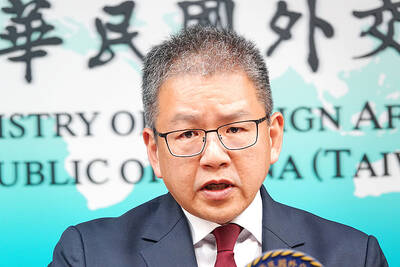
Taiwan is still in the process of assessing the possibility of recruiting workers from Eswatini, the Ministry of Foreign Affairs said yesterday, adding that its goal is to help Eswatini upgrade its vocational training centers. If there are plans to recruit workers from Eswatini, safeguarding national security, protecting public health and ensuring the employment rights of Taiwanese would be prerequisites, Department of West Asian and African Affairs Director-General Yen Chia-liang (顏嘉良) told a news conference. Key considerations would also include filling labor shortages in specific industries, and fostering bilateral professional and technical exchanges, he said. Yen was asked about the progress of labor

‘BOOMING’: ’ The number of partners we have here is incredible. You can see from their stock prices. They’re doing so well, they’re so happy,’ Jensen Huang said Nvidia Corp’s spending in Taiwan has ballooned to about US$150 billion a year, 10 times the US$10 billion to US$15 billion the company spent five years ago, Nvidia chief executive officer Jensen Huang (黃仁勳) said yesterday, suggesting Taiwan’s strategic importance in the global artificial intelligence (AI) supply chain. “Taiwan is the epicenter of the AI revolution. This is where the chips come, packaging comes. This is where the systems are made. This is where AI supercomputers were created,” Huang said at a meeting for the company’s employees in Beitou-Shilin Technology Park (北投士林科技園區) in Taipei, the planned site of Nvidia’s Taipei headquarters. “Taiwan


 RSS
RSS