


Beijing’s influence campaign targeting Taiwanese media, as well as corruption among Taiwanese officials were highlighted on Tuesday in the US’ annual report on global human rights practices.
The US Department of State releases annual reports of human rights practices around the world in the previous year.
In a section on Taiwan, the report found that there were no credible reports of Taiwanese authorities restricting media freedom, but it highlighted Beijing’s influence.
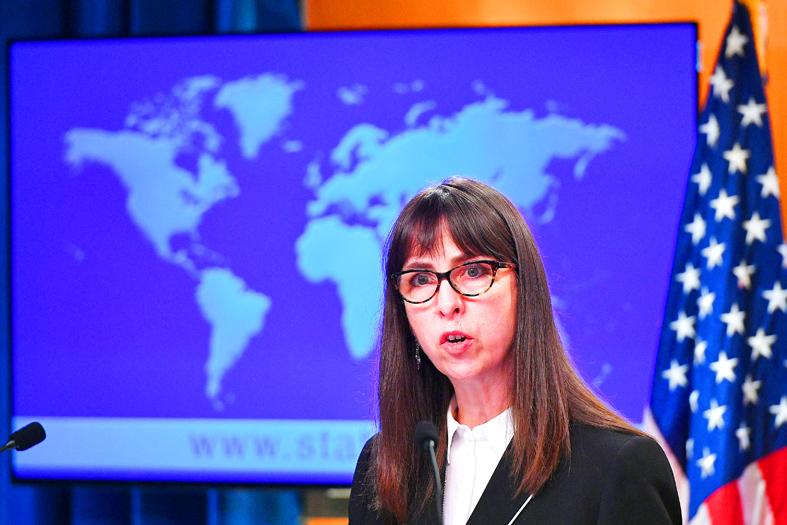
Photo: AFP
The issue was addressed in previous reports, but was given more space this year.
“Officials in the People’s Republic of China (PRC) influenced Taiwan media outlets through pressure on the business interests of their parent companies in the PRC,” this year’s report said.
“To punish Taiwan media outlets deemed too critical of PRC policies or actions, the PRC would subject their journalists to heightened scrutiny at Chinese ports of entry or deny them entry to China,” it said. “PRC actors also targeted the computers and mobile phones of Taiwan journalists for cyberattacks.”
The report documented how the National Communications Commission (NCC) last year declined a CTi News request for a license renewal after the channel was repeatedly fined for breaching broadcasting regulations.
Some opposition politicians and academics said that the NCC was politically motivated and that its decision was retaliation for criticism of the Democratic Progressive Party (DPP), the report said.
There were also allegations that the channel and its sister publications owned by Want Want China Times Media Group (旺旺中時集團) took editorial direction from China, the report said, without providing an evaluation of the case.
Journalists in Taiwan faced online bullying and threats of legal action, particularly over alleged libel, it said.
While journalists were rarely convicted for criminal defamation, some legal academics and non-governmental organizations had called for libel to be exclusively a civil matter, it said.
The report cited Want Want lawsuits against Financial Times journalist Kathrin Hille over her report exposing coordination between Want Want media firms in Taiwan and China’s Taiwan Affairs Office, and against the Central News Agency for citing her report.
It also documented major cases of corruption.
Former minister of transportation and communications Kuo Yao-chi (郭瑤琪) was sentenced to eight years in prison due to a guilty verdict for bribery, it said.
Several lawmakers, including Su Chen-ching (蘇震清) of the DPP, Sufin Siluko and Chen Chao-ming (陳超明) of the Chinese Nationalist Party (KMT), and former New Power Party legislator Hsu Yung-ming (徐永明), were charged with accepting bribes from a businessman, it said, using Sufin’s Chinese name, Liao Kuo-tung (廖國棟).
Independent Legislator Chao Cheng-yu (趙正宇) was indicted in a separate bribery case, it said, adding that the cases were pending trial.
The findings have been referred to government agencies in charge of corresponding issues, the Ministry of Foreign Affairs said in a news release yesterday, adding that it would inform the US of any action taken.
Taiwan and the US promote human rights, democracy and good governance through platforms such as the Indo-Pacific Democratic Governance Consultation, the ministry said, adding that it would continue to deepen the bilateral partnership based on its good foundations.
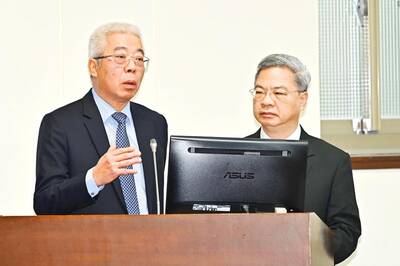
Taiwan has arranged for about 8 million barrels of crude oil, or about one-third of its monthly needs, to be shipped from the Red Sea this month to bypass the Strait of Hormuz and ease domestic supply pressures, CPC Corp, Taiwan (CPC, 台灣中油) said yesterday. The state-run oil company has worked with Middle Eastern suppliers to secure routes other than the Strait of Hormuz, through which about 20 percent of the world’s oil and liquefied natural gas typically passes, CPC chairman Fang Jeng-zen (方振仁) said at a meeting of the legislature’s Economics Committee in Taipei. Suppliers in Saudi Arabia have indicated they
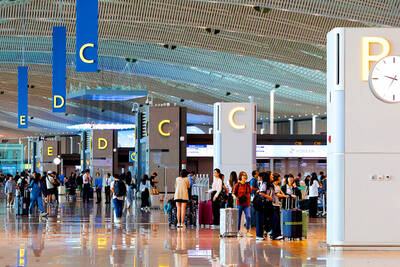
South Korea has adjusted its electronic arrival card system to no longer list Taiwan as a part of China, a move that the Ministry of Foreign Affairs said would help facilitate exchanges between the two sides. South Korea previously listed “Taiwan” as “Taiwan (China)” in the drop-down menus of its online arrival card system, where people had to fill out where they came from and their next destination. The ministry had requested South Korea make a revision and said it would change South Korea’s name on Taiwan’s online immigration system from “Republic of Korea” to “Korea (South),” should the issue not be

CCP ‘PAWN’? Beijing could use the KMT chairwoman’s visit to signal to the world that many people in Taiwan support the ‘one China’ principle, an academic said Chinese Nationalist Party (KMT) Chairwoman Cheng Li-wun (鄭麗文) yesterday arrived in China for a “peace” mission and potential meeting with Chinese President Xi Jinping (習近平), while a Taiwanese minister detailed the number of Chinese warships currently deployed around the nation. Cheng is visiting at a time of increased Chinese military pressure on Taiwan, as the opposition-dominated Legislative Yuan stalls a government plan for US$40 billion in extra defense spending. Speaking to reporters before going to the airport, Cheng said she was going on a “historic journey for peace,” but added that some people felt uneasy about her trip. “If you truly love Taiwan,
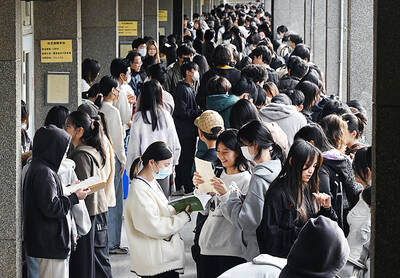
A global survey showed that 60 percent of Taiwanese had attained higher education, second only to Canada, the Ministry of the Interior said. Taiwan easily surpassed the global average of 43 percent and ranked ahead of major economies, including Japan, South Korea and the US, data from the Organisation for Economic Co-operation and Development (OECD) for 2024 showed. Taiwan has a high literacy rate, data released by the ministry showed. As of the end of last year, Taiwan had 20.617 million people aged 15 or older, accounting for 88.5 percent of the total population, with a literacy rate of 99.4 percent, the data


 RSS
RSS