


Health officials have already made preparations for a China Airlines (中華航空) flight that is bringing 120 passengers to Taiwan from the UK today, Minister of Health and Welfare Chen Shih-chung (陳時中) said yesterday.
The number of flights from the UK has been halved and extra quarantine measures were put in place since Wednesday, in response to a new strand of SARS-CoV-2 — the virus that causes COVID-19 — that has been spreading in the UK, the Central Epidemic Command Center said yesterday.
Today’s flight from London, which is to arrive at 6:15pm, is the first from the UK to arrive since the new measures were put in place, the center said.
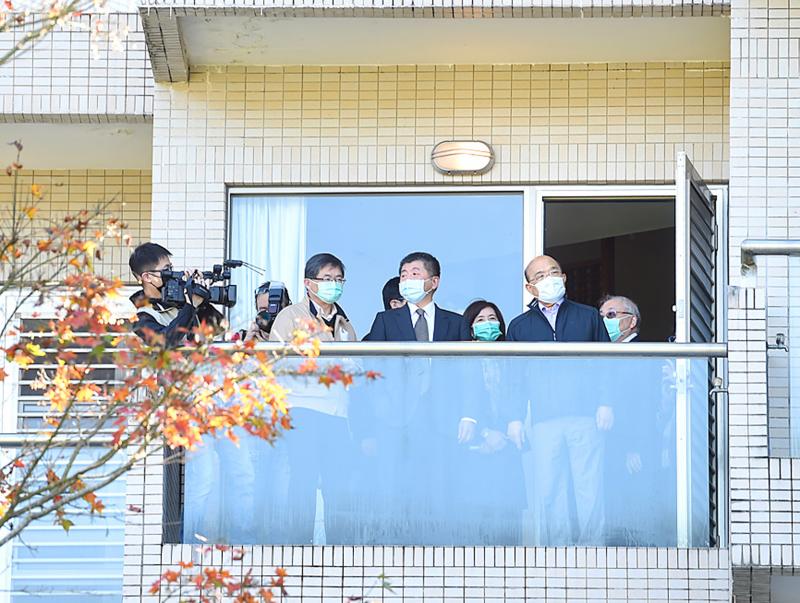
Photo: Fang Pin-chao, Taipei Times
Flight personnel would be required to quarantine at home for 14 days, and all passengers would be required to undergo testing, and be quarantined at a centralized facility for 14 days, Chen said, adding that they would be required to report any health abnormalities to officials after being released from quarantine.
Anyone who has recently traveled to the UK would be subject to the same regulations, he added. Over the past few days, 26 people who have recently been to the UK were placed in a quarantine facility, he said.
Chen said that the center had initially planned to test only those showing symptoms, but revised its plans in light of the number of positive cases that showed no symptoms, as well as the relative lack of information about the new strain of the virus.
Asked how the center would handle the approximately 4,000 students expected to return from the UK for the Lunar New Year holiday, Chen said that they would be subject to the same measures.
“What we know about the new virus strain is that while it is more transmissible, infections caused by it are not more serious,” he said, adding that centralized quarantine is required for passengers from the UK to prevent transmission to people who live in the same home as them.
“If someone got infected at home and then the virus spreads into the community, I’m afraid that may cause a community outbreak,” he said.
Asked by reporters whether there are sufficient centralized facilities to accommodate an influx of people returning home for the Lunar New Year, Chen said there are 3,200 beds at 29 facilities, and that six more facilities would begin operations next month.
Meanwhile, Taoyuan International Airport Corp (桃園國際機場) said that passengers arriving on flights from the UK would be directed to an unused terminal lounge after leaving their aircraft, and prevented from entering the arrivals hall.
Six designated shuttle busses would take them from the airport to the quarantine facility, it said.
Additional reporting by CNA

OPTIMISTIC: The DGBAS sharply upgraded its GDP growth estimate from 3.54 percent to 7.71 percent after the Taiwan-US trade agreement signing and given AI optimism The US imported more from Taiwan than China for the first time in decades, as US President Donald Trump’s tariffs reshape trade flows while a global boom in artificial intelligence (AI) fuels demand for tech products. US purchases of goods from China plunged almost 44 percent in December last year from 2024 to US$21.1 billion, US Department of Commerce data showed on Thursday. By contrast, shipments from Taiwan more than doubled during the same period to US$24.7 billion. The soaring Taiwanese shipments to the US reflect the huge expansion in supplies of chips and servers for AI companies, which has completely changed
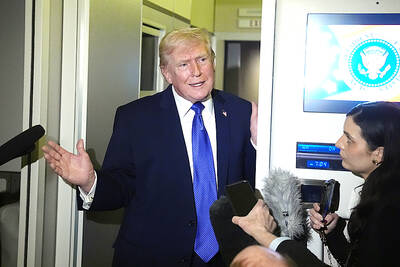
NON-NEGOTIABLE: The US president’s action ran counter to one of the US’ ‘six assurances’ on not consulting China about arms sales to Taiwan, US lawmakers said US President Donald Trump’s admission that he is discussing arms sales to Taiwan with Chinese President Xi Jinping (習近平) is “alarming and a blatant violation of US policy and the six assurances,” US Representative Ro Khanna said on Tuesday. Trump on Monday said he would decide soon on whether to send more weapons to Taiwan, after Xi warned him not to do so. “I’m talking to him about it. We had a good conversation, and we’ll make a determination pretty soon,” Trump told reporters aboard Air Force One when asked about warnings raised by Beijing during a phone call with Xi over
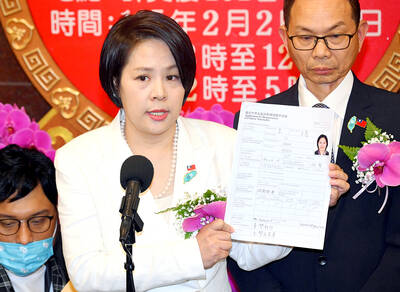
The Central Election Commission has amended election and recall regulations to require elected office candidates to provide proof that they have no Chinese citizenship, a Cabinet report said. The commission on Oct. 29 last year revised the Measures for the Permission of Family-based Residence, Long-term Residence and Settlement of People from the Mainland Area in the Taiwan Area (大陸地區人民在台灣地區依親居留長期居留或定居許可辦法), the Executive Yuan said in a report it submitted to the legislature for review. The revision requires Chinese citizens applying for permanent residency to submit notarial documents showing that they have lost their Chinese household record and have renounced — or have never
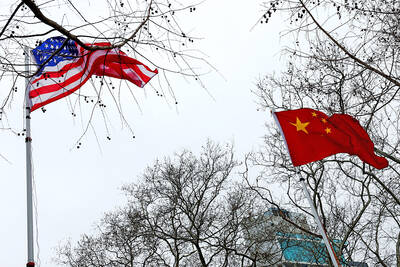
US and Chinese fighter jets briefly faced off above waters near the Korean Peninsula this week, Yonhap News agency reported, marking a rare confrontation in that area between the two superpowers. About 10 US fighter jets on Wednesday departed an airbase in Pyeongtaek, South Korea, for drills above international waters off South Korea’s western coast, the news outlet cited unidentified military sources as saying. While the US planes did not enter China’s air defense identification zone, Beijing scrambled planes as they neared that region, the report said. “The Chinese People’s Liberation Army organized naval and air forces to monitor and effectively respond


 RSS
RSS