


US Secretary of Health and Human Services Alex Azar on Friday said he wants to learn about Taiwan’s “incredibly effective” response to COVID-19, even though the nation did things that the US has fumbled, such as having a unified strategy and citizens willing to wear masks.
Azar leads a US delegation arriving today for a three-day visit to Taiwan. They are to meet with President Tsai Ing-wen (蔡英文) and health system leaders, and Azar is to give a speech to public health graduates.
“The message of this trip is about Taiwan,” Azar said in an interview, deflecting a question about China. “It’s about public health, it’s about our partnership with Taiwan, but also the model that Taiwan offers to the world community of a transparent and open healthcare system. It is a model others can learn from.”
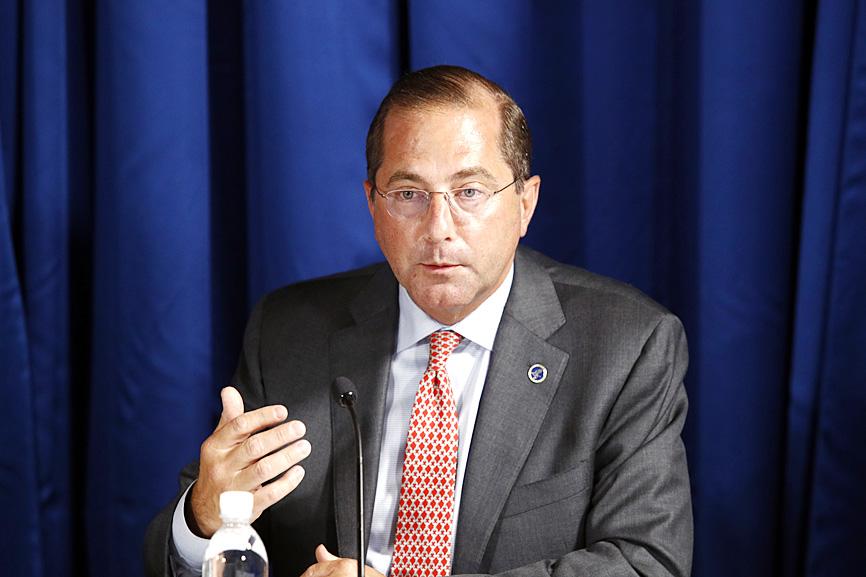
Photo: AP
The trip is a geopolitical chess move in Washington’s contentious relationship with China, which has voiced concerns about the trip to Washington and called on the US to stop government-to-government interactions with Taiwan.
Azar called Taiwan’s coronavirus response “incredibly effective” and said that he is willing to “learn from them about their responses.”
It is not too late for the US, said a leading expert on Taiwan’s healthcare system, Cheng Tsung-mei (鄭宗美), a Princeton University health policy research analyst.
“It will be good if our health chief can learn from Taiwan, how exactly they did it,” Cheng said. “It’s really a treasure trove of very useful information as to how you could effectively control and contain the spread of the virus.”
Taiwan had direct experience with an earlier respiratory virus known as SARS, so it did not take the novel coronavirus lightly. A government-run healthcare system allowed public health authorities to mobilize resources to track and contain cases, and citizens were willing to follow public health advice.
As a result Taiwan has had 479 confirmed cases of COVID-19, despite its close proximity to China, where the virus originated.
Florida, which has about the same number of residents as Taiwan, has had more than 518,000 cases and is struggling to contain this summer’s surge.
Taiwan “set the policy right and they had the infrastructure and the leadership,” Cheng said. “I cannot emphasize enough the importance of leadership.”
Azar, while praising Taiwan, said that the US is dealing with “very different” circumstances.
“They are an island with 23 million people that also experienced SARS quite directly,” he said.
The US is one of the world’s largest land mass countries, he added, with a federal system that gives states great leeway and traditions of individual liberty.
Also on the agenda for the trip is trade, as the US tries to broaden its sources for medical products, many of which have been produced in China.
US Cabinet-rank officials have traveled to Taiwan in previous administrations, but Azar’s trip is billed as the highest-level visit since Washington and Taipei broke formal diplomatic relations in 1979.
“This is a visit to reinforce the US-Taiwan partnership in global health and health security,” Azar said. “Taiwan is a leader in global health and I believe it deserves to be recognized as such.”
Additional reporting by staff writer

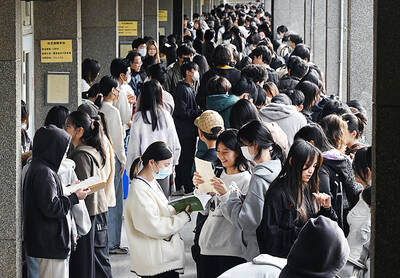
A global survey showed that 60 percent of Taiwanese had attained higher education, second only to Canada, the Ministry of the Interior said. Taiwan easily surpassed the global average of 43 percent and ranked ahead of major economies, including Japan, South Korea and the US, data from the Organisation for Economic Co-operation and Development (OECD) for 2024 showed. Taiwan has a high literacy rate, data released by the ministry showed. As of the end of last year, Taiwan had 20.617 million people aged 15 or older, accounting for 88.5 percent of the total population, with a literacy rate of 99.4 percent, the data

NEW LOW: The council in 2024 based predictions on a pessimistic estimate for the nation’s total fertility rate of 0.84, but last year that rate was 0.69, 17 percent lower An expected National Development Council (NDC) report expects the nation’s population to drop below 12 million by 2065, with the old-age dependency ratio to top 100 percent sooner than 2070, sources said yesterday. The council is slated to release its latest population projections in August, using an ultra-low fertility model, the sources said. The previous report projected that Taiwan’s population would fall to 14.37 million by 2070, but based on a new estimate of the total fertility rate (TFR) — the average number of children born to a woman over her lifetime — the population is expected to reach 12 million by

COUNTERING HOSTILITY: The draft bill would require the US to increase diplomatic pressure on China and would impose sanctions on those who sabotage undersea cable networks US lawmakers on Thursday introduced a bipartisan bill to bolster the resilience of Taiwan’s submarine cables to counter China’s hostile activities. The proposal, titled the critical undersea infrastructure resilience initiative act, was cosponsored by Republican representatives Mike Lawler and Greg Stanton, and Democratic Representative Dave Min. US Senators John Curtis and Jacky Rosen also introduced a companion bill in the US Senate, which has passed markup at the chamber’s Committee on Foreign Relations. The House’s version of the bill would prioritize the deployment of sensors to detect disruptions or potential sabotage in real-time and enhance early warning capabilities through global intelligence sharing frameworks,
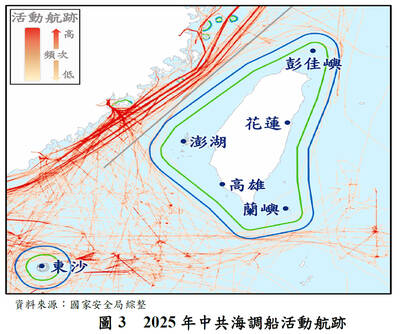
INTENSIFYING THREATS: Beijing’s tactics include massive attacks on the government service network, aircraft and naval vessel incursions and damaging undersea cables China is prepared to interfere in November’s nine-in-one local elections by launching massive attacks on the Taiwanese government’s service network (GSN), a report published by the National Security Bureau showed. The report was submitted to the Legislative Yuan ahead of the bureau’s scheduled briefing at the Foreign Affairs and National Defense Committee tomorrow. The national security team has identified about 13,000 suspicious Internet accounts and 860,000 disputed messages, the bureau said of China’s cognitive warfare against Taiwan. The disputed messages focus on major foreign affairs, national defense and economic issues, which were produced using generative artificial intelligence (AI) and distributed through Chinese


 RSS
RSS