


Taiwan Semiconductor Manufacturing Co (TSMC, 台積電) yesterday said that it plans to spend about US$12 billion building an advanced plant in the US to make 5-nanometer chips by 2024, a move that analysts said was prompted by escalating geopolitical tensions between the US and China.
The Hsinchu-based chipmaker’s latest investment came after reports that the administration of US President Donald Trump was in talks with TSMC and other major chipmakers to build new manufacturing facilities in the US amid growing concern over the US’ heavy reliance on Asia for the supply of advanced chips.
The new facility is to be built in Arizona and have an installed capacity of 20,000 semiconductor wafers per month, TSMC said in a statement.
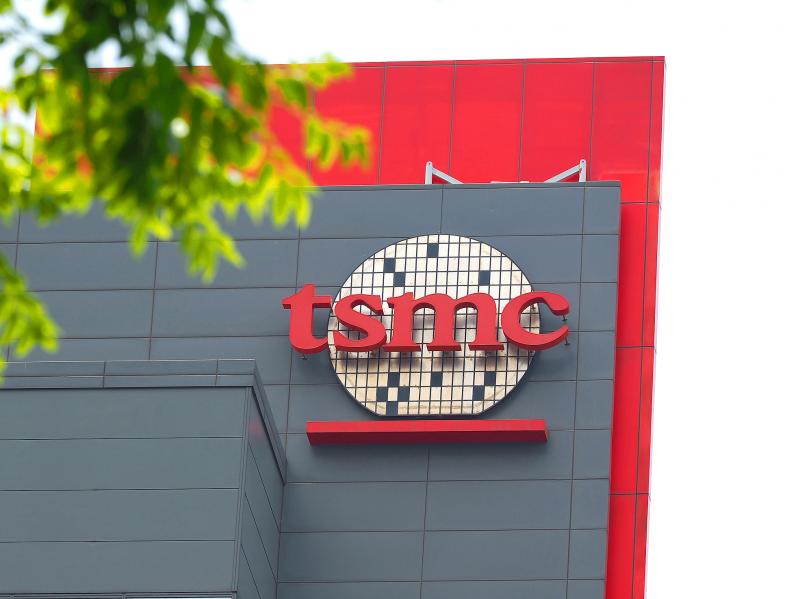
Photo: David Chang, EPA-EFE
The 5-nanometer process is the most advanced technology commercially available in the world.
“This project is of critical, strategic importance to a vibrant and competitive US semiconductor ecosystem that enables leading US companies to fabricate their cutting-edge semiconductor products within the United States and benefit from the proximity of a world-class semiconductor foundry and ecosystem,” TSMC said.
“This US facility not only enables us to better support our customers and partners, it also gives us more opportunities to attract global talent,” it said.
One semiconductor industry analyst, who spoke on condition of anonymity, said: “I am not surprised about TSMC’s decision. At this pivotal moment, the chipmaker has to include political factors into its consideration.”
TSMC’s latest investment aligns with Trump’s efforts to return manufacturing to the US, the analyst said, adding that manufacturing costs have become less of a concern.
A month ago, TSMC said that manufacturing costs in Taiwan were the world’s lowest.
However, TSMC chairman Mark Liu (劉德音) at the time told investors that the firm was “now actively evaluating the US fab plan ... but as I told the investor before, there is a cost gap, which is hard to accept at this point.”
Local semiconductor raw material suppliers and component manufacturers are likely to follow TSMC in allocating production to the US, setting the scene for the US government to fulfill its long-term plan to make chips in the nation, market researcher TrendForce Corp (集邦科技) said yesterday.
TSMC counts many US heavyweight technology companies as its clients, including Apple Inc, Advanced Micro Devices Inc and Nvidia Inc. Those firms are usually the earliest adopters of its most advanced chips.
Of its NT$1.069 trillion (US$35.69 billion) revenue last year, North American clients contributed about 60 percent and China, mostly Huawei Technologies Co (華為), about 20 percent.
The new investment is to directly create more than 1,600 high-tech jobs, as well as thousands of indirect jobs in the semiconductor ecosystem, TSMC said, adding that it plans to start construction next year, with production targeted to begin in 2024.
The fab would be the second TSMC operates in the US, following one in Camas, Washington, as well as design centers in Austin, Texas, and San Jose, California.
As TSMC is investing NT$1.2 trillion on developing next-generation technology, Taiwan would remain the most important manufacturing and technology development hub for the chipmaker, the Ministry of Economic Affairs said in a statement yesterday.
TSMC is to start commercial production of 3-nanometer chips in 2022, the ministry said.
TSMC’s US$12 billion investment would increase US economic independence from China, US Secretary of State Mike Pompeo said in a statement early yesterday.
The investment would also strengthen US-Taiwan ties, he said.
“TSMC’s announcement comes at a critical juncture, when China is competing to dominate cutting-edge technology and control critical industries,” Pompeo said.
“The TSMC facility in Arizona will increase US economic independence,” he added.
Presidential Office spokesman Xavier Chang (張惇涵) yesterday rejected media reports that President Tsai Ing-wen (蔡英文) had met with high-level managers from TSMC, GlobalWafers Inc (環球晶圓), Win Semiconductors Corp (穩懋半導體) and Largan Precision Co (大立光) at the Presidential Office Building in Taipei on Wednesday.
Regarding TSMC’s decision to build a new factory in the US, Chang said that Tsai is optimistic about the development, but would not be involved.
Additional reporting Lee Hsin-fang and Reuters
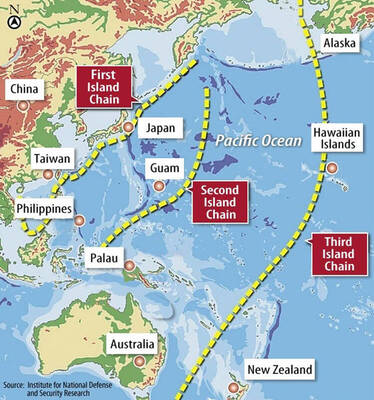
The US government has signed defense cooperation agreements with Japan and the Philippines to boost the deterrence capabilities of countries in the first island chain, a report by the National Security Bureau (NSB) showed. The main countries on the first island chain include the two nations and Taiwan. The bureau is to present the report at a meeting of the legislature’s Foreign Affairs and National Defense Committee tomorrow. The US military has deployed Typhon missile systems to Japan’s Yamaguchi Prefecture and Zambales province in the Philippines during their joint military exercises. It has also installed NMESIS anti-ship systems in Japan’s Okinawa

‘WIN-WIN’: The Philippines, and central and eastern European countries are important potential drone cooperation partners, Minister of Foreign Affairs Lin Chia-lung said Minister of Foreign Affairs Lin Chia-lung (林佳龍) in an interview published yesterday confirmed that there are joint ventures between Taiwan and Poland in the drone industry. Lin made the remark in an exclusive interview with the Chinese-language Liberty Times (the Taipei Times’ sister paper). The government-backed Taiwan Excellence Drone International Business Opportunities Alliance and the Polish Chamber of Unmanned Systems on Wednesday last week signed a memorandum of understanding in Poland to develop a “non-China” supply chain for drones and work together on key technologies. Asked if Taiwan prioritized Poland among central and eastern European countries in drone collaboration, Lin

TRAGEDY STRIKES TAIPEI: The suspect died after falling off a building after he threw smoke grenades into Taipei Main Station and went on a killing spree in Zhongshan A 27-year-old suspect allegedly threw smoke grenades in Taipei Main Station and then proceeded to Zhongshan MRT Station in a random killing spree that resulted in the death of the suspect and two other civilians, and seven injured, including one in critical condition, as of press time last night. The suspect, identified as a man surnamed Chang Wen (張文), allegedly began the attack at Taipei Main Station, the Taipei Fire Department said, adding that it received a report at 5:24pm that smoke grenades had been thrown in the station. One man in his 50s was rushed to hospital after a cardiac arrest
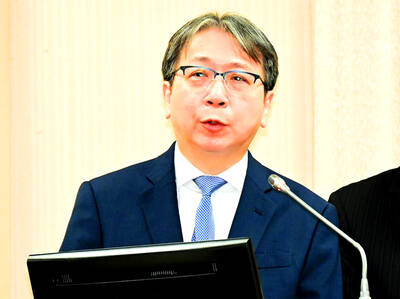
ON ALERT: Taiwan’s partners would issue warnings if China attempted to use Interpol to target Taiwanese, and the global body has mechanisms to prevent it, an official said China has stationed two to four people specializing in Taiwan affairs at its embassies in several democratic countries to monitor and harass Taiwanese, actions that the host nations would not tolerate, National Security Bureau (NSB) Director-General Tsai Ming-yen (蔡明彥) said yesterday. Tsai made the comments at a meeting of the legislature’s Foreign Affairs and National Defense Committee, which asked him and Minister of National Defense Wellington Koo (顧立雄) to report on potential conflicts in the Taiwan Strait and military preparedness. Democratic Progressive Party (DPP) Legislator Michelle Lin (林楚茵) expressed concern that Beijing has posted personnel from China’s Taiwan Affairs Office to its


 RSS
RSS