


The Executive Yuan yesterday unveiled a “new economy immigration” bill, which seeks to relax regulations on foreign professionals and attract “mid-level” foreign skilled workers.
As immigration laws are only concerned with hiring foreign professionals and migrant workers, the nation has very few mid-level skilled workers from abroad, National Development Council Minister Chen Mei-ling (陳美伶) told a weekly news conference at the Executive Yuan in Taipei.
There were about 210,000 fewer mid-level foreign workers than were needed last year, with the manufacturing industry experiencing the biggest shortfall, she said, citing government data.
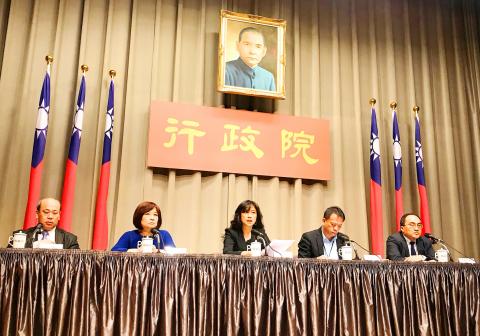
Photo: CNA
According to the bill, the category includes people with credentials to work as technicians or technical assistants, tradespeople, machine operators and personal healthcare professionals, in addition to other occupations to be defined by the government.
Eligible applicants would be required to fulfill at least one of three qualifications: Hold a high-school or equivalent degree, or have graduated from the Overseas Community Affairs Council’s Overseas Youth Vocational Training Workshop; have worked in Taiwan for at least six years as a migrant worker; or fulfill other government-defined criteria that would boost economic development, the bill says.
Salaries paid to such workers must not be lower than the 70th percentile of the average salary in the worker’s profession and applicants must have obtained necessary credentials issued by the central government or other recognized institutions to practice their chosen profession, the bill states.
The bill also proposes relaxing a rule that restricts permanent residency for foreign professionals and mid-level foreign skilled workers by allowing them to obtain permanent residency after they have lived in the nation for an average of at least 183 days per year within five consecutive years — instead of at least 183 days every year for at least five consecutive years.
Mid-level foreign workers’ spouses and children would be eligible to apply for permanent residency once the worker has fulfilled the aforementioned requirement, provided that the worker has passed financial or skill checks, the bill says.
Foreigners with permanent residency would be included in the government’s employment insurance plan, as well as its child-rearing and public kindergarten subsidy programs, it says.
Those who work in the private sector would be protected by the labor insurance system, while those working as public-school teachers would be able to claim their pensions on a monthly basis under the civil servant and teacher insurance system, the draft says.
Mid-level foreign skilled workers are not classified as blue collar or migrant workers, Chen said.
Such workers must be sourced based on the prerequisite that they would not affect the salary levels or employment chances of Taiwanese, she added.
This means that the total number of such workers, as well as the number allowed in each industry, would be subject to a quota, she said.
The bill also seeks to lift restrictions that require foreign employers to possess a certain amount of assets or make a certain amount of revenue, greatly relaxing rules on foreign businesses.
It also includes a rule on “resident investors,” which says that foreigners or overseas Taiwanese who do not have a household registration, but who have been granted residency due to the amount of their investments, could apply for permanent residency.
If passed, the act would integrate rules on immigrant investors and permanent residents, demonstrating the government’s resolve to strengthen the nation’s workforce and to synchronize it with the rest of the world, National Development Council Deputy Minister Kao Shien-quey (高仙桂) said.

Japan has deployed long-range missiles in a southwestern region near China, the Japanese defense minister said yesterday, at a time when ties with Beijing are at their lowest in recent years. The missiles were installed in Kumamoto in the southern region of Kyushu, as Japan is attempting to shore up its military capacity as China steps up naval activity in the East China Sea. “Standoff defense capabilities enable us to counter the threat of enemy forces attempting to invade our country ... while ensuring the safety of our personnel,” Japanese Minister of Defense Shinjiro Koizumi said. “This is an extremely important initiative for
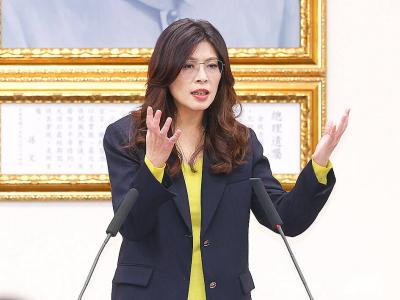
Chinese Nationalist Party (KMT) Chairwoman Cheng Li-wun (鄭麗文) today accepted an invitation from Chinese President Xi Jinping (習近平) to lead a delegation to China next month, saying she hopes to promote the peaceful development of cross-strait relations and bring stability to the Taiwan Strait. “I am grateful and happy to accept this invitation,” Cheng said in a statement from the KMT chairperson’s office. Cheng said she hopes both sides can work together to promote the peaceful development of cross-strait relations, enhance exchange and cooperation, bring stability to the Taiwan Strait and improve people’s livelihoods. At today's news conference, Cheng said any efforts to

MORE POPULAR: Taiwan Pass sales increased by 59 percent during the first quarter compared with the same period last year, the Tourism Administration said The Tourism Administration yesterday said that it has streamlined the Taiwan Pass, with two versions available for purchase beginning today. The tourism agency has made the pass available to international tourists since 2024, allowing them to access the high-speed rail, Taiwan Railway Corp services, four MRT systems and four Taiwan Tourist Shuttles. Previously, five types of Taiwan Pass were available, but some tourists have said that the offerings were too complicated. The agency said only two types of Taiwan Pass would be available, starting from a three-day pass with the high-speed rail and a three-day pass with Taiwan Railway Corp. The former costs NT$2,800

The nation’s fastest supercomputer, Nano 4 (晶創26), is scheduled to be launched in the third quarter, and would be used to train large language models in finance and national defense sectors, the National Center for High-Performance Computing (NCHC) said. The supercomputer, which would operate at about 86.05 petaflops, is being tested at a new cloud computing center in the Southern Taiwan Science Park in Tainan. The exterior of the server cabinet features chip circuitry patterns overlaid with a map of Taiwan, highlighting the nation’s central position in the semiconductor industry. The center also houses Taiwania 2, Taiwania 3, Forerunner 1 and


 RSS
RSS