


The US might ban laptops from aircraft cabins on all flights into and out of the country as part of a ramped-up effort to protect against potential security threats, US Secretary of Homeland Security John Kelly said on Sunday.
In an interview on Fox News Sunday, Kelly said the US planned to “raise the bar” on airline security, including tightening screening of carry-on items.
“That’s the thing that they are obsessed with, the terrorists, the idea of knocking down an airplane in flight, particularly if it’s a US carrier, particularly if it’s full of US people,” he said.
The US government in March imposed restrictions on large electronic devices in aircraft cabins on flights from 10 airports, including the United Arab Emirates, Qatar and Turkey.
Kelly said the move would be part of a broader airline security effort to combat what he called “a real sophisticated threat.”
He said no decision had been made as to the timing of any ban.
“We are still following the intelligence and are in the process of defining this, but we’re going to raise the bar generally speaking for aviation much higher than it is now,” he said.
Airlines are concerned that a broad ban on laptops may erode customer demand, but none wants an incident aboard one of its airplanes.
“Whatever comes out, we’ll have to comply with,” United Airlines chief executive Oscar Munoz told the company’s annual meeting last week.
Airlines were blindsided in January when US President Donald Trump issued an executive order banning entry for 90 days to citizens from Iraq, Syria, Iran, Libya, Somalia, Sudan and Yemen, sending airlines scrambling to determine who could board and who could not. The order was later blocked in the courts.
In the case of laptops, the administration is keeping the industry in the loop.
Delta Air Lines said in a statement it “continues to be in close contact with the US Department of Homeland Security,” while Munoz applauded the administration for giving the company a “heads up.”
“We’ve had constant updates on the subject,” he said. “We know more than most. And again, if there’s a credible threat out there, we need to make sure we take the appropriate measures.”
Among the enhanced security measures will likely be tighter screening of carry-on items to allow US Transport Security Administration (TSA) agents to discern problematic items in tightly stuffed bags.
Kelly said that to avoid paying fees for checking bags, people were stuffing them to the point where it was difficult to see through the clutter.
“The more stuff is in there, the less the TSA professionals that are looking at what’s in those bags through the monitors can tell what’s in them,” he said.
The TSA has begun testing certain new procedures at a limited number of airports, requiring people to remove additional items from carry-on bags for separate screenings.
Asked whether the government would expand such measures nationwide, Kelly said: “We might, and likely will.”

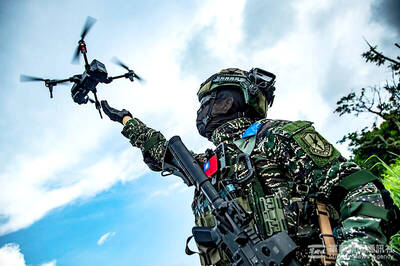
RESILIENCE: Taiwan plays a key role in semiconductors, energy, information infrastructure and advanced manufacturing, AIT Director Raymond Greene said Taiwan’s continued investment in deterrence and resilience remains vital, especially in uncrewed systems and other emerging technologies, American Institute in Taiwan (AIT) Director Raymond Greene said yesterday. Greene made the remarks at the annual National Strategic Summit on Supply Chain Resilience held by the Research Institute for Democracy, Society and Emerging Technology (DSET), a government-backed think tank. As Taiwan last year became the US’ fourth-largest trading partner and supply chain security is becoming more important, cooperation in emerging technologies continues to deepen between the two countries, he said. The US is committed to accelerating innovation, building key infrastructure, strengthening cooperation

The National Chungshan Institute of Science and Technology yesterday showcased its locally developed variants of the Vision 60 robotic patrol dog, which it plans to deploy on the nation’s outlying territories in the South China Sea. The variants were produced under the Joint Lab project — created by the institute and domestic companies — and assembled with domestically produced motors, lenses and artificial intelligence (AI) systems alongside licensed tech from the US, Missile and Rocket Systems Research Division deputy director Jen Kuo-kang (任國光) told the media event at a military base in Taipei’s Dazhi (大直) area. Taiwan has built up its strengths
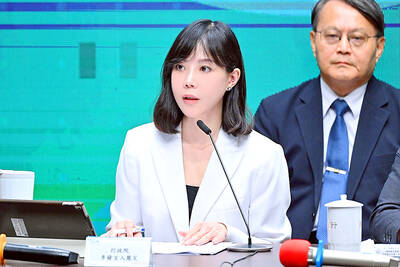
RIGHT DIRECTION: Taiwan’s efforts to prevent forced labor include a proposal to ‘fully prohibit’ employers from withholding workers’ documents, an official said Taiwan is to establish a mechanism to restrict imports of goods linked to forced labor, the Executive Yuan said yesterday, after the US proposed imposing additional tariffs on Taiwanese goods over labor concerns. “The Ministry of Labor and the Ministry of Economic Affairs are to establish an interministerial review procedure,” Executive Yuan spokesperson Michelle Lee (李慧芝) said at a news briefing in Taipei. “The government is to use the Foreign Trade Act [貿易法] as the legal basis to restrict imports of goods produced with forced labor” and bring its supply chain governance more in line with international standards on human rights, resilience
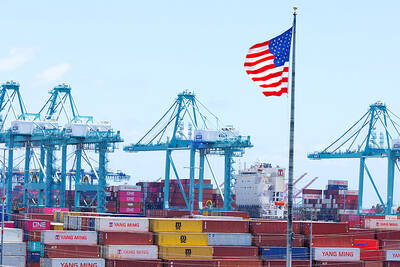
NOT IMMEDIATE: Taiwan has a chance to appeal the proposed 10 percent tariff before it starts, while other countries face a 12.5 percent tariff from the trade office Taiwan is among 60 economies determined by the US to have failed to impose or enforce a ban on the importation of goods produced with forced labor, according to a notice released on Tuesday by the Office of the US Trade Representative (USTR), which proposed imposing an additional 10 percent or more tariff on them. The USTR in a statement said that following an investigation, it had determined under Section 301 of the Trade Act of 1974 that the failure of the 60 economies to impose and effectively enforce a prohibition on the importation of goods produced with forced labor is


 RSS
RSS