


The medical community has ridiculed Chinese Nationalist Party (KMT) Legislator Lo Shu-lei’s (羅淑蕾) claim that independent Taipei mayoral candidate Ko Wen-je (柯文哲), dubbed the “father of extracorporeal membrane oxygenation” (ECMO) technology in Taiwan, does not know how to install the life-support equipment.
Lo made the claim in an episode of the Weekend News Hunter (週末新聞追追追) political talk show that aired on Saturday night, saying that Ko, the head of National Taiwan University Hospital’s (NTUH) Department of Traumatology, “does not perform surgeries and offer outpatient service, nor does he know how to install ECMOs.”
Lo’s claims were dismissed by Ko’s campaign spokesperson Billy Pan (潘建志), who said Ko has a license for ECMO installation.
“I also have a driver’s license. Does everyone who has a driver’s license necessarily know how to drive? I don’t think so. I am telling the truth, go ask any NTUH doctor,” Lo said.
Former NTUH physician Liu Lin-wei (柳林瑋) dismissed Lo’s remarks on Facebook late on Saturday, saying that it did not matter whether Ko knows how to install ECMOs because that is the job of the hospital’s department of cardiac surgery.
“[Media company] Watchout owns several Web sites, but as a manager of the company, I myself do not know how to write code for a site,” Liu said.
“Based on Lo’s theory, she may as well also take aim at the hospital’s superintendent [Huang Guan-tarn (黃冠棠)], a general physician who also does not perform surgery,” Liu said, adding that she could also ask former Taipei EasyCard Corp (悠遊卡股份有限公司) chairman Sean Lien (連勝文), the KMT’s Taipei mayoral candidate, whether he can make an EasyCard on his own.
Ko campaign advisor Hung Chi-kune (洪智坤) also rejected Lo’s comments.
“First, she accused Ko of selling ECMO machines [to China]. Now she said Ko is not capable of installing ECMOs. Is she going to tell us Ko does not even know how to use plastic wrap tomorrow?” Hung said.
Hung was referring to Lo’s remarks on the same show on Thursday last week, when she questioned Ko’s 18 visits to China and asked whether he was there to teach Chinese doctors how to install ECMOs or sell them the equipment.
When reached for comment, Ko, who introduced ECMO technology into Taiwan from the US in 1994, started by joking about whether Apple cofounder Steve Jobs knew how to assemble iPhones.
“If I do not know how to install an ECMO, from whom do you think those doctors who carried out the first ECMO operation in Taiwan learned the technology?” Ko said.
Ko said he had rarely performed ECMO on patients since he began leading the hospital’s ECMO team, adding that all his students had surpassed their teacher.
Additional reporting by Wu Chia-hsiang

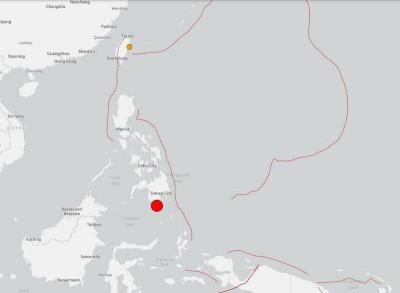
A magnitude 7.8 earthquake struck off the southern coast of Mindanao in the Philippines at 7:38am today, prompting the US Tsunami Warning System to issue an alert for neighboring countries, including Taiwan. The system issued a purple alert indicating a "tsunami threat." The potential threat zone includes Taiwan, the Philippines, Papua New Guinea, Yap and Palau. A spokesperson for Indonesia disaster mitigation agency said there were no reports of damage so far. Arlene Hollero, disaster chief of Maasim town in the Philippines' Sarangani Province, said their evacuation was underway in coastal villages and there were no reported casualties so far. DZBB radio, broadcasting from the
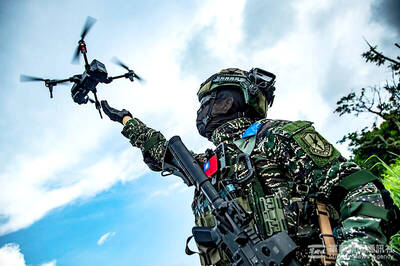
RESILIENCE: Taiwan plays a key role in semiconductors, energy, information infrastructure and advanced manufacturing, AIT Director Raymond Greene said Taiwan’s continued investment in deterrence and resilience remains vital, especially in uncrewed systems and other emerging technologies, American Institute in Taiwan (AIT) Director Raymond Greene said yesterday. Greene made the remarks at the annual National Strategic Summit on Supply Chain Resilience held by the Research Institute for Democracy, Society and Emerging Technology (DSET), a government-backed think tank. As Taiwan last year became the US’ fourth-largest trading partner and supply chain security is becoming more important, cooperation in emerging technologies continues to deepen between the two countries, he said. The US is committed to accelerating innovation, building key infrastructure, strengthening cooperation

The National Chungshan Institute of Science and Technology yesterday showcased its locally developed variants of the Vision 60 robotic patrol dog, which it plans to deploy on the nation’s outlying territories in the South China Sea. The variants were produced under the Joint Lab project — created by the institute and domestic companies — and assembled with domestically produced motors, lenses and artificial intelligence (AI) systems alongside licensed tech from the US, Missile and Rocket Systems Research Division deputy director Jen Kuo-kang (任國光) told the media event at a military base in Taipei’s Dazhi (大直) area. Taiwan has built up its strengths
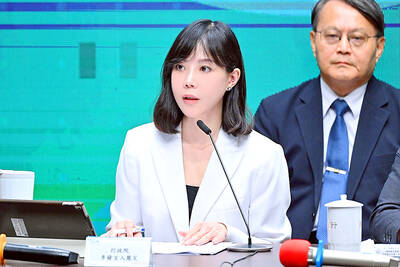
RIGHT DIRECTION: Taiwan’s efforts to prevent forced labor include a proposal to ‘fully prohibit’ employers from withholding workers’ documents, an official said Taiwan is to establish a mechanism to restrict imports of goods linked to forced labor, the Executive Yuan said yesterday, after the US proposed imposing additional tariffs on Taiwanese goods over labor concerns. “The Ministry of Labor and the Ministry of Economic Affairs are to establish an interministerial review procedure,” Executive Yuan spokesperson Michelle Lee (李慧芝) said at a news briefing in Taipei. “The government is to use the Foreign Trade Act [貿易法] as the legal basis to restrict imports of goods produced with forced labor” and bring its supply chain governance more in line with international standards on human rights, resilience


 RSS
RSS