


Australian authorities have seized A$180 million (US$162 million) of methamphetamine stashed in a consignment of kayaks from China and arrested four Taiwanese, police said yesterday.
The 183kg haul was discovered during a joint Australian Federal Police and Customs and Border Protection Service operation at Sydney’s container port.
Border officers selected a container from China for X-ray inspection which revealed that 19 of the 27 kayaks contained packages of methamphetamine, or crystal meth.
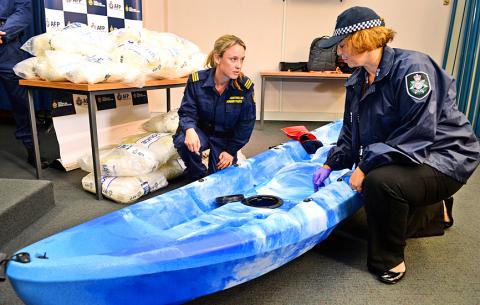
Photo: AFP
Police then conducted a controlled delivery of the container to a storage facility in Sydney, before arresting three men and one woman — all Taiwanese — on Tuesday after they allegedly went to pick up the drugs.
A fifth person, an Australian, was arrested at his home.
“This is a great example of authorities working together to identify and disrupt criminals who are seeking to import drugs into Australia,” Sydney Federal Police Chief Commander Ray Johnson said. “The police and its partner agencies will continue to stop these harmful drugs from reaching our streets, and affecting our neighborhoods and communities.”
Australian Customs and Border Protection Service Director Tim Fitzgerald said that in the past 14 months officials had seized more than 1,000kg of meth in liquid and crystal form, with a significant amount of it coming from China.
David Alton, 32, and Taiwanese woman, Lin Chieh-wei, 28, were each charged with one count of attempting to import a commercial quantity of a border-controlled drug.
The other three Taiwanese — Kuo Chien-chih, 21, Shih Meng-chih, 30 and Zhao Xiung, 35 — were charged with one count each of possessing a commercial quantity of a border-controlled drug.
All five were refused bail when they appeared in a Sydney court yesterday.
They face a maximum penalty of life in jail if convicted.

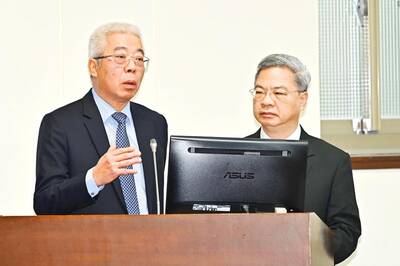
Taiwan has arranged for about 8 million barrels of crude oil, or about one-third of its monthly needs, to be shipped from the Red Sea this month to bypass the Strait of Hormuz and ease domestic supply pressures, CPC Corp, Taiwan (CPC, 台灣中油) said yesterday. The state-run oil company has worked with Middle Eastern suppliers to secure routes other than the Strait of Hormuz, through which about 20 percent of the world’s oil and liquefied natural gas typically passes, CPC chairman Fang Jeng-zen (方振仁) said at a meeting of the legislature’s Economics Committee in Taipei. Suppliers in Saudi Arabia have indicated they
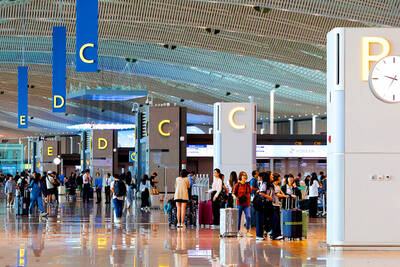
South Korea has adjusted its electronic arrival card system to no longer list Taiwan as a part of China, a move that the Ministry of Foreign Affairs said would help facilitate exchanges between the two sides. South Korea previously listed “Taiwan” as “Taiwan (China)” in the drop-down menus of its online arrival card system, where people had to fill out where they came from and their next destination. The ministry had requested South Korea make a revision and said it would change South Korea’s name on Taiwan’s online immigration system from “Republic of Korea” to “Korea (South),” should the issue not be

Tainan, Taipei and New Taipei City recorded the highest fines nationwide for illegal accommodations in the first quarter of this year, with fines issued in the three cities each exceeding NT$7 million (US$220,639), Tourism Administration data showed. Among them, Taipei had the highest number of illegal short-term rental units, with 410. There were 3,280 legally registered hotels nationwide in the first quarter, down by 14 properties, or 0.43 percent, from a year earlier, likely indicating operators exiting the market, the agency said. However, the number of unregistered properties rose to 1,174, including 314 illegal hotels and 860 illegal short-term rental
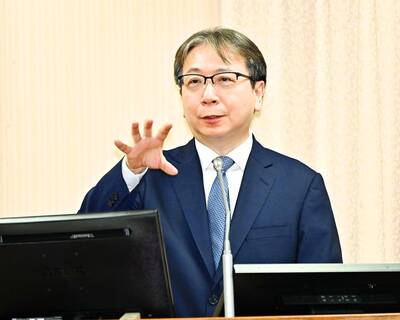
AIR ALERT: China’s reservation of airspace over the Yellow Sea and East China Sea could be an attempt to test the US’ response ahead of a Trump-Xi meeting, the NSB head said China’s attempts to infiltrate Taiwan are systematic, planned and targeted, with activity shifting from recruiting mid-level military officers to rank-and-file enlisted personnel, National Security Bureau (NSB) Director-General Tsai Ming-yen (蔡明彥) said yesterday. The Chinese Communist Party’s (CCP) integrates national security, intelligence operations and “united front” efforts into a dense network to conduct intelligence gathering and espionage in Taiwan, Tsai said at a meeting of the legislature’s Foreign Affairs and National Defense Committee. It uses specific networks to screen targets through exchange activities and recruiting local collaborators to establish intelligence-gathering organizations, he said. China is also shifting who it targets to lower-ranking military personnel,


 RSS
RSS