


Amid recent disputes over President Ma Ying-jeou’s (馬英九) re-election bid as Chinese Nationalist Party (KMT) chairman, some KMT Central Standing Committee members called for united party support for Ma, while urging the Ministry of the Interior to explain related regulations to clarify the issue.
KMT Central Standing Committee member Yao Chiang-lin (姚江臨) said the party is undergoing a reform under Ma’s leadership and his doubling as chairman also met with the “party-state” principles that the KMT has always followed, with former president Lee Teng-hui (李登輝) serving as the party’s chairman for 12 years.
“We should not obstruct President Ma’s reforms of the KMT and such reforms would be better carried out if the president also serves as KMT chairman,” he said.
Yao said the party’s regulations, which state that the party chairman can be re-elected only once, should be more comprehensive, but declined to comment on whether the KMT should revise the regulations in the wake of the disputes over Ma’s situation.
Ma was elected KMT chairman in 2005, but resigned in 2007 when he was embroiled in a corruption case for allegedly misusing his special allowance fund during his tenure as Taipei mayor.
The post was taken over by Wu Poh-hsiung (吳伯雄), who had served as acting chairman and was later elected in a by-election in 2007 to complete the term until 2009, when Ma was found not guilty of graft and was re-elected as party chairman.
The KMT has defended Ma for seeking re-election and denied it had attempted to revise party regulations for Ma.
KMT spokesman Yin Wei (殷瑋) cited party regulations and said that the party chairman can be consecutively re-elected once.
Because Wu was elected as party chairman in 2007, and Ma was elected in 2009, the president’s re-election bid did not violate the regulations, because he is seeking to serve two terms consecutively, Yin added.
KMT Central Standing Committee member Lee Te-wei (李德維) said the party should ask the ministry to explain related regulations, including the Civil Associations Act (人民團體法) and the Local Government Act (地方制度法), to clarify the dispute.
KMT Legislator Alex Tsai (蔡正元), who last week challenged the legitimacy of Ma seeking a second term as chairman, yesterday denied that Legislative Speaker Wang Jin-pyng (王金平) was behind the latest anti-Ma campaign within the KMT.
He insisted that Ma’s attempt to seek the party chairmanship for a third time could be in violation of the law and that the legal questions should be handled in a serious manner.
“Political parties’ explanations of the issue will not resolve the legal issue and it’s not right to erase the problem with political tactics. The KMT would face big trouble in the future if any individual filed a lawsuit to nullify the election,” he said yesterday on his Facebook page.
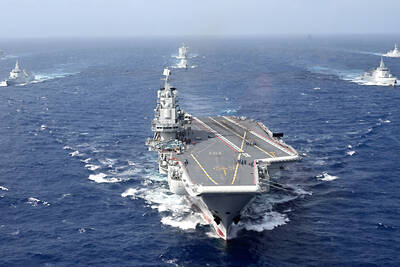
PROVOCATIVE: Chinese Deputy Ambassador to the UN Sun Lei accused Japan of sending military vessels to deliberately provoke tensions in the Taiwan Strait China denounced remarks by Japan and the EU about the South China Sea at a UN Security Council meeting on Monday, and accused Tokyo of provocative behavior in the Taiwan Strait and planning military expansion. Ayano Kunimitsu, a Japanese vice foreign minister, told the Council meeting on maritime security that Tokyo was seriously concerned about the situation in the East China and South China seas, and reiterated Japan’s opposition to any attempt to change the “status quo” by force, and obstruction of freedom of navigation and overflight. Stavros Lambrinidis, head of the EU delegation to the UN, also highlighted South China Sea
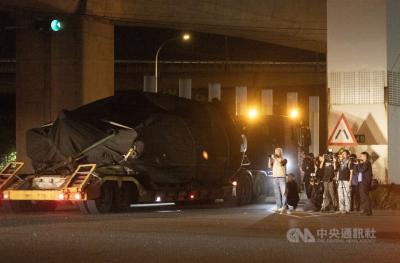
The final batch of 28 M1A2T Abrams tanks purchased from the US arrived at Taipei Port last night and were transported to the Armor Training Command in Hsinchu County’s Hukou Township (湖口), completing the military’s multi-year procurement of 108 of the tanks. Starting at 12:10am today, reporters observed more than a dozen civilian flatbed trailers departing from Taipei Port, each carrying an M1A2T tank covered with black waterproof tarps. Escorted by military vehicles, the convoy traveled via the West Coast Expressway to the Armor Training Command, with police implementing traffic control. The army operates about 1,000 tanks, including CM-11 Brave Tiger
Taiwan Semiconductor Manufacturing Co (TSMC, 台積電), the world’s largest contract chipmaker, said it expects its 2-nanometer (2nm) chip capacity to grow at a compound annual rate of 70 percent from this year to 2028. The projection comes as five fabs begin volume production of 2-nanometer chips this year — two in Hsinchu and three in Kaohsiung — TSMC senior vice president and deputy cochief operating officer Cliff Hou (侯永清) said at the company’s annual technology symposium in Silicon Valley, California, last week. Output in the first year of 2-nanometer production, which began in the fourth quarter of last year, is expected to
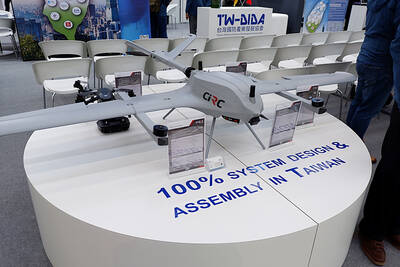
Taiwan’s drone exports surged past US$100 million in the first quarter, exceeding last year’s full-year total, with the Czech Republic emerging as the largest buyer, the Ministry of Economic Affairs said. Exports of complete drones reached US$115.85 million in the period, about 1.2 times the total recorded for all of last year, the ministry said in a report. Exports to the Czech Republic accounted for about US$100 million, far outpacing other markets. Poland, last year’s top destination, recorded about US$11.75 million in the first quarter. Taiwan’s drone exports have expanded rapidly in the past few years, with last year’s total


 RSS
RSS