


King Car Industrial Co (金車) asked stores to pull eight products from shelves yesterday after it commissioned tests that showed the products contained the toxic chemical melamine, prompting the Department of Health to call for tests on products from China not containing animal protein.
The Department of Health also ordered a recall of the products after King Car informed officials that seven of its instant coffee products and one instant soup mix tested positive for the chemical that has sickened thousands of babies in China. All the recalled products were powder or granule products in individual packages.
“[The eight King Car products] have tested positive for melamine [in tests conducted] by the Food Industry Research and Development Institute [FIRDI],” Deputy Health Minister Sung Yen-jen (宋晏仁) said.
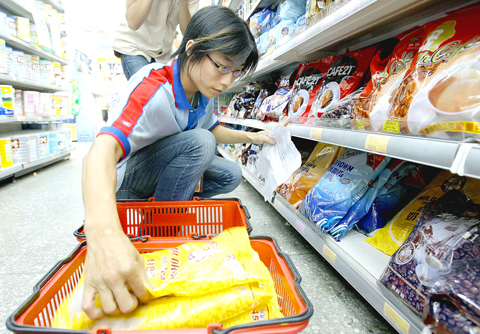
PHOTO: CNA
On Wednesday, the health department ordered 18 companies that import dairy products from China to have their products tested for melamine. The department prohibited sales of these products until the companies could provide evidence that their products were safe.
Although the department did not target companies selling products that contain plant protein rather than animal protein, King Car had all of its products tested by the FIRDI on Friday to ensure they were safe for consumption.
Until then, the fears sparked by Chinese milk powder had only involved products containing animal protein, such as baby formula and milk powder. However, department officials told reporters yesterday that the results of the King Car tests showed products containing plant protein, such as non-dairy creamers, can also be contaminated.
King Car spokesperson Ma Ming-hao (馬明皓) told a press conference yesterday that King Car used powdered non-dairy creamer from China in some of its products because it ensures a “stable supply of raw materials.”
King Car is recalling all 120,000 cases of the contaminated products, he said.
“We estimate about 95 percent will be retrieved within one week. We hope to have retrieved 75 percent within three days,” he said.
King Car vice manager Lee Yu-ting (李玉鼎) and Ma bowed in a show of apology to consumers.
The contaminated products include Mr Brown Blue Mountain Blend Coffee, Mr Brown Mandheling Blend Coffee and Mr Brown French Vanilla Coffee.
The company’s canned coffee beverages tested negative for melamine, the company said.
The tainted powdered non-dairy creamer was purchased from China’s Zhongshi Duqing (Shandong) Biotech Co in December. The powder was used in instant coffee products manufactured between Apr. 9 and Sep. 12, meaning that part of the powder has likely been consumed by customers, said Wu Yi-ling (吳怡玲), chief of the company’s Research and Development Division.
The US Food and Drug Administration says the tolerable daily intake (TDI) of melamine is 0.63mg per 1kg of body weight. This means that an adult weighing 60kg has a TDI of two to four cups of the tainted instant coffee or one package of instant corn chowder.
The department called on companies that imported products with plant protein to have them tested for melamine.
It also announced that it would prohibit all imports of milk powder, dairy products and products containing plant protein from China until matters have been cleared up.
Consumers who have bought the contaminated King Car products can receive a full money refund through the King Car Web site at www.kingcar.com.tw.
Also See: Milk scandal spreads to Hong Kong
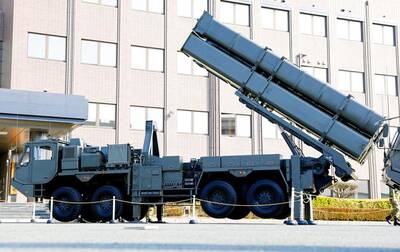
Japan has deployed long-range missiles in a southwestern region near China, the Japanese defense minister said yesterday, at a time when ties with Beijing are at their lowest in recent years. The missiles were installed in Kumamoto in the southern region of Kyushu, as Japan is attempting to shore up its military capacity as China steps up naval activity in the East China Sea. “Standoff defense capabilities enable us to counter the threat of enemy forces attempting to invade our country ... while ensuring the safety of our personnel,” Japanese Minister of Defense Shinjiro Koizumi said. “This is an extremely important initiative for
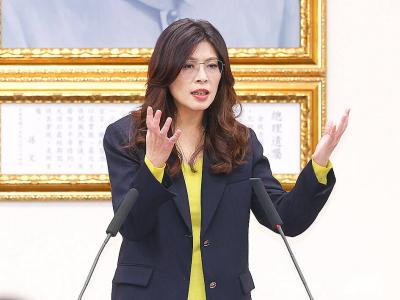
Chinese Nationalist Party (KMT) Chairwoman Cheng Li-wun (鄭麗文) today accepted an invitation from Chinese President Xi Jinping (習近平) to lead a delegation to China next month, saying she hopes to promote the peaceful development of cross-strait relations and bring stability to the Taiwan Strait. “I am grateful and happy to accept this invitation,” Cheng said in a statement from the KMT chairperson’s office. Cheng said she hopes both sides can work together to promote the peaceful development of cross-strait relations, enhance exchange and cooperation, bring stability to the Taiwan Strait and improve people’s livelihoods. At today's news conference, Cheng said any efforts to
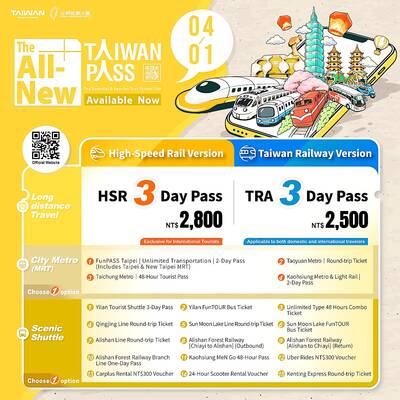
MORE POPULAR: Taiwan Pass sales increased by 59 percent during the first quarter compared with the same period last year, the Tourism Administration said The Tourism Administration yesterday said that it has streamlined the Taiwan Pass, with two versions available for purchase beginning today. The tourism agency has made the pass available to international tourists since 2024, allowing them to access the high-speed rail, Taiwan Railway Corp services, four MRT systems and four Taiwan Tourist Shuttles. Previously, five types of Taiwan Pass were available, but some tourists have said that the offerings were too complicated. The agency said only two types of Taiwan Pass would be available, starting from a three-day pass with the high-speed rail and a three-day pass with Taiwan Railway Corp. The former costs NT$2,800
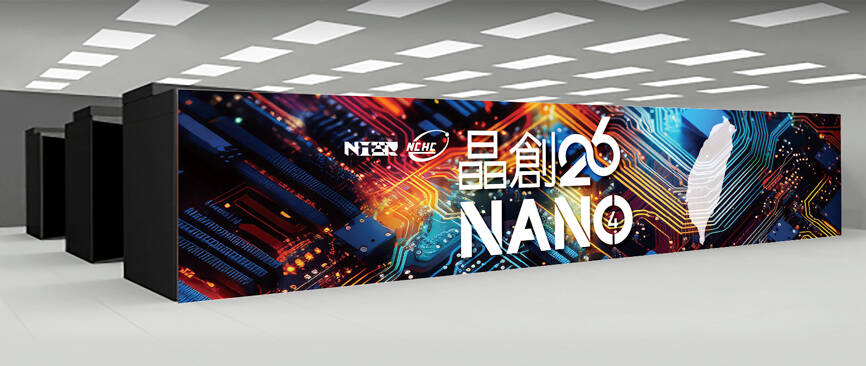
The nation’s fastest supercomputer, Nano 4 (晶創26), is scheduled to be launched in the third quarter, and would be used to train large language models in finance and national defense sectors, the National Center for High-Performance Computing (NCHC) said. The supercomputer, which would operate at about 86.05 petaflops, is being tested at a new cloud computing center in the Southern Taiwan Science Park in Tainan. The exterior of the server cabinet features chip circuitry patterns overlaid with a map of Taiwan, highlighting the nation’s central position in the semiconductor industry. The center also houses Taiwania 2, Taiwania 3, Forerunner 1 and


 RSS
RSS