


Two soldiers died yesterday after their army helicopter crashed into a building in Lungtan Township (龍潭), Taoyuan County, Ministry of National Defense officials said.
The AH-1W Super Cobra helicopter hit a four-story building before falling to the street below at 10:11am.
Pilot Lieutenant Colonel Yu Chien-wen (喻建文), 41, and copilot Captain Lee Huang-yu (李黃宇), 27, were both trapped in the cabin of the helicopter.
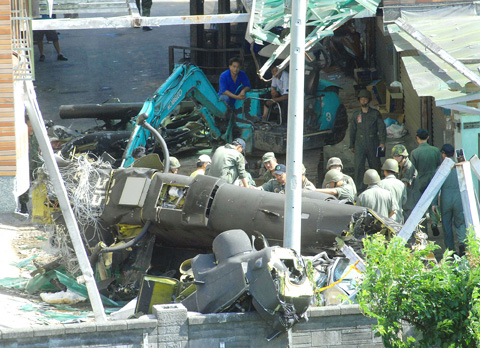
PHOTO: AFP
They were removed from the wreckage and taken to Taoyuan Armed Forces General Hospital after rescuers used hydraulic equipment to pry open the cabin.
An army press statement said the helicopter took off at 9:38am from its base in Lungtan to perform a routine training mission around the Lungtan and Pingchen Township (平鎮) area.
At 10:10am, the helicopter asked the control tower for permission to land, but one minute later it crashed into the residential building.
The statement said the helicopter did not issue an emergency call before it crashed.
The army has launched an investigation into the incident.
The helicopter had been in service for 14 years.
Chief of the General Staff General Huo Shou-yeh (霍守業) told reporters at the hospital yesterday afternoon that Yu was an outstanding and experienced pilot, adding that according to witnesses, the crew had tried to pull up so that the chopper would not hit the building, and they had done their best.
Huo said Yu had 1,792 hours of flight experience, while Lee had completed 450 hours.
“We regret that we lost two outstanding pilots,” Huo added.
The AH-1W helicopter team was established in 1993.
Yesterday’s incident marked the third accident involving members of the helicopter team.
The armed forces has 61 AH-1W helicopters, which were procured from the US.
The army also said that it would compensate the owner of the building for losses resulting from the damage.
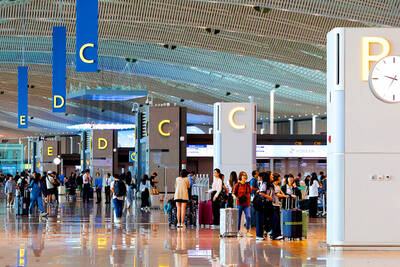
South Korea has adjusted its electronic arrival card system to no longer list Taiwan as a part of China, a move that the Ministry of Foreign Affairs said would help facilitate exchanges between the two sides. South Korea previously listed “Taiwan” as “Taiwan (China)” in the drop-down menus of its online arrival card system, where people had to fill out where they came from and their next destination. The ministry had requested South Korea make a revision and said it would change South Korea’s name on Taiwan’s online immigration system from “Republic of Korea” to “Korea (South),” should the issue not be

Tainan, Taipei and New Taipei City recorded the highest fines nationwide for illegal accommodations in the first quarter of this year, with fines issued in the three cities each exceeding NT$7 million (US$220,639), Tourism Administration data showed. Among them, Taipei had the highest number of illegal short-term rental units, with 410. There were 3,280 legally registered hotels nationwide in the first quarter, down by 14 properties, or 0.43 percent, from a year earlier, likely indicating operators exiting the market, the agency said. However, the number of unregistered properties rose to 1,174, including 314 illegal hotels and 860 illegal short-term rental
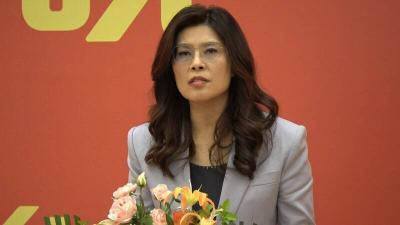
Both sides of the Taiwan Strait share a political foundation based on the “1992 consensus” and opposition to Taiwanese independence, Chinese Nationalist Party (KMT) Chairwoman Cheng Li-wun (鄭麗文) today said during her meeting with Chinese President Xi Jinping (習近平). Both sides of the Strait should plan and build institutionalized and sustainable mechanisms for dialogue and cooperation based on that foundation to make peaceful development across the Strait irreversible, she said. Peace is a shared moral value across the Strait, and both sides should move beyond political confrontation to seek institutionalized solutions to prevent war, she said. Mutually beneficial cross-strait relations are what the
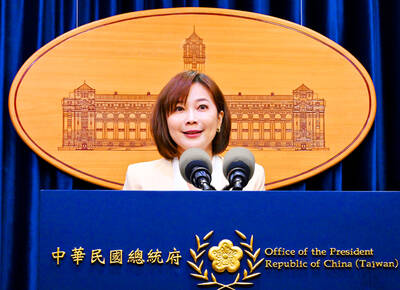
ECONOMIC COERCION: Such actions are often inconsistently applied, sometimes resumed, and sometimes just halted, the Presidential Office spokeswoman said The government backs healthy and orderly cross-strait exchanges, but such arrangements should not be made with political conditions attached and never be used as leverage for political maneuvering or partisan agendas, Presidential Office spokeswoman Karen Kuo (郭雅慧) said yesterday. Kuo made the remarks after China earlier in the day announced 10 new “incentive measures” for Taiwan, following a landmark meeting between Chinese President Xi Jinping (習近平) and Chinese Nationalist Party (KMT) Chairwoman Cheng Li-wun (鄭麗文) in Beijing on Friday. The measures, unveiled by China’s Xinhua news agency, include plans to resume individual travel by residents of Shanghai and China’s Fujian


 RSS
RSS