


A US aircraft carrier group sailed through the Taiwan Strait after it was denied entry to Hong Kong last week, the US Navy said on Thursday.
The USS Kitty Hawk and eight accompanying ships passed through the Taiwan Strait on their way back to Japan after China barred the carrier group from entering Hong Kong for a long-planned visit, a spokesman for the US Pacific Command in Hawaii said.
"USS Kitty Hawk carrier strike group has transited the Taiwan Strait," Navy spokesman Shane Tuck said. "This was a normal navigational transit of international waters, and the route selection was based on operational necessity, including adverse weather."
Ministry of National Defense (MND) spokesman Major General Yu Sy-tue (虞思祖) yesterday declined to comment on the subject.
Taiwanese military officers who spoke on condition of anonymity said that Taiwanese waters are limited to 12 nautical miles (22km) off the coast and that the area beyond is considered international waters.
Taiwan respects the right of any foreign vessel to sail through the Taiwan Strait as long as they are in international waters and pose no threat to Taiwan, they said.
Meanwhile, Washington officials appeared befuddled on Thursday over whether China's refusal to let the Kitty Hawk into Hong Kong for Thanksgiving was a "misunderstanding" or a deliberate act of protest over the Bush administration's Taiwan arms sales policy and relations with the Dalai Lama.
The administration was seeking a clarification of contradictory statements by Chinese foreign policy officials over the flap, while at the same time emphasizing that US-Chinese relations remained strong despite the incident, which some analysts are referring to as the biggest US-China military crisis since the forced landing of a US E-P3 reconnaissance aircraft following a collision with a Chinese fighter jet near Hainan Island in 2001.
On Nov. 20, only days before the Kitty Hawk was denied entry, Beijing -- which has direct authority over Hong Kong's military affairs -- refused permission for the minesweepers USS Patriot and USS Guardian to enter Hong Kong to refuel and to avoid a storm.
On Thursday the White House and the Pentagon were seeking explanations from China as to why the Kitty Hawk and its combat group were denied entry.
White House spokesman Dana Perino told reporters on Wednesday that Chinese Foreign Minister Yang Jiechi (楊潔箎) told US President George W. Bush during their meeting in the Oval Office that the flap was simply a "misunderstanding."
However, she admitted that she was not at the meeting.
"I was not able to be there, but that's the readout that I have for you, and that's the explanation that was given to the president," Perino said.
The next day, however, Chinese Foreign Ministry spokesman Liu Jianchao (
Despite the White House's earlier explanation, the Pentagon issued a formal protest to China over the incident, with Deputy Assistant Defense Secretary for East Asia David Sedney summoning China's defense attache in Washington, Zhao Ning (趙寧), to deliver the complaint.
On Thursday, Perino expressed surprise over the Chinese Foreign Ministry statement.
"Yesterday," she told reporters, "we were told there was a miscommunication. Today there are reports in the press that someone in the defense ministry is saying it had to do with other reasons."
"So we are asking for a clarification on that matter," she said.
The State Department had nothing to add to Perino's comments, saying that the White House was in charge of the matter.
Asked how the White House would say one thing and the Chinese Foreign Ministry something else, State Department spokesman Sean McCormack said: "I would assume that the White House said that [it was a misunderstanding] because that's what they heard, and if there's any reports to the contrary coming out of the Chinese Foreign Ministry, that they're seeking clarification about those subsequent comments that have come out of the Foreign Ministry. And I know that the White House is handling that."
Chinese officials were said to have made inconsistent statements over whether the Kitty Hawk snub was related to the Pentagon's recent announcement of plans to sell nearly US$1 billion in advanced ground support equipment for Taiwan's Patriot II anti-missile batteries and Bush's unprecedented appearance next to the Dalai Lama during a congressional award ceremony for the Tibetan spiritual leader.
Liu was reported to have linked the Kitty Hawk incident to both Taiwan and Tibet, while other reports stressed one or the other as the main offender.
Perino downplayed any damage to US-China relations that the Kitty Hawk incident may have caused.
"I think the president believes we have good relations with China, we work cooperatively with China on so many different issues," Perino said. "This is one small incident. And in the big picture, in the big scheme of things, we have very good relations," she said.
"So we've asked for the clarification and I think that we'll get it, and then we'll be able to move beyond this," Perino said.
Additional reporting by CNA
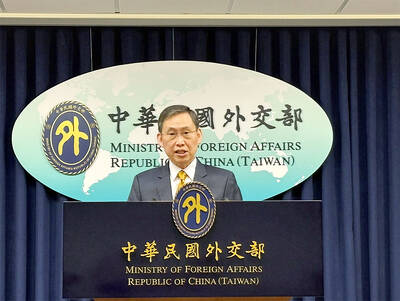
A Ministry of Foreign Affairs official yesterday said that a delegation that visited China for an APEC meeting did not receive any kind of treatment that downgraded Taiwan’s sovereignty. Department of International Organizations Director-General Jonathan Sun (孫儉元) said that he and a group of ministry officials visited Shenzhen, China, to attend the APEC Informal Senior Officials’ Meeting last month. The trip went “smoothly and safely” for all Taiwanese delegates, as the Chinese side arranged the trip in accordance with long-standing practices, Sun said at the ministry’s weekly briefing. The Taiwanese group did not encounter any political suppression, he said. Sun made the remarks when
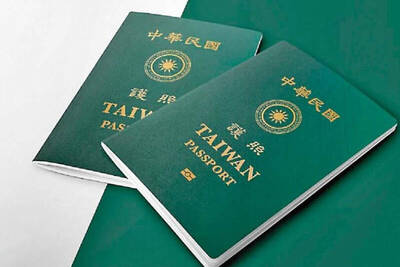
The Taiwanese passport ranked 33rd in a global listing of passports by convenience this month, rising three places from last month’s ranking, but matching its position in January last year. The Henley Passport Index, an international ranking of passports by the number of designations its holder can travel to without a visa, showed that the Taiwan passport enables holders to travel to 139 countries and territories without a visa. Singapore’s passport was ranked the most powerful with visa-free access to 192 destinations out of 227, according to the index published on Tuesday by UK-based migration investment consultancy firm Henley and Partners. Japan’s and
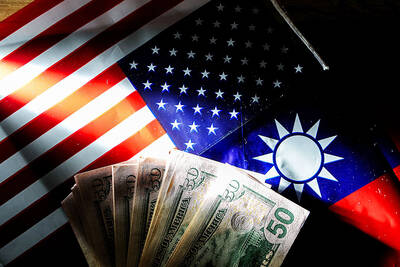
BROAD AGREEMENT: The two are nearing a trade deal to reduce Taiwan’s tariff to 15% and a commitment for TSMC to build five more fabs, a ‘New York Times’ report said Taiwan and the US have reached a broad consensus on a trade deal, the Executive Yuan’s Office of Trade Negotiations said yesterday, after a report said that Washington is set to reduce Taiwan’s tariff rate to 15 percent. The New York Times on Monday reported that the two nations are nearing a trade deal to reduce Taiwan’s tariff rate to 15 percent and commit Taiwan Semiconductor Manufacturing Co (TSMC, 台積電) to building at least five more facilities in the US. “The agreement, which has been under negotiation for months, is being legally scrubbed and could be announced this month,” the paper said,
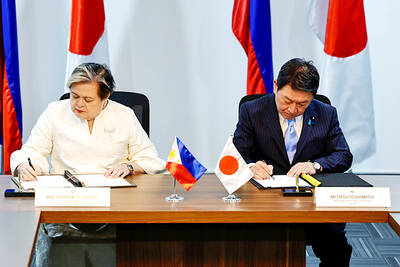
Japan and the Philippines yesterday signed a defense pact that would allow the tax-free provision of ammunition, fuel, food and other necessities when their forces stage joint training to boost deterrence against China’s growing aggression in the region and to bolster their preparation for natural disasters. Japan has faced increasing political, trade and security tensions with China, which was angered by Japanese Prime Minister Sanae Takaichi’s remark that a Chinese attack on Taiwan would be a survival-threatening situation for Japan, triggering a military response. Japan and the Philippines have also had separate territorial conflicts with Beijing in the East and South China


 RSS
RSS