


Until a fortnight ago, former hotel worker Jeff Lin Hai Wah had never even tasted a cup of filtered coffee.
The 23-year-old will soon be serving up tall skinny lattes and other speciality coffee varieties to customers in his new job at the first branch of Starbucks in the sprawling city of Guangzhou in southern China.
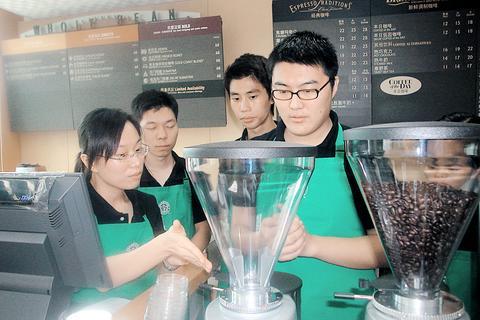
PHOTO: DPA
"I'll be pretty nervous, especially serving coffee to expatriates and tourists who have been drinking coffee all their lives," he said. "When I grew up, we only ever had tea in the house. It wasn't until two or three years ago that I had my first cup of instant coffee."
Seattle-based Starbucks is one of three Western coffee chains opening or preparing to open shops in the sprawling city of Guangzhou, where for centuries tea has been the drink of choice.
There are more than 100 of branches of Starbucks in Hong Kong, Beijing and Shanghai, but now coffee shops are branching out for the first time into China's less cosmopolitan hinterland, with the southern center of Guangzhou their first target.
The main rival to Starbucks in Hong Kong, the Hong Kong-Singapore Pacific Coffee chain, is also seeking a partner to open its first Guangzhou branch.
Ironically, however, an outsider without a foothold in Hong Kong or the mainland has beaten them by opening Guangzhou's first western-style coffee house.
Canadian chain Blenz -- which has 29 outlets in British Columbia and four in Japan -- has just opened the doors on an outlet at the base of the high-rise Citic Plaza shopping and office block.
The outlet is already doing brisk business among office workers with prices ranging from 9 yuan (about US$1) for a fresh coffee to 28 yuan (US$3.40) for a grand cafe mocca -- while local cafes nearby charge as little as 1 yuan for a cup of green tea and 3 yuan for a set lunch.
The coffee shop chains believe the growing affluence in southern China's key city of Guangzhou will provide the potential to follow in the footsteps of Beijing, Shanghai and Hong Kong.
Ernest Luk, vice president of Starbucks Coffee Asia Pacific, said, "There will be other companies that will go into the China market and into Guangzhou but I see that competition as healthy.
"Guangzhou is, as China as a whole, a tea-drinking country. Coffee culture isn't very strong. By having multiple competition, we will see the market grow faster," Luk said.
"Looking at our customers in Shanghai and Beijing, the first people who come to us are the younger crowd -- younger professional workers who were maybe exposed to our brand when they were educated overseas."
Starbucks prices will be 10 to 15 percent lower in Guangzhou than in Hong Kong but still hugely more expensive than other corner cafes and tea shops around the city.
Angela Chou, marketing manager for Starbucks Hong Kong's joint venture Coffee Concepts, said she did not believe the relatively high prices would put customers off. "We see our product as an affordable luxury," she said.
Pacific Coffee's chief operating officer Rob Naylor agreed that Guangzhou was ready to embrace coffee shops, saying, "We would like to be there and we are actively looking and talking about it."
Naylor said he believed Guangzhou had enormous potential and said he expected to see a number of overseas chains move into the city in the months ahead.
"Once it gets going and people understand what coffee culture is, the market grows rapidly," he said. "It becomes part of peoples' lifestyle choices. Its not just about coffee. It is about the experience," he said.
"The Guangzhou market is developing so rapidly. Five years ago you could say it was 50 years behind Hong Kong. Now maybe its 25 years. Who knows where well be in another year's time?"
Meanwhile, the last-minute training continues for Guangzhou Starbucks recruits, with trainees watching a subtitled video in which a top Seattle executive extols trainees to put their passion into making the perfect expresso, telling them, "You are an artist."
Karen Cheung Po Shan, 28, who was sent from Hong Kong to train the Guangzhou staff, said employees took little time getting a taste for drinking coffee, even after a lifetime of drinking tea.
Their expression when they first try it is funny to watch, she said. At first they complain it is too strong, but they gradually get used to it. Karen and her bosses at Starbucks are banking on the hope that the tea drinkers of Guangzhou will react in much the same way.


Taiwan’s English education system is being pulled apart by three opposing forces. Bilingual Nation 2030 pulls students toward English and global communication. Artificial Intelligence (AI) readiness pulls them toward digital judgment, verification and AI-mediated work. But Taiwan’s old exam culture pulls them back toward memorization, grammar drills, timed reading and correct answers. If the education system keeps using old exams to define success, it risks producing graduates who are neither genuinely bilingual nor genuinely AI-ready, but trained for tasks machines can already perform. The first force is Bilingual Nation 2030. Launched in 2018, the policy aimed to “help Taiwan’s workforce connect

“Taiwan’s Opposition Leader Comes to US With a Message Straight Out of Beijing” read a May 31 headline in the Wall Street Journal. Top US administration officials and members of Congress almost certainly read the WSJ, and if there was a bullet point takeaway that people in Washington should absorb ahead of Chinese Nationalist Party (KMT) Chair Cheng Li-wun’s (鄭麗文) arrival in DC on June 9, that headline is it. The last few columns have discussed this very topic, and the timing is not coincidental. While those top officials likely do not read the Taipei Times, judging by the number
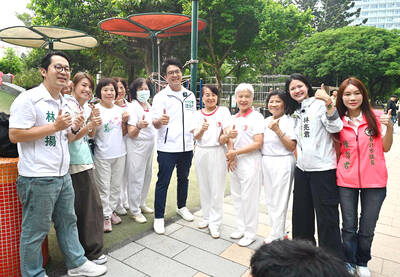
With weighty, anxiety-inducing geopolitical topics dominating the headlines, checking in on the wild and weird state of local politics can take some of the edge off. This November’s elections will determine who will be in charge of fixing potholes in your neighborhood, not the potholes in Taiwan’s complicated geopolitical space. Recently, after an online interview with a Taipei-based journalist, I commented that Taipei journalists never go further than the MRT can take them. He laughed and agreed. Naturally, the Taipei mayoral race is eating up much of the press attention. TAIPEI CITY Democratic Progressive Party (DPP) candidate Puma Shen (沈伯洋) has
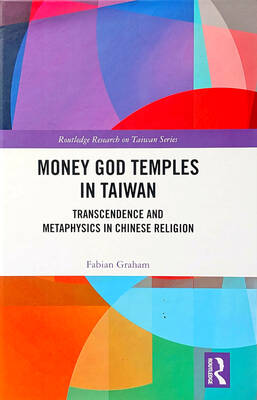
As someone who normally steers clear of books with “transcendence” or “metaphysics” in their subtitles, this reviewer — a casual observer of local belief systems since the 1990s — found Fabian Graham’s Money God Temples in Taiwan a challenging read. Those who’ve only dipped their toes into temple culture will likely need to parse several sections with special care if they’re to keep up with the author, a British ethnographic researcher whose previous books have investigated religious practices among ethnic Chinese in Southeast Asia. This scholarly volume examines a facet of Taiwan’s religious landscape that didn’t exist a century ago, and


 RSS
RSS