


Department of Health Director-General Chen Chien-jen (陳建仁) announced yesterday that as of today, passengers are no longer required to wear masks on trains, the MRT and freeway busses.
However, passengers' temperatures will continue to be taken before boarding highway busses, Chen said.
Stipulations on the new policies are expected to be announced by the Ministry of Transportation and Communications today.
Chen also announced that visitors arriving from Hong Kong and Macau no longer need to be quarantined for 10 days.
Although China has been removed from World Health Organization's (WHO) lists of travel warnings against SARS and SARS-affected areas, Chen insisted that Chinese travelers arriving in Taiwan through Hong Kong or Macau must still be quarantined.
"If the quarantine requirement for Chinese travelers is lifted abruptly, cross-strait traffic could dramatically increase from some 1,000 people to some 10, 000 people a day, which could create a mess for us," Chen said.
However, the decision on whether or not to continue with current measures will be made next week, Chen said.
Visas upon arrival for Hong Kong, Macau and Chinese visitors still will not be available through airlines, and airports will continue with SARS-prevention policies, Chen said.
Meanwhile, the Center of Disease Control expressed optimism that Taiwan could be removed from WHO's list of SARS-affected areas soon.
Center officials said yesterday if the same requirements that allowed Hong Kong and China to be removed from the WHO list of SARS-infected areas were applied, Taiwan could be removed from the list today.
Hong Kong and China were declared SARS-free by the WHO when no new SARS cases occurred within 20 days after the last discovered SARS victim went under quarantine.
The last patient diagnosed with SARS in Taiwan began quarantine on June 6. Today marks the 20th day after the patient went into quarantine.
No new cases of SARS were reported yesterday for the ninth day running.
Also see story:

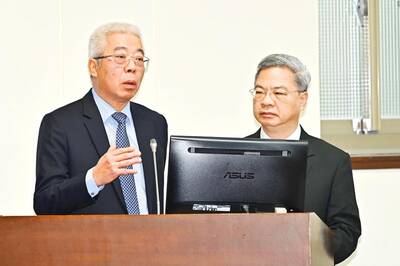
Taiwan has arranged for about 8 million barrels of crude oil, or about one-third of its monthly needs, to be shipped from the Red Sea this month to bypass the Strait of Hormuz and ease domestic supply pressures, CPC Corp, Taiwan (CPC, 台灣中油) said yesterday. The state-run oil company has worked with Middle Eastern suppliers to secure routes other than the Strait of Hormuz, through which about 20 percent of the world’s oil and liquefied natural gas typically passes, CPC chairman Fang Jeng-zen (方振仁) said at a meeting of the legislature’s Economics Committee in Taipei. Suppliers in Saudi Arabia have indicated they
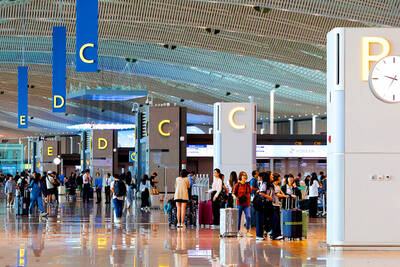
South Korea has adjusted its electronic arrival card system to no longer list Taiwan as a part of China, a move that the Ministry of Foreign Affairs said would help facilitate exchanges between the two sides. South Korea previously listed “Taiwan” as “Taiwan (China)” in the drop-down menus of its online arrival card system, where people had to fill out where they came from and their next destination. The ministry had requested South Korea make a revision and said it would change South Korea’s name on Taiwan’s online immigration system from “Republic of Korea” to “Korea (South),” should the issue not be

Tainan, Taipei and New Taipei City recorded the highest fines nationwide for illegal accommodations in the first quarter of this year, with fines issued in the three cities each exceeding NT$7 million (US$220,639), Tourism Administration data showed. Among them, Taipei had the highest number of illegal short-term rental units, with 410. There were 3,280 legally registered hotels nationwide in the first quarter, down by 14 properties, or 0.43 percent, from a year earlier, likely indicating operators exiting the market, the agency said. However, the number of unregistered properties rose to 1,174, including 314 illegal hotels and 860 illegal short-term rental

AIR ALERT: China’s reservation of airspace over the Yellow Sea and East China Sea could be an attempt to test the US’ response ahead of a Trump-Xi meeting, the NSB head said China’s attempts to infiltrate Taiwan are systematic, planned and targeted, with activity shifting from recruiting mid-level military officers to rank-and-file enlisted personnel, National Security Bureau (NSB) Director-General Tsai Ming-yen (蔡明彥) said yesterday. The Chinese Communist Party’s (CCP) integrates national security, intelligence operations and “united front” efforts into a dense network to conduct intelligence gathering and espionage in Taiwan, Tsai said at a meeting of the legislature’s Foreign Affairs and National Defense Committee. It uses specific networks to screen targets through exchange activities and recruiting local collaborators to establish intelligence-gathering organizations, he said. China is also shifting who it targets to lower-ranking military personnel,


 RSS
RSS