


President Chen Shui-bian (陳水扁) yesterday reviewed troops for the first time in his capacity as commander-in-chief of the armed forces, as he presided over celebrations for the 76th anniversary of the ROC Army Academy at its Kaohsiung campus.
Honored by a 21-gun salute and a parade by more than 200 cadets, Chen seemed pleased to follow in the footsteps of his predecessors in chanting customary slogans such as "long live the Three Principles of the People," and "long live the Republic of China."
But he introduced for the first time a new slogan, "long live liberty and democracy," and discarded some old ones such as "follow the will of the government leader" and "accomplish the reunification of China," which even former President Lee Teng-hui (李登輝) had found himself having to chant once in a while.
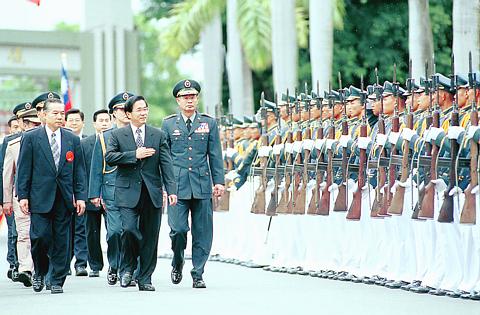
PHOTO: GEORGE TSORNG, TAIPEI TIMES
Major General Kung Fan-ding (
"Every era has its own catch phrases, and there is no fixed rule on what slogans the president should use on public occasions," Kung said.
In yesterday's military review, the army presented the largest parade of troops in recent years to President Chen. In order to bring the event off without a glitch, the army had held three previews in advance and started training the cadet corps three months ago.
The Army Academy even invited the Air Force, Navy and Political Warfare Academies to send cadets to take part in the parade, which made the ceremony look more like a review for the Oct. 10 National Day than that for the Army Academy.
The huge effort exerted for this single event was widely interpreted as an expression of the army's support for Chen, following an expression by its top brass of unwillingness to serve a president with a background of support for Taiwan independence in the wake of the March 18 presidential election.
Several top-ranking military figures had, before Chen's inauguration on May 20, expressed an unwillingness to serve such a president.
In a speech delivered at the ceremony, Chen said, "I have been sending messages of goodwill to China ever since I became the 10th president of the ROC. I only hope that no war will break out between the two sides of the Taiwan Strait."
"But given that China has not renounced the possibility of the use of force against Taiwan and that it keeps increasing its military build-up, Taiwan's military has no choice but to strengthen itself in the name of deterrence," Chen said.
"We don't intend to become involved in an arms race with China," he added
Among the cadets participating in the parade were two from Taiwan's allies in Latin America -- Paraguay and Guatemala.
German Aguilera, from Paraguay, and Christian Arana, from Guatemala, both said that they were excited at being able to take part in the parade despite the rigor of the previous three-month's training.
Christian, a sophomore, said: "It is a rare experience for me. I came to study at the ROC Army Academy as an exchange student. In my home country, Guatemala, there is no military institution which can provide this kind of training.
"The three-month program was quite demanding, but now I feel a great sense of accomplishment," he said.

PROVOCATIVE: Chinese Deputy Ambassador to the UN Sun Lei accused Japan of sending military vessels to deliberately provoke tensions in the Taiwan Strait China denounced remarks by Japan and the EU about the South China Sea at a UN Security Council meeting on Monday, and accused Tokyo of provocative behavior in the Taiwan Strait and planning military expansion. Ayano Kunimitsu, a Japanese vice foreign minister, told the Council meeting on maritime security that Tokyo was seriously concerned about the situation in the East China and South China seas, and reiterated Japan’s opposition to any attempt to change the “status quo” by force, and obstruction of freedom of navigation and overflight. Stavros Lambrinidis, head of the EU delegation to the UN, also highlighted South China Sea

SILENCING CRITICS: In addition to blocking Taiwan, China aimed to prevent rights activists from speaking out against authoritarian states, a Cabinet department said The Ministry of Foreign Affairs (MOFA) yesterday condemned transnational repression by Beijing after RightsCon, a major digital human rights conference scheduled to be held in Zambia this week, was abruptly canceled due to Chinese pressure over Taiwanese participation. This year’s RightsCon, the world’s largest conference discussing issues “at the intersection of human rights and technology,” was scheduled to take place from tomorrow to Friday in Lusaka, and expected to draw 2,600 in-person attendees from 150 countries, along with 1,100 online participants. However, organizers were forced to cancel the event due to behind-the-scenes pressure from China, the ministry said, expressing its “strongest condemnation”
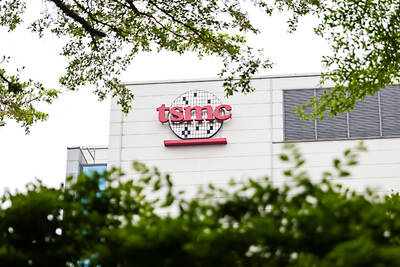
Taiwan Semiconductor Manufacturing Co (TSMC, 台積電), the world’s largest contract chipmaker, said it expects its 2-nanometer (2nm) chip capacity to grow at a compound annual rate of 70 percent from this year to 2028. The projection comes as five fabs begin volume production of 2-nanometer chips this year — two in Hsinchu and three in Kaohsiung — TSMC senior vice president and deputy cochief operating officer Cliff Hou (侯永清) said at the company’s annual technology symposium in Silicon Valley, California, last week. Output in the first year of 2-nanometer production, which began in the fourth quarter of last year, is expected to
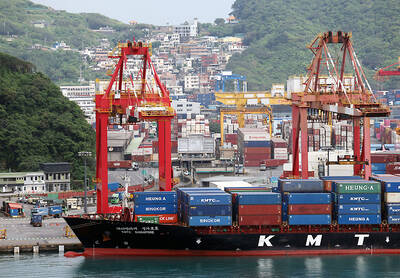
Taiwan’s economy grew far faster than expected in the first quarter, as booming demand for artificial intelligence (AI) applications drove a surge in exports, spilling over into investment and consumption, the Directorate-General of Budget, Accounting and Statistics (DGBAS) said yesterday. GDP growth was 13.69 percent year-on-year during the January-to-March period, beating the DGBAS’ February forecast by 2.23 percentage points and marking the most robust growth in nearly four decades, DGBAS senior official Chiang Hsin-yi (江心怡) told a news conference in Taipei. The result was powered by exports, which remain the backbone of Taiwan’s economy, Chiang said. Outbound shipments jumped 51.12 percent year-on-year to


 RSS
RSS