


Taiwan's first independent federation of labor unions -- the Taiwan Confederation of Trade Unions (TCTU,
At a founding meeting for the organization, which represents more than 270,000 workers, President-elect Chen Shui-bian (
The legalization of the TCTU would break the stranglehold of the KMT-controlled Chinese Federation of Labor (CFL,
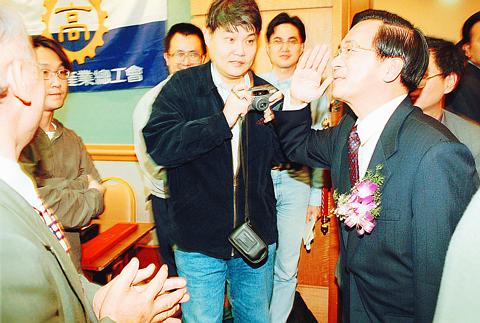
PHOTO: CHEN CHENG-CHANG, TAIPEI TIMES
Speaking at the meeting, Chen said he would invite labor activists to the Presidential Office on Labor Day next year, in contrast to the KMT government which had honored laborers by commending "model workers."
"The Council of Labor Affairs (CLA,
The TCTU is comprised of 18 unions. It was launched by leading labor activists of 14 unions and labor rights groups in 1997. The CLA, however, never officially recognized the TCTU, citing the Union Law which prohibits independent labor groups.
The Union Law was passed in China before the civil war, and named the KMT-dominated Chinese Federation of Labor (CFL,
Ironically, the CFL must be comprised of 21 national unions according to the terms of the same law which, strictly speaking, has rendered the CFL illegitimate since the KMT government moved to Taiwan.
Activists have been campaigning to legitimize the TCTU with amendments to the Union Law since 1997, only recently gaining official recognition due to the change in the political environment brought about by the KMT's defeat in the presidential election in March.
Just two months after the CLA's refusal to accept the TCTU's latest application on Feb. 27, the group suddenly announced official recognition of the union last Friday.
Recognition of the TCTU had been one of Chen's election promises. He also said he would attend the TCTU's opening congress on Labor Day.
Making good on that promise, Chen said yesterday that the "TCTU will be legitimized and recognized by the new government. This is absolutely no problem."
"I will attend the one-year anniversary of the TCTU next year as president," Chen said. "Chen Chu (陳菊) [the director-designate of the CLA] and I will keep our promises. We won't let you down."
The TCTU has been close to the DPP while the CFL has historically been affiliated with the KMT, which has controlled the legality of unions for decades. It has also received steady funding from the KMT over its 50-year history.
Many leaders of the CFL concurrently serve on the KMT's Central Standing Committee or are legislators, delegates to the National Assembly, or hold other high-ranking posts.
The organization has been widely regarded as a rubber-stamp for government labor policy, which itself tends to reflect the influence of the business leaders in the KMT.
Now, however, as the DPP prepares to take power, the development of independent unions appears to have opened up.
"The establishment of the TCTU is based on the accumulative experience of Taiwan's independent labor movements," a statement from the TCTU read.
As a confederation of various independent unions, however, the TCTU could have a rough start.
"The composition of the TCTU is not sound enough," said Chang Shu-chung (
"The official recognition of the TCTU came mainly because of the alternation of political parties in power," Chang said, stressing that independent labor movements should not rely on such external causes.
Chang said most of the TCTU unions were from state-run enterprises that had different resources and capacities from those of private enterprises.
"We have to look for harmonious and complementary factors," Chang said. "The [executive] committee has to understand this point well."

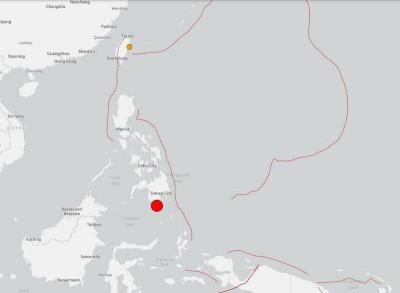
A magnitude 7.8 earthquake struck off the southern coast of Mindanao in the Philippines at 7:38am today, prompting the US Tsunami Warning System to issue an alert for neighboring countries, including Taiwan. The system issued a purple alert indicating a "tsunami threat." The potential threat zone includes Taiwan, the Philippines, Papua New Guinea, Yap and Palau. There were no immediate reports of major damage in the Philippines or Indonesia. The quake struck at a depth of 10km, said the German Research Centre for Geosciences, which had earlier pegged the earthquake at magnitude 8.2. Phivolcs, the Philippine agency, said the quake was magnitude 7 and
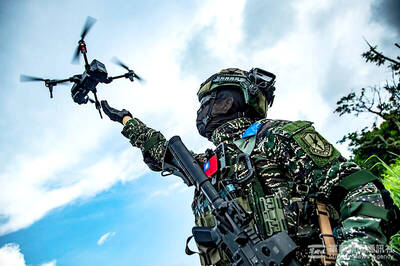
RESILIENCE: Taiwan plays a key role in semiconductors, energy, information infrastructure and advanced manufacturing, AIT Director Raymond Greene said Taiwan’s continued investment in deterrence and resilience remains vital, especially in uncrewed systems and other emerging technologies, American Institute in Taiwan (AIT) Director Raymond Greene said yesterday. Greene made the remarks at the annual National Strategic Summit on Supply Chain Resilience held by the Research Institute for Democracy, Society and Emerging Technology (DSET), a government-backed think tank. As Taiwan last year became the US’ fourth-largest trading partner and supply chain security is becoming more important, cooperation in emerging technologies continues to deepen between the two countries, he said. The US is committed to accelerating innovation, building key infrastructure, strengthening cooperation

The National Chungshan Institute of Science and Technology yesterday showcased its locally developed variants of the Vision 60 robotic patrol dog, which it plans to deploy on the nation’s outlying territories in the South China Sea. The variants were produced under the Joint Lab project — created by the institute and domestic companies — and assembled with domestically produced motors, lenses and artificial intelligence (AI) systems alongside licensed tech from the US, Missile and Rocket Systems Research Division deputy director Jen Kuo-kang (任國光) told the media event at a military base in Taipei’s Dazhi (大直) area. Taiwan has built up its strengths
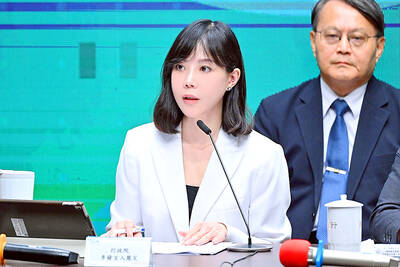
RIGHT DIRECTION: Taiwan’s efforts to prevent forced labor include a proposal to ‘fully prohibit’ employers from withholding workers’ documents, an official said Taiwan is to establish a mechanism to restrict imports of goods linked to forced labor, the Executive Yuan said yesterday, after the US proposed imposing additional tariffs on Taiwanese goods over labor concerns. “The Ministry of Labor and the Ministry of Economic Affairs are to establish an interministerial review procedure,” Executive Yuan spokesperson Michelle Lee (李慧芝) said at a news briefing in Taipei. “The government is to use the Foreign Trade Act [貿易法] as the legal basis to restrict imports of goods produced with forced labor” and bring its supply chain governance more in line with international standards on human rights, resilience


 RSS
RSS