

The Taiwan People’s Party (TPP) is facing some difficulties, and there are some tensions in their alliance with the Chinese Nationalist Party (KMT). However, though these problems are real, the local press is blowing them out of proportion and hyping too much out of context.
Take, for example, a poll released by Z.media on Wednesday of 1,070 adults with a sampling error of ±3 percentage points. It showed support for the TPP dropping to 6.3 percent, an all-time low on their historical chart and 4.2 percent lower than their May poll and 11 percent from a year earlier. This led to speculation that the party is disintegrating (paomohua 泡沫化, a delightfully evocative term that means “foaming”).
When asked about this poll, TPP Chair Huang Kuo-chang (黃國昌) claimed he was not worried at all by the poll, as the pollster “frequently works with the Democratic Progressive Party (DPP) for manipulation.” He provided no proof of that allegation.
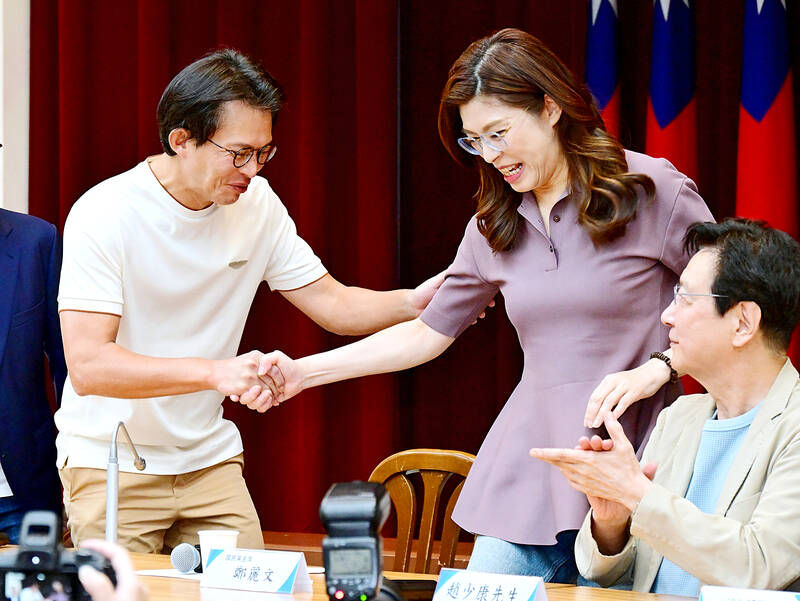
Photo: Chen Yi-kuan, Taipei Times
On one level, he is right. In my 2024 weighted poll of polls, Z.media was not so bad as to be excluded, but I ranked them as “underweight,” meaning low reliability.
Additionally, the latest Formosa poll released on Aug. 4 showed the TPP’s “favorability” rising 5.4 percent to 29.1 percent from the month prior and an all-time high for this year. Of course, asking if one views a party favorably and if one identifies as a supporter of the party are very different questions, but that one rose and the other fell paints a blurrier picture than the Z.media poll alone. Also, consider that smaller parties have much smaller sample bases, making them more prone to volatility.
Huang is right to dismiss a single poll, but he should still be concerned. Looking across all polling, the party is significantly less popular than at their previous peaks in past years. Looking across multiple polls, I would estimate their support is down by roughly a third, but it does not indicate the party is disintegrating.
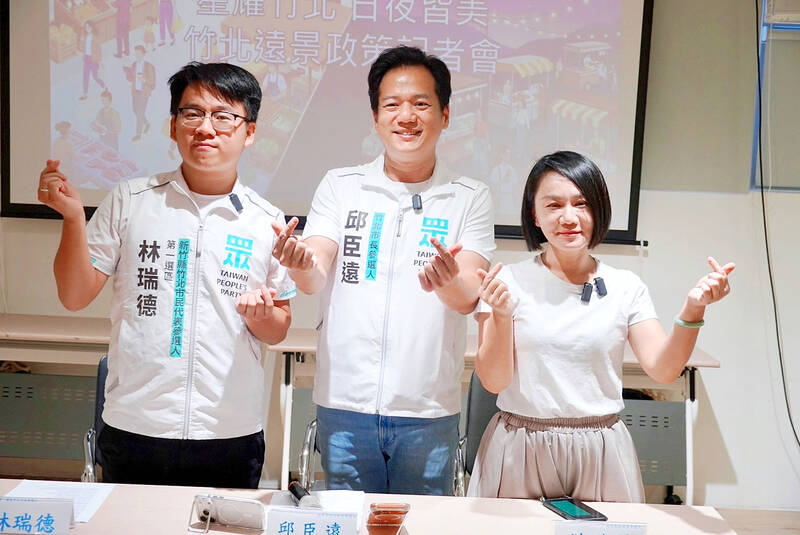
Photo courtesy of Chiu Chen-yuan’s campaign team
At least, not yet. The TPP is seven years old, by which many of Taiwan’s previous third parties had already begun to lose momentum. Whether the TPP follows that pattern remains to be seen.
CAUCUS SPLITS
There are also tensions, disagreements and problems in their alliance with the KMT.
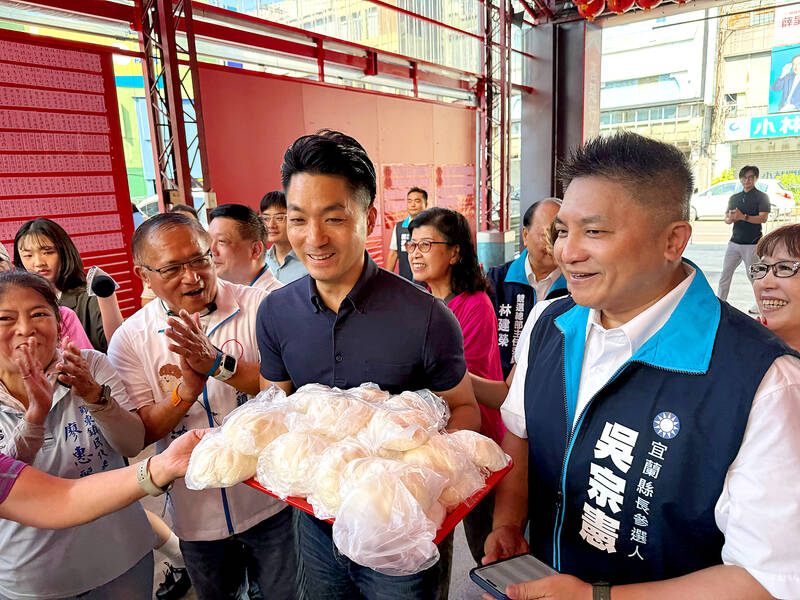
Photo: Wang Chun-chi, Taipei Times
The two parties’ legislative caucuses split on several referendum proposals. This was unusual; typically they negotiate behind the scenes to agree on the details of legislation before it goes to a vote.
Of the six referendum proposals by the two parties, three passed. One, a TPP proposal concerning absentee voting, did not receive KMT backing and was not placed on the legislative agenda. Similarly, a KMT proposal on rejecting the abolition of the death penalty was also not on the agenda.
The KMT abstained on the TPP’s euthanasia proposal, killing it. The TPP abstained on the KMT’s caning proposal, though the KMT still had enough votes to get that passed. The two parties were united in passing the proposals on traffic-fine spending and ending the “nuclear-free homeland” policy.
TPP founder Ko Wen-je (柯文哲) downplayed any split in their alliance, saying the two parties are cooperating, but have not merged. He also said the TPP and the KMT will cooperate when possible but compete when necessary, and that it is not possible for the two sides to agree all the time.
Does this indicate a breakdown in their legislative alliance? Not necessarily. It could indicate that the current legislative caucus wants more independence than when it was led by Huang. It could also indicate that the party wants to carve out a more independent image ahead of November’s elections.
In other words, it could mean a split is coming, but it is far too early to say. It could simply mean the TPP caucus will be a more publicly assertive partner within the alliance rather than breaking from it entirely.
ELECTION TENSIONS
There are also tensions in their electoral alliance.
Most notably, neither party appears to be willing to back away from running their respective candidates in Jhubei City (竹北), Hsinchu County. This threatens the two parties’ agreement to coordinate behind a single candidate, with the TPP insisting that an earlier understanding reserved Jhubei for its nominee. Time is running out; candidate registration closes on Sept. 4.
Huang, appearing on an online talk show on Aug. 12, reiterated that he believes KMT Chair Cheng Li-wun (鄭麗文) and KMT Hsinchu County commissioner candidate Hsu Hsin-ying (徐欣瑩) will “do what they say” and honor an agreement to back the TPP candidate in Jhubei.
He also bluntly warned that if this leads to a so-called “breach” in their alliance, it would be detrimental to future cooperation.
“It would also be difficult for me to go back and persuade my fellow party members: If the other side can go back on its word, why should we keep ours?” he said.
Meanwhile, in Taipei, the KMT party chapter decided that incumbent KMT Mayor Chiang Wan-an (蔣萬安) will not appear at campaign events for individual TPP candidates, only joint unity rallies.
On a BCC News talk show on Wednesday, Huang said he “really respected” the Taipei chapter’s decision, but he said that they had always understood that the TPP ultimately had to rely on itself. He then underscored how much tighter the relationship is with the KMT in New Taipei City and Taichung.
On the relationship more broadly, Huang said that from the outset, he had advocated a coalition government and joint governance, and that from signing a party cooperation agreement with the KMT to agreeing on shared policy positions, he could say with a clear conscience that “when I, Huang Kuo-chang, promise something, I will definitely keep my word. I won’t tell you one thing to your face and do another behind your back. I don’t play that game. Because if that’s how we’re going to operate, then we shouldn’t cooperate at all.”
On Jhubei, he again admonished the KMT: “I’ll say it again: I hope Legislator Hsu Hsin-ying will do what she says. We’re giving you time and space.”
Asked whether there had been any new developments, Huang said bluntly, “I really don’t want to say anything unpleasant right now, but I guarantee you that they understand every single thing I say.”
R-E-S-P-E-C-T
Watching the talk show, Huang delivered those lines with relaxed confidence, not anger or hostility.
In the broad scheme of things, the alliance remains functional despite these increasingly visible points of friction.
Huang’s message is essentially that the honeymoon period is over; now we need to do the hard work to make the relationship last, not that he is giving up on it. “Why must it always be us who yields?” he asked.
He is asking for some respect and making some requests of his partner to make the relationship work better. In other words, asking for some help with the dishes and taking out the garbage, not saying the relationship is necessarily fundamentally flawed.
If the KMT yields in Jhubei and shows more respect in the legislature for the TPP’s positions, this will likely blow over.
In Taipei, the KMT can hold firm on the campaigning issue, as Huang indicated, even if he is not happy about it. City and county councils are elected in multi-member districts, which complicates the math and not only pits a party’s candidates against the opposition, but also against candidates within their own party. The KMT’s Taipei chapter wants to win an outright majority of seats, and TPP candidates ultimately threaten that goal.
The ball is in the KMT’s court. For now, the TPP’s requests are not large and easily met.
However, if the KMT does not show flexibility and respect, these problems will accumulate and fester into a broader frustration with the nature of the relationship itself.
That is how divorces happen.
Donovan’s Deep Dives is a regular column by Courtney Donovan Smith (石東文) who writes in-depth analysis on everything about Taiwan’s political scene and geopolitics. Donovan is also the central Taiwan correspondent at ICRT FM100 Radio News, co-publisher of Compass Magazine, co-founder Taiwan Report (report.tw) and former chair of the Taichung American Chamber of Commerce. Follow him on X: @donovan_smith.
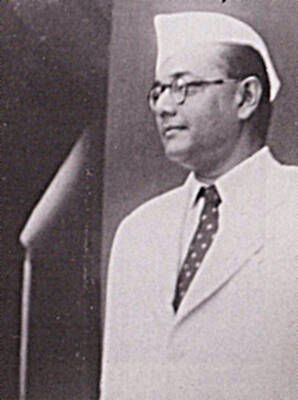
Aug. 17 to Aug. 23 Subhas Chandra Bose was meant to be in Taiwan for no more than two hours. After refueling at today’s Songshan Airport in Taipei, the Mitsubishi Ki-21 bomber carrying the Indian independence leader took off for Japan — and crashed almost immediately. It was Aug. 18, 1945, three days after Japan announced its surrender to the Allies. Bose, who advocated armed struggle to free India from British rule, had worked closely with Imperial Japan. He was attempting to reach the Soviet Union via Manchuria in the hope of gaining support
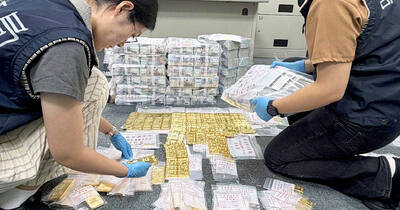
The Tzu Chi Foundation, the globally known Buddhist charity, announced on July 21, 2021 that it had signed a deal to purchase 5 million doses of the Pfizer-BioNTech (BNT) COVID-19 vaccine. It said that the vaccine doses would be donated to the government’s COVID vaccine program. In October the Centers for Disease Control (CDC) made a public announcement thanking the Buddhist foundation and others for the 889,200 doses of the BNT vaccine they had collectively donated. FRAUD Earlier this month, the public was stunned to learn that prosecutors had indicted former Changhua Bar Association chairwoman, Chen Yu-hsuan (陳昱瑄), and others on suspicion
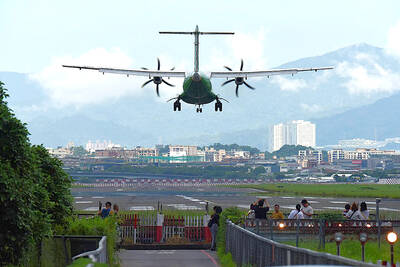
An interesting essay in the spring issue this year of International Security by Kerby Davis and Eugene Gholz explores the possibilities and outcomes of simulated missile attacks by the People’s Republic of China (PRC) on Taiwan’s ports to carry out a blockade. “Substantively,” they conclude in Blockade by Fire: China’s Potential to Blockade Taiwan Using Missile Attacks on Ports, “our article raises serious concern about Taiwan’s vulnerability to Chinese military coercion. Even if Taiwan and the United States take steps to better prepare for a Chinese blockade, they face a greater threat from China than analysts previously believed.” The authors

At the recent AI WAVE SHOW in Taipei, more than 200 companies displayed over 350 AI solutions under the slogan AI Ready: Put It to Work Now.” But the real star was the AI agent. Unlike a chatbot that mainly answers questions, an AI agent can be given a goal, access information and software, make intermediate decisions and carry out parts of a workflow. AI WAVE organizers also described this year as the point when AI agents are no longer future tense, but are becoming part of everyday enterprise operations. However, as Taiwan’s new digital employees start to clock in, the


 RSS
RSS