

Aug. 17 to Aug. 23
Subhas Chandra Bose was meant to be in Taiwan for no more than two hours. After refueling at today’s Songshan Airport in Taipei, the Mitsubishi Ki-21 bomber carrying the Indian independence leader took off for Japan — and crashed almost immediately.
It was Aug. 18, 1945, three days after Japan announced its surrender to the Allies. Bose, who advocated armed struggle to free India from British rule, had worked closely with Imperial Japan. He was attempting to reach the Soviet Union via Manchuria in the hope of gaining support for India’s independence when the accident occurred.
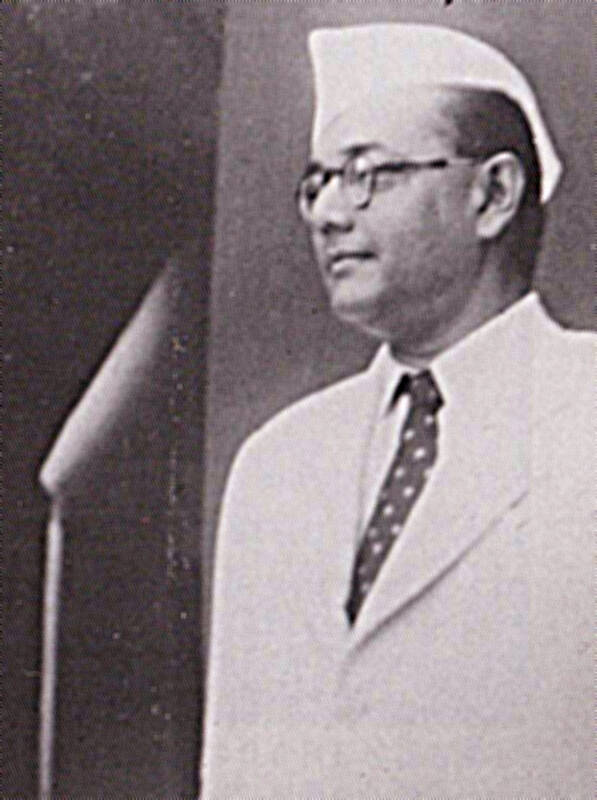
Photo courtesy of Wikimedia Commons
While the pilot, copilot and Japanese lieutenant general Tsunamasa Shidei were instantly killed, Bose was relatively uninjured. However, with the rear of the plane blocked by luggage, he tried to escape through the flames of the wreckage. But since his clothes were soaked with petrol, he was soon engulfed in fire and suffered severe burns.
Bose and other survivors were rushed to the Nanmen Branch of Taipei Army Hospital (today’s Heping Hospital), where he remained mostly conscious before succumbing to his injuries that night. His body was reportedly cremated at the Taipei Crematorium (near today’s Linsen Park) and his ashes were taken to Japan, where they were later placed at Renkoji Temple in Tokyo.
From official accounts, it appears to have been a straightforward tragedy. But many still refuse to accept that explanation.
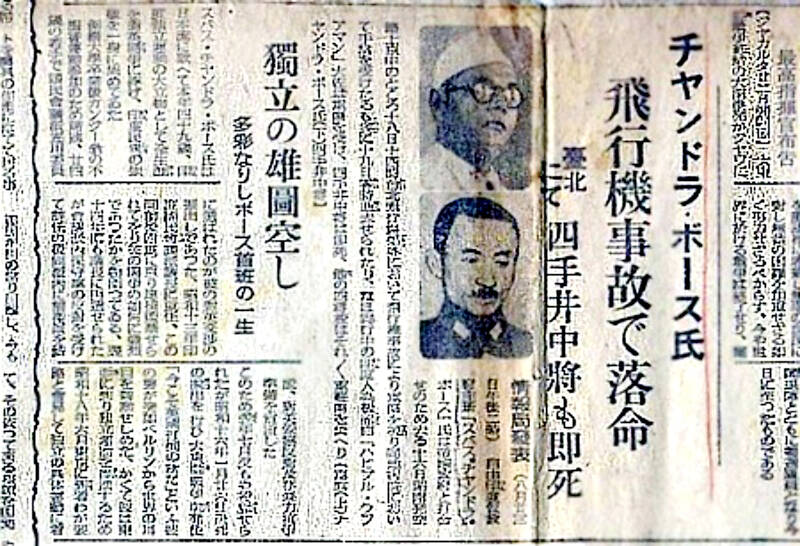
Photo courtesy of Wikimedia Commons
Some allege that the Japanese had meant to assassinate him rather than risk handing him to the Allies; others claim they staged his death to help him escape to the Soviet Union, while some maintain that Bose secretly lived on in India as an ascetic.
In 1956, the Indian government appointed the Shah Nawaz Committee to investigate, sending investigators to interview eyewitnesses in Japan. It concluded that Bose had died in the crash, but the controversy surrounding his fate continued.
THE DEADLY CRASH
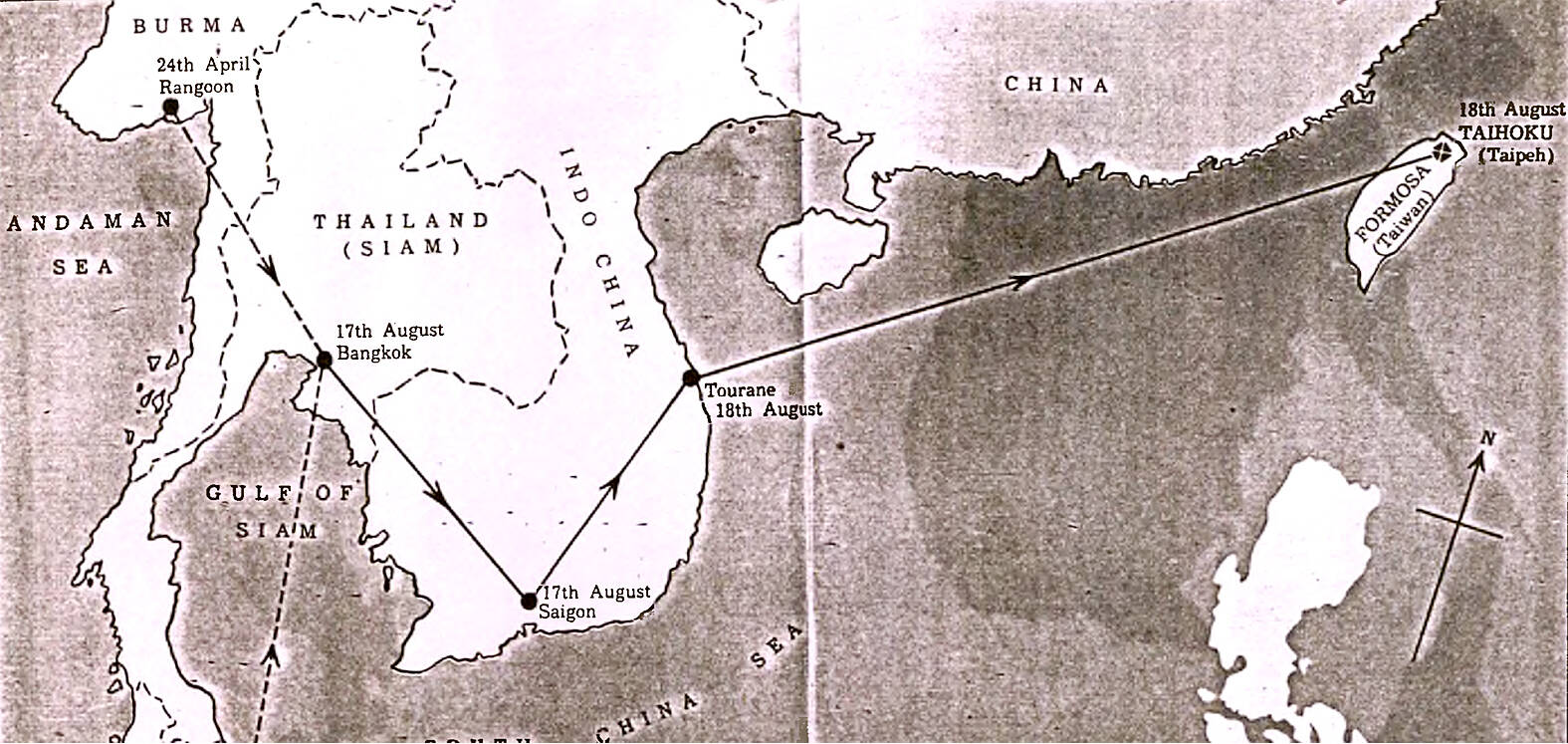
Photo courtesy of Wikimedia Commons
Known for the quote “Give me blood and I will give you freedom,” Bose is widely regarded in India as a national hero who fought British rule; Kolkata’s international airport bears his name. But his willingness to ally with Nazi Germany and Imperial Japan remains controversial.
After being placed under house arrest in India for his anti-colonial activities, Bose escaped in 1941 and made his way to Nazi Germany. There, he sought German support for India’s independence and organized the Indian Legion from prisoners of war and expatriates.
Curiously, major newspapers erroneously reported in 1942 that Bose had died in a plane crash.
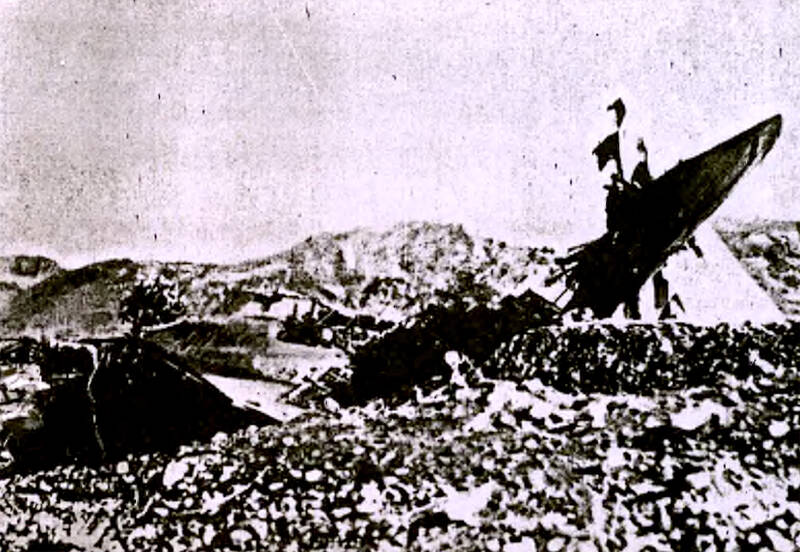
Photo courtesy of Wikimedia Commons
Disappointed with Germany’s limited support, Bose traveled to Japanese-occupied Southeast Asia in 1943, where he launched the Indian National Army (INA) and headed the Japanese-backed Provisional Government of Free India. The INA fought alongside Japanese forces during their disastrous 1944 invasion of India from Burma.
Bose fled Yangon as the British retook it in May 1945. Japan’s surrender greatly affected his plans, and he hoped to find a new ally in the Soviet Union. On Aug. 17, 1945, he left Saigon (today’s Ho Chi Minh City), stopping briefly in today’s Da Nang before landing in Taipei around noon the following day.
After a lunch of sandwiches and bananas, he set off again. Mechanics had noticed something wrong with one of the engines, but they resolved the problem and deemed it safe to fly.
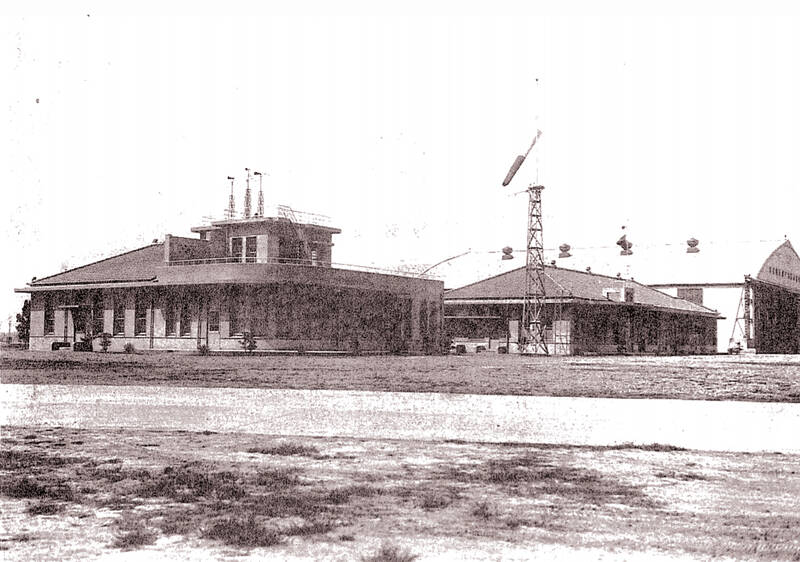
Photo courtesy of Wikimedia Commons
Bose’s chief of staff, Habib-ur-Rahman, recalled that the plane had cleared the runway and begun to climb when he heard a “noise like a cannon shot.” The aircraft began wobbling before crashing on its nose. Rahman later found that the propeller of the port engine had broken off. The two men pushed their way out of the burning wreckage.
The two collapsed, and Rahman later recalled Bose telling him, “When you go back to the country, tell the people that up to the last I have been fighting for the liberation of my country; they should continue to struggle, and I am sure India will be free fore long. Nobody can keep India in bondage now.”
They woke up in the only military hospital still running in Taipei, reportedly due to Allied air raids. According to a Japanese report, Bose remained conscious for much of the time, even offering to be treated last. He died that night.
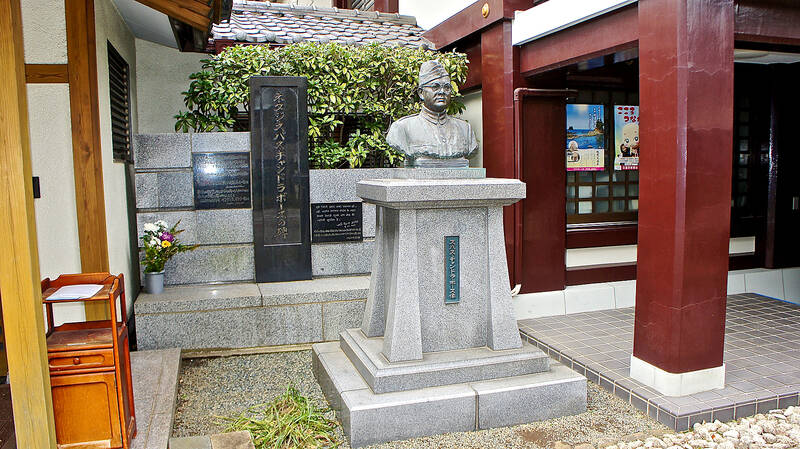
Photo courtesy of Wikimedia Commons
After his cremation, a small funeral ceremony was held at Nishi Honganji Temple near today’s Ximending. It was reportedly kept low key to avoid attracting Allied attention. His remains, along with his belongings, were sent to Japanese Army headquarters in Tokyo and transferred to Renkoji temple.
STILL ALIVE?
A decade after the accident, many Indians still refused to accept Bose’s death.
“The rumor is persistent and deep-rooted among people of India to the effect that Chandra Bose is still alive,” stated a 1956 article by the Indo-Japanese Friendship Association.
That year, the Indian government sent a three-person investigation team led by Shah Nawaz, and included Bose’s brother, to Japan to examine the circumstances of his death. Also in question were the jewels Bose was reportedly carrying to fund his operations, of which only a small portion was found.
The committee repeatedly requested permission to visit Taiwan, but the Indian government refused, having broken diplomatic ties with Taipei in 1950 in favor of Beijing. Triloki Nath Kaul of the Ministry of External Affairs wrote to the Indian ambassador to Japan: “We do not recognize that government and they are likely to put obstacles in the way of the committee.”
However, in 1946, Indian journalist Harin Shah visited Taipei and interviewed a Taiwanese nurse at the hospital named “Tsan Pi Sha,” who confirmed that she looked after him and was present when he died.
During the investigation, the Indian government also obtained a copy of the Taipei cremation permit from Japanese authorities. Curiously, the document gave the name of the deceased as Ichiro Okura, rather than Bose. Japanese officials explained that the name had been used to keep Bose’s death confidential. This would later become an important point for those who reject the conclusion that Bose died in the crash.
The Shah Nawaz Committee report noted that the Japanese remained secretive and delayed publishing the news, and also produced no convincing proof of Bose’s death, which raised initial suspicion among Indians. However, it partially attributed this to things being “out of gear” after the Japanese surrender, and found no convincing reason to reject the fact that Bose had died in the crash, with his ashes taken to Japan where they still remain today.
However, the theories continue. In 2005, a commission headed by retired Supreme Court judge Manoj Kumar Mukherjee concluded that Bose had not died in the crash and that the ashes in Japan were not his. The Indian government rejected these findings.
Taiwan in Time, a column about Taiwan’s history that is published every Sunday, spotlights important or interesting events around the nation that either have anniversaries this week or are tied to current events.
It is forest fire season in Europe and North America, and the news is filled with harrowing images of disastrous fires filling the air with smoke. What about Taiwan? Taiwan has a unique forest fire profile. Unlike other nations, where the threat peaks in the dry summer months, that period is wet. Instead, major forest fires typically occur during October to April, when the country is drier. Moreover, “high temperatures are not the primary drivers of forest fires” as a study in Theoretical and Applied Climatology noted. Rather, the consensus is that dryness is the trigger of forest fires here, with
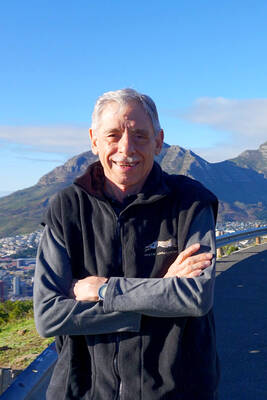
When Gary Melyan, a longtime Taiwan resident who died on July 7 at age 83, arrived in Taipei for the second time in 1971, he was a graduate student trying to complete a doctoral thesis on the Taiping Rebellion. Wanting to assemble some fellow academics for a regular meal, he initiated a Saturday lunch, which quickly shifted to Saturday dinner. Then, sometime in 1974 or 1975, it became a weekly Wednesday night meal. Melyan never finished his PhD, but the weekly Wednesday dinner, now known as the Wednesday Night Old Farts (WNOF), has continued for more than half a century

This week a flood of news on the great divide in Taiwan. Not the Blue-Green one, but the other divide, between the haves and the have-nots. The government announced that real wages (wage growth after inflation) grew 1.16 percent in the first six months of this year, marking the strongest real wage growth in six years for the same period, according to the Directorate General of Budget, Accounting and Statistics (DGBAS). Good news! The statistics also mapped the demographic strain on the workforce: average monthly overtime hours was 17.8 hours per employee in the first half of the year. That was the
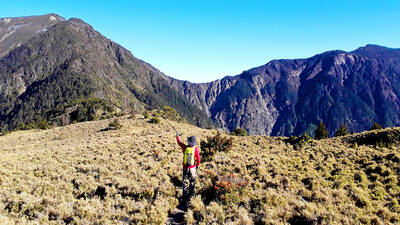
Starting dramatically on a historic trail built by the Japanese above a hot springs town and ending unceremoniously on a muddy, leech-infested forest road after what could be your worst night’s sleep ever in the mountains, the Mabolasi Traverse (馬博拉斯橫斷) is full of challenge and reward. For fit hikers who can survive the former and still enjoy the latter, “Mabo” is the route for you. UP, DOWN AND UP AGAIN The first challenge of the trip: three days of uphill walking with a heavy backpack. From the hot springs town of Dongpu (東埔) in Nantou County, the route follows the Japanese-built Batongguan


 RSS
RSS