

When Gary Melyan, a longtime Taiwan resident who died on July 7 at age 83, arrived in Taipei for the second time in 1971, he was a graduate student trying to complete a doctoral thesis on the Taiping Rebellion. Wanting to assemble some fellow academics for a regular meal, he initiated a Saturday lunch, which quickly shifted to Saturday dinner. Then, sometime in 1974 or 1975, it became a weekly Wednesday night meal.
Melyan never finished his PhD, but the weekly Wednesday dinner, now known as the Wednesday Night Old Farts (WNOF), has continued for more than half a century and still convenes weekly in Taipei.
Over the years, this informal dinner club has evolved into a low-key Taipei institution, known chiefly to its attendees and restaurateurs who built a rapport with a table of foreigners that kept returning for decades.
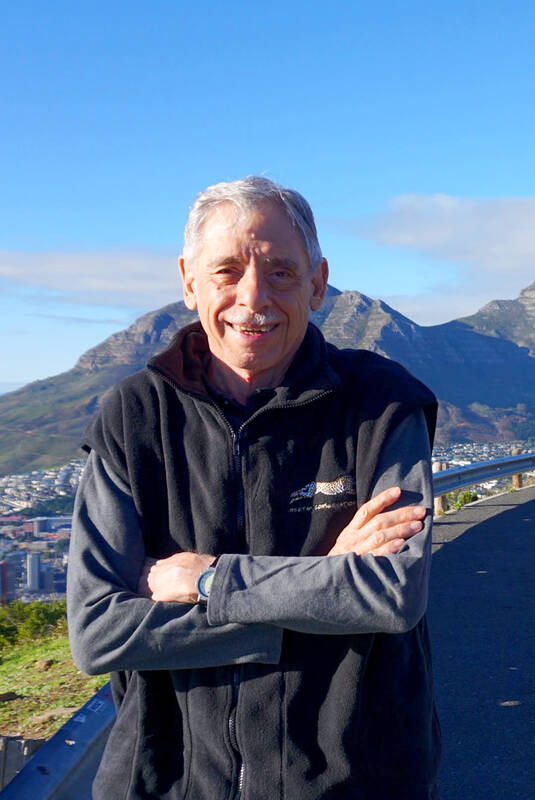
Photo courtesy Jennifer Melyan
Notable regulars have included Richard Vuylsteke, who was president of the East-West Center in Honolulu and chair of AmCham Taipei, and Taiwanese avant-garde composer Ehr Lin (林二). Drop-in guests have included the likes of Australian cinematographer Christopher Doyle (杜可風), filmmaker Richard Chen (陳耀圻), novelist Dean Barrett and British drug smuggler and author Howard Marks.
The meals typically gather eight to 10 diners. Most in the WNOF are expats of at least two or three decades, and Taiwanese and overseas Chinese also number among the regulars. I began attending the dinners sometime in the late 2000s.
From the group’s initial scholarly bent, membership quickly expanded to include journalists, import-export traders and at least two former US diplomats. Among the journalists, there have been writers for the New York Times, Time Magazine, Bloomberg, Reuters and other major international media.
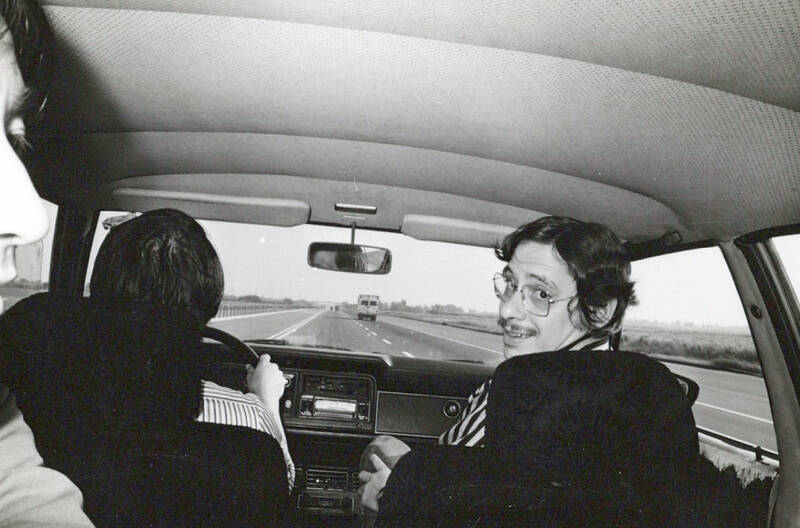
Photo courtesy of Jennifer Melyan
American photographer David Hartung, who lived in Taipei from 1995 to 2005 and is now based between northern California and Macau, claims responsibility for naming the group sometime in the mid-1990s.
“A friend had invited me to the dinner, and I replied, ‘Oh, so you’re going to eat with those old farts?’” Hartung recalled.
Hartung did not attend that particular meal, but the potentially disparaging epithet was reported to the table. Somewhat unexpectedly, they embraced the moniker.
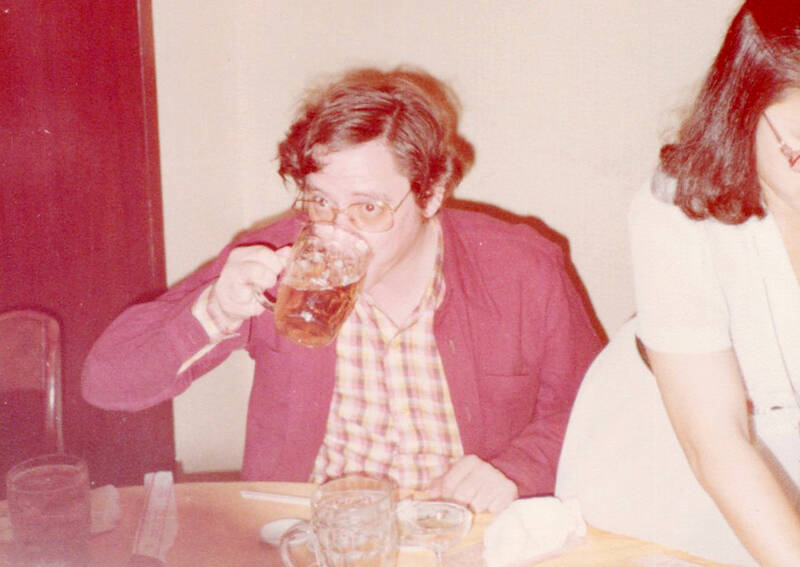
Photo courtesy Jennifer Melyan
One founding member, Earl Wieman, who first came to Taiwan in 1961 with the US Air Force and stayed on as an editor for various government ministries, promptly had the WNOF acronym inscribed on a nameplate. For decades, that nameplate reserved the group’s weekly table at their regular post-meal watering hole, the Manila Pub in Taipei’s Combat Zone bar district.
The Manila Pub announced last month that after 26 years in operation it will close permanently from Aug. 29. Coming together with Melyan’s death, messages in WNOF group chats have decried the double loss as “the end of an era.”
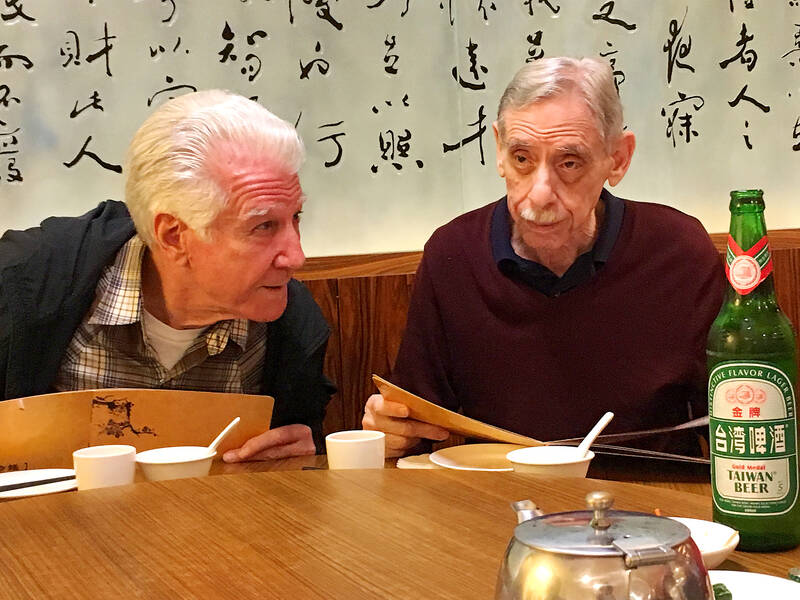
Photo: David Frazier
‘ANCHOR ACTIVITY’
According to Wieman, now 85 and living in Kentucky, “The WNOF was, for many of us, the anchor activity of the week. We were just a group of guys who were (mostly) friends with each other, didn’t ask anything from each other, could take insults from each other without being insulted. Just about every member was a unique character.”
Though no one can remember precisely when the first Wednesday dinner was held, there is a fairly consistent story of that inaugural meal. The group’s five original members — Melyan, Wieman and journalists Don Shapiro, Mike Boydell and Dirk Bennet — were drinking together one Wednesday in a Taipei apartment when it suddenly dawned on them that they still hadn’t had dinner.
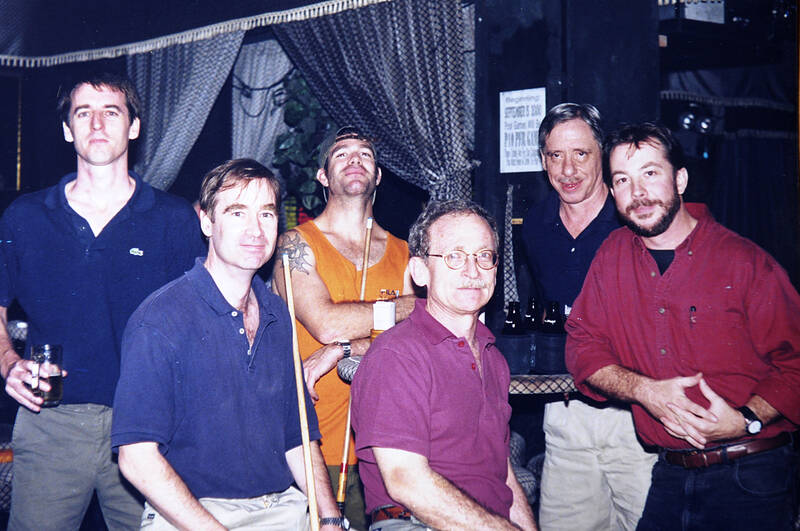
Photo courtesy of Chris Stowers
The problem was that it was already late evening and most normal restaurants had closed. According to Don Shapiro, who arrived in Taipei in 1969 as a stringer for the New York Times and is now senior advisor at AmCham Taipei, they ended up at a Taiwanese-style stir fry place in an alley off Zhongshan North Rd called Qing Ye (青葉).
Then, “at the end of an evening of tasty food, plenty of cold Taiwan beer and animated conversation,” Shapiro wrote in the only previous report on the group, a 2011 article in AmCham’s Topics magazine, they made plans for the following week, and then the week after.
“And before they realized it, the Wednesday night-out had become a firmly planted tradition,” Shapiro wrote in that article.
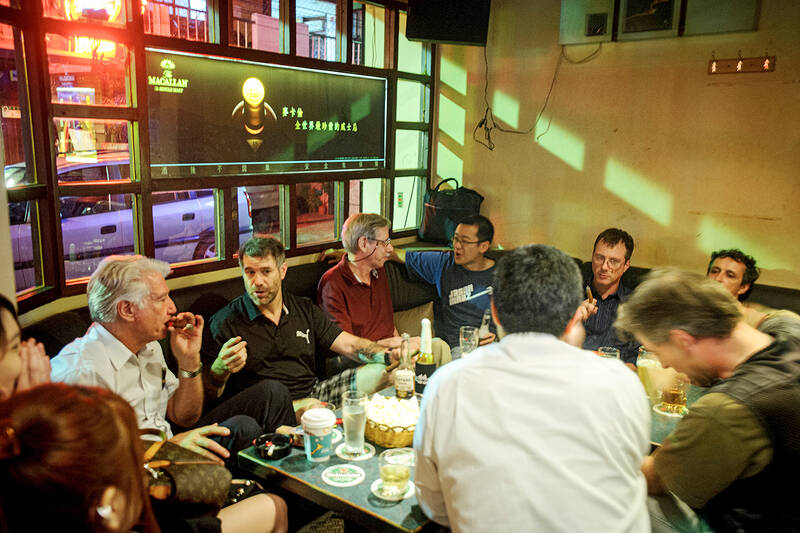
Photo courtesy of Alberto Buzzola
For the group’s first several years, they attempted to dine at a different restaurant every week, Shapiro recently told me. At present, the group rotates meals between 20 or 30 favorites.
‘THE SOUL OF THE WNOF’
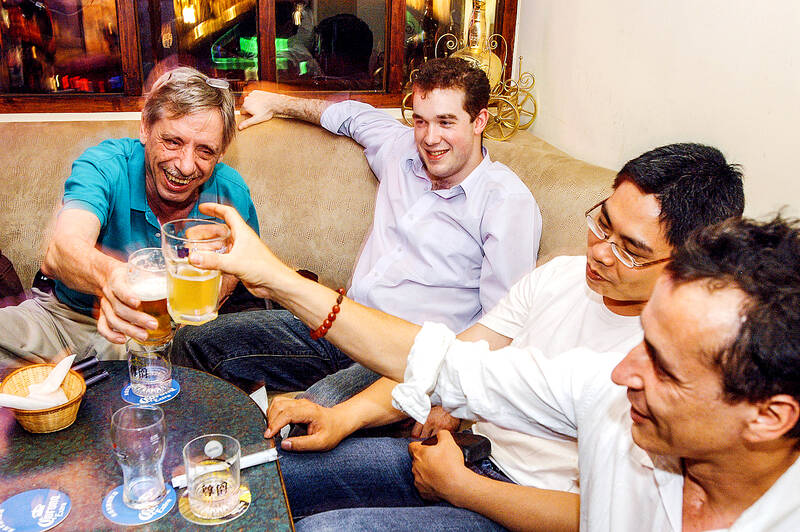
Photo courtesy of Chris Stowers
Melyan had the longest history in Taiwan of the dinner club’s foreign members and was described by his friends as “the soul of the WNOF.” He was also a firsthand witness to Asia’s transformations since World War II” from the ruins of Okinawa to the factories of Guangdong,” as photographer Chris Stowers put it in a recent tribute.
Born in Boulder, Colorado in 1943, Gary Gwyn Melyan was the son of a US Navy officer who was present at Japan’s 1945 surrender in Yokohama Bay. He first came to Asia in 1946 at the age of three.
In the post-war years, Melyan’s father, Wesley, worked in Japan and Okinawa as a civilian engineer for General Douglas MacArthur, the Supreme Commander of Allied Powers. Occasionally, he’d take his children to witness the theater of the “God-like” general getting off work at Tokyo’s Dai Ichi Insurance Building.
In 1949, Melyan, who spoke fluent Japanese and was a sumo wrestling fan till the end of his life, claimed his brothers once went for a play date with Japan’s crown prince and future emperor, Akihito, who was then 15. Since Melyan had mumps at the time, he had to skip the visit.
In 1955, the Melyans returned to the US for two years — “until I went to college, that’s the only time I really ever remember living in the States,” said Melyan, when I interviewed him in 2020.
Then just two years later, Melyan’s father, who had always had a penchant for the Chinese language, moved the family to Taipei after taking a job with a US aid organization, the International Cooperation Administration, which launched under US president Dwight Eisenhower.
Gary enrolled in Taipei American School at age 14 along with four siblings and graduated in 1961.
After returning to the US to attend the University of Washington, Meylan found himself studying Chinese in the same class with future kung fu movie star Bruce Lee (李小籠).
“We became pretty good friends,” said Melyan, who said he stayed in regular contact with the kung fu legend through his early days acting in the American TV drama, The Green Hornet.
Years later, Meylan, who remembered Lee as a “likeable guy,” was peeved by the star’s portrayal in Quentin Tarantino’s 2019 film Once Upon a Time in Hollywood, which he felt wrongly depicted Lee as “arrogant.”
“Bruce Lee was not an asshole,” Melyan said. “I thought that was a cheap shot.”
Melyan continued his graduate studies at Japan’s Kyoto University and returned to Taipei in 1971. While ostensibly working on his doctoral thesis, he took jobs as an English teacher, an editor at the China Post and in Taipei City government under the city’s first non-Chinese Nationalist Party mayor, Henry Kao (高玉樹).
“At that time, I realized there was a lot of weird stuff going on that I knew nothing about, in terms of dissidents and anti-KMT movements,” Melyan recalled.
It was not until 1973 that Melyan found his true calling when he was hired by a large American company, Atlanta-based Fuqua Industries, to source various sporting goods products from Taiwanese manufacturers. Over the ensuing decades, Melyan sourced Arnold Palmer brand golf clubs, Brunswick bowling balls and rubber basketballs with American college logos.
His entry into the business world came during the heady years of the Taiwan Economic Miracle. Later in the 1980s and 1990s, as factory owners’ migrated from Taiwan to lower wage markets, he shifted his company’s sourcing operations to South Korea, the Philippines and finally to China. But Taipei always remained his home.
MEN’S ONLY GROUP
Over the years, the WNOF became so well known among the Melyan’s extended family that several cousins in Los Angeles tried to recreate similar dinner clubs, but without lasting success.
WNOF regulars who’ve left Taipei have however spun off new chapters, including a group in Shanghai that met for most of the 2000s and a self-proclaimed “WNOF Freedom Edition” that currently convenes in San Francisco.
The WNOF has only two major rules: No women, and eating is not allowed before the rice arrives. Restaurants are also chosen because they’re reasonably priced.
“My mother had some misgivings about my dad joining a men’s only group for a long while,” said Jennifer Melyan, Gary’s daughter, a playwright living in Los Angeles. “But later realized how much joy and community those dinners brought him.”
“He really lived for his Wednesday night group,” Jennifer continued. “Come hell or high water, even in the middle of a typhoon, he’d try to go.”
Though the Wednesday Night Old Farts’ membership keeps changing, that spirit largely continues. The WNOF will be dining somewhere in Taipei this Wednesday.
The next three weeks will be intense for the Chinese Nationalist Party (KMT) and Democratic Progressive Party (DPP) ahead of candidate registration for this year’s local nine-in-one elections. Registration opens Aug. 31 and ends on Sept. 4. The Central Election Commission (CEC) will vet the candidates and if they pass muster, the formal list of candidates will be released on Oct. 16. Election day is Nov. 28. Both parties are afraid of breakaway party members running as independents, challenging their nominees and splitting the vote. KMT Chair Cheng Li-wun (鄭麗文) is in overdrive, and the DPP has enlisted former president
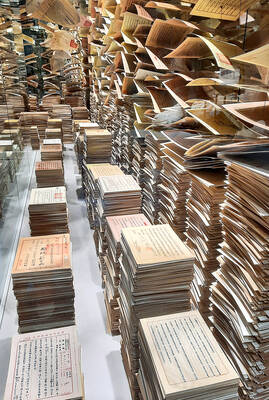
Every functioning country on Earth maintains a national archive to preserve its official records. In Taiwan, that institution is the National Archives Administration (檔案管理局, NAA), a unit of the government’s National Development Council. Since September last year, part of the NAA’s purpose-built headquarters in New Taipei City’s Linkou District (林口) has been open to the public. The National Archives (國家檔案館) store and showcase documents generated through the day-to-day operations of government agencies. Covering defense, education, economic development, health, and other policy sectors, what’s displayed here will appeal to anyone with an interest in the country’s history — although having some Chinese
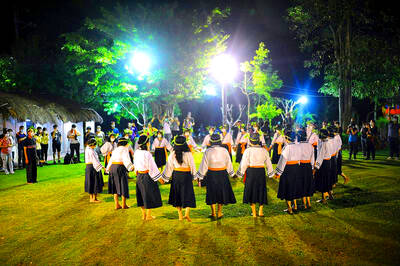
Aug.10 to Aug.16 Yuko remembers getting into frequent fights with children from neighboring villages who called him huana (番仔), a derogatory term for Indigenous people meaning “savage.” “I was mad because they made fun of me. I had no idea that it had anything to do with my identity,” the Pataran (北投洋) resident in Tainan’s Jiali District (佳里) told me when I visited in 2019. Yuko’s experience was not unusual among the Siraya and other Pingpu (plains Indigenous) groups, who hid their Indigenous identity amid stigma and discrimination, leaving later generations unaware of their ancestry. When anthropologist Melissa J. Brown

In August of 1939 Nazi Germany and the Soviet Union concluded an agreement on credit that enabled trade between the two dictatorships to boom. This was followed by two economic agreements in February of 1940 and January of 1941. By the summer of 1940 the Soviet Union “had become the most important supplier of raw materials” to Germany, accounting for almost a third of its oil imports. A year later Nazi Germany invaded the Soviet Union, its most important trade partner. This history, and that of Imperial Japan, which at one point pursued belligerent policies that were to bring it into


 RSS
RSS