

The next three weeks will be intense for the Chinese Nationalist Party (KMT) and Democratic Progressive Party (DPP) ahead of candidate registration for this year’s local nine-in-one elections. Registration opens Aug. 31 and ends on Sept. 4. The Central Election Commission (CEC) will vet the candidates and if they pass muster, the formal list of candidates will be released on Oct. 16. Election day is Nov. 28.
Both parties are afraid of breakaway party members running as independents, challenging their nominees and splitting the vote. KMT Chair Cheng Li-wun (鄭麗文) is in overdrive, and the DPP has enlisted former president Tsai Ing-wen (蔡英文) to stump.
Out of the 22 cities and counties, both the DPP and KMT have nominated 19 candidates for the top leadership position of mayor or county commissioner. The KMT’s “opposition alliance” has candidates in the remaining three — two independents and one from the Taiwan People’s Party (TPP).
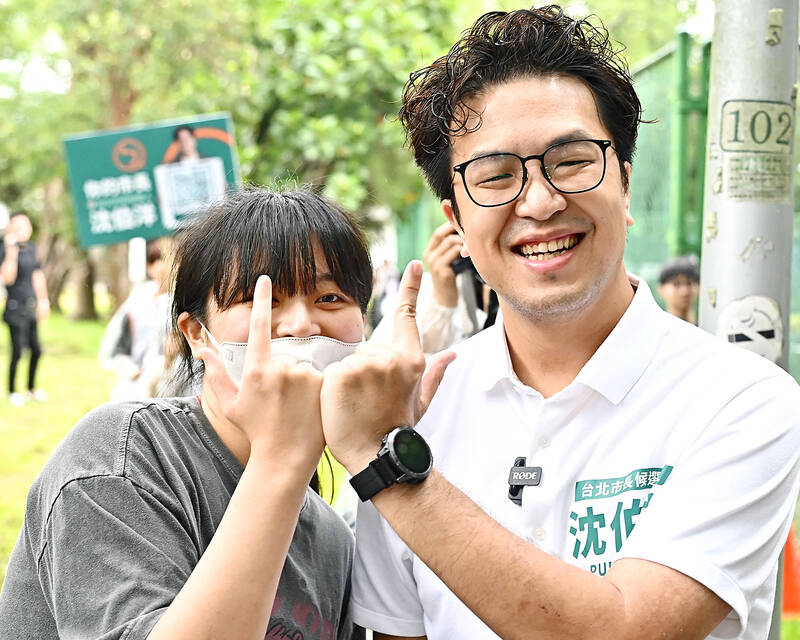
Photo: Tu Chien-jung, Taipei Times
The DPP is upbeat about its prospects this year. In the 2022 nine-in-one elections, it made some stunningly bad strategic choices and had the worst result since the party was founded, only winning five top leadership posts.
The KMT is bullish on winning over some key DPP strongholds, but openly concerned about losing some key races where they are typically strong.
If either party’s results come in below expectations, their party chair will face pressure to resign to take responsibility, which is customary. Cheng holds the strategic reins on the KMT side, while President William Lai (賴清德) leads the DPP. Lai has far more electoral experience but will be distracted by his day job. Though less experienced, Cheng can devote herself full time to the task.
Photo courtesy of Hsu Hsin-ying’s campaign office
Here is an overview of what to watch in northern Taiwan over the next three weeks.
THE DPP’S NORTHERN HOPES
The DPP struggled with who to nominate for the Taipei race, before finally settling on lawmaker Puma Shen (沈伯洋). He has done well at keeping himself in the spotlight, but polling still strongly favors incumbent KMT Mayor Chiang Wan-an (蔣萬安). Chiang has been on a roll recently, and is now, in some polling, the leading candidate for a presidential run on the KMT side in 2028.
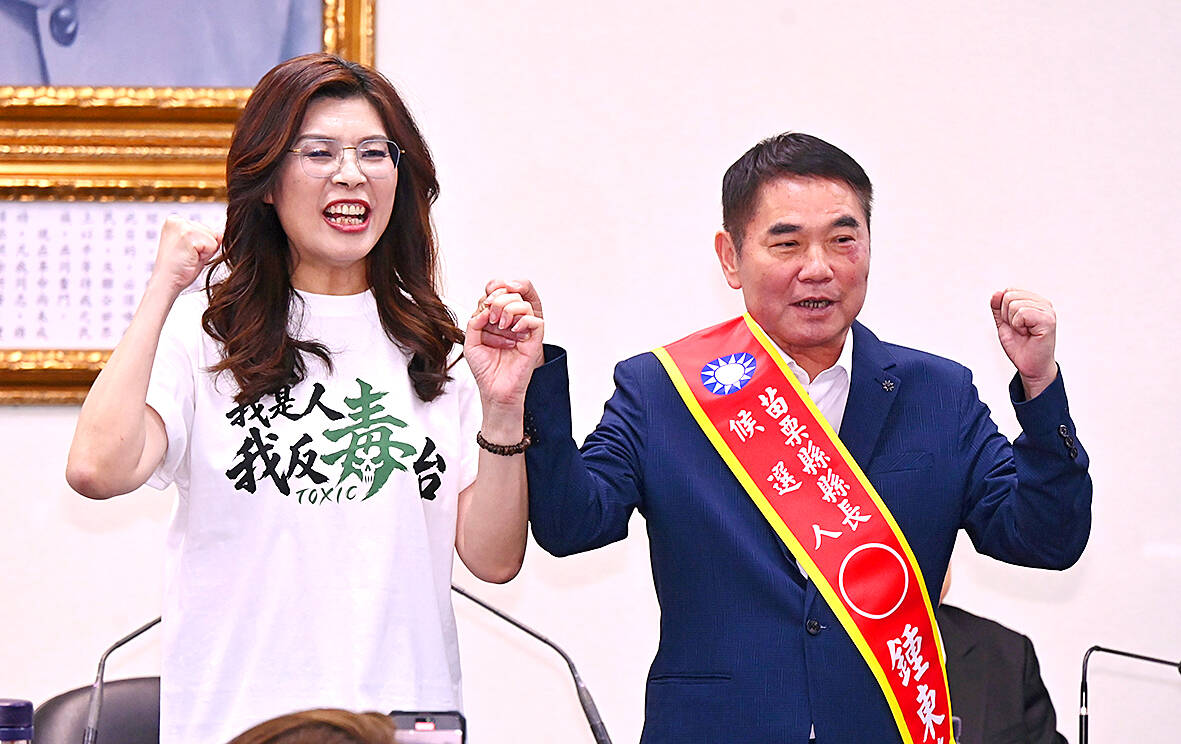
Photo: Liu Hsin-de, Taipei Times
Because of the strong media presence in Taipei, the mayoral race has traditionally been a magnet for oddball candidates, with the 2022 race attracting 12 candidates. So far as I am aware, this time only the Taiwan Mahjong Greatest Party (台灣麻將最大黨) has thrown their hat in the ring, but more may crawl out of the woodwork come candidate registration time.
In New Taipei City, the KMT’s Hammer Lee (李四川) watched as his double-digit lead evaporated as he prevaricated on entering the race, but he appears to have stabilized. Most polling has him ahead by single digits, but some suggest he is tied with the DPP’s Su Chiao-hui (蘇巧慧). The DPP is hopeful in this race, but getting the last few percentage points to put Su over the top has proved elusive.
To assist, former president Tsai has taken over as Su’s election committee chair. Tsai remains relatively popular, so this may help give Su an extra couple of points. However, Tsai is also campaign chair in the Taitung race, and was behind the strategic disasters of the 2022 race, so it is possible she could also be a problem. Most likely, though, her role will be largely honorary rather than substantive.
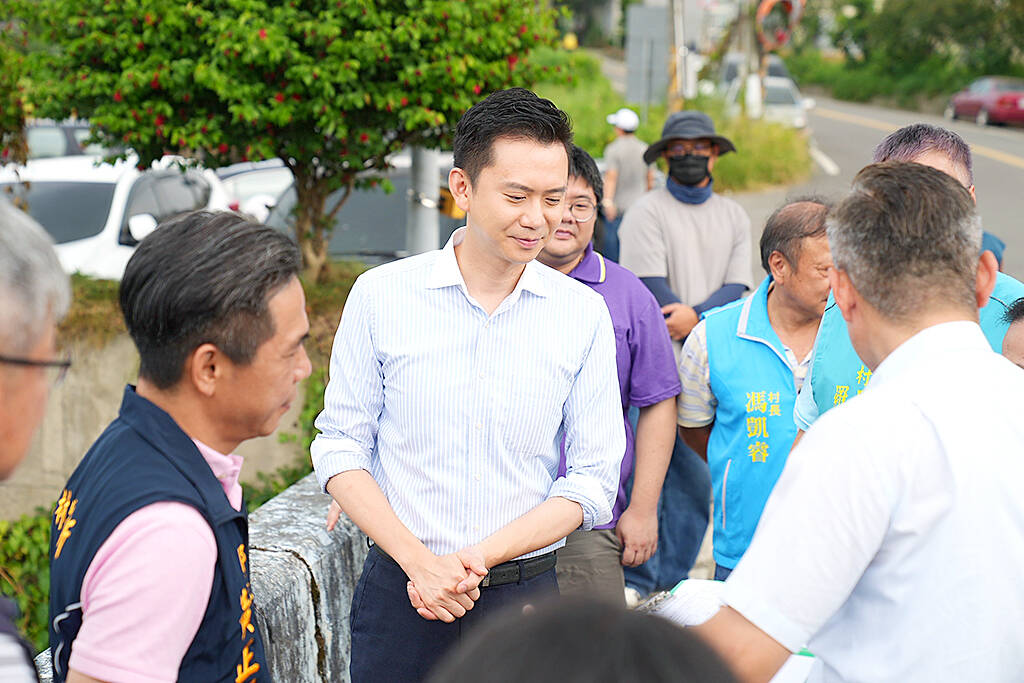
Photo courtesy of Cheng Chao-fang’s campaign office
In June, the DPP did not consider Keelung in play, but became hopeful after a Mirror Media poll late last month showed incumbent George Hsieh (謝國樑) only 2.5 points ahead of DPP challenger Tong Tzu-wei (童子瑋). However, Hsieh has already survived a recall, and that poll showed a high 25.5 percent undecided.
So far, nobody on the DPP side has indicated they have much hope in ousting KMT incumbent Simon Chang (張善政) in Taoyuan.
THE HAKKA BELT
The entire Taoyuan region has a high percentage of Hakka residents. Traditionally, they have favored the KMT and strongly disliked the DPP because it is perceived as dominated by Hoklo (better known as Taiwanese) speakers, their historic rivals with whom they often engaged in warfare up until the late 19th century.
Some polling suggests, however, that they do not particularly like the KMT per se, but rather pick them over the DPP when they were the only option. Third party candidates tend to do better here than in other parts of the country, and both the New Power Party (NPP) and TPP have a relatively strong presence here.
Interestingly, the Hsinchu County commissioner seat may be in play for the DPP. The last election they won there was in the 1990s.
The KMT primary was ugly. Cheng put her finger on the scale in how the primary was structured, intentionally including a portion of the result devoted only to KMT members. This was intended to favor current Vice Mayor Chen Chien-hsien (陳見賢) over lawmaker Hsu Hsin-ying (徐欣瑩).
Hsu is quite a character. She was originally an independent, then joined the KMT. Following the 2014 Sunflower movement, she left the KMT and founded the Minkuotang (MKT), which just switched the order of two characters in KMT. Her party produced a video targeted at young voters that was bizarre, featuring a mass synchronized dance scene in front of Chiang Kai-shek Memorial Hall that looked like something straight out of the Chinese Communist Party playbook.
Her party failed, was absorbed into the Congress Party Alliance, which also failed. She then returned to the KMT. So, Cheng likely questions her loyalty.
Cheng’s gambit narrowly failed. Chen, as expected, won the party members, but Hsu beat him by a wide enough margin with public opinion polling to eke out a narrow victory.
Chen was furious. Rumors are rampant that he will launch an independent bid. He recently did not show up to a KMT Central Standing Committee meeting held in Hsinchu County, further deepening fears within the party. Clearly nervous, at that meeting Cheng publicly sent a message to Chen, saying, “the KMT definitely needs you.”
If Chen does break with the party, that will likely hand victory to the DPP’s young, popular Cheng Chao-fang (鄭朝方). Cheng is currently Jhubei mayor and is Hakka, making him a strong candidate.
Incidentally, though not one of the 22 top leadership positions, Jhubei is where the KMT-TPP electoral non-compete agreement might break down. So far, each party is standing by their respective candidates.
In Hsinchu City, the KMT is strongly backing incumbent Ann Kao (高虹安). She won in 2022 on the TPP ticket in a three-way race against the KMT and DPP. Following her conviction on corruption charges, she was suspended as mayor, and left the TPP. She was exonerated on the most serious charges on appeal, and was restored as mayor, but so far she remains an independent and has not rejoined the TPP.
Kao has survived a recall attempt and appears likely to win re-election.
Miaoli had a wild race in 2022. Then-KMT chair Eric Chu (朱立倫) refused to nominate county council speaker Chung Tung-chin (鍾東錦) because of his criminal background. Chung ran anyway.
Chung launched his campaign for county commissioner with a press conference announcing he was not a murderer and a rapist as many alleged; he only stabbed a “friend” and was an adulterer.
He was exiled from the party, but won anyway. Chu eventually swallowed his pride and brought him back into the party.
Typically, when a local politician uses China’s Hanyu Pinyin (Chung uses Zhong Dongqin) to spell out their name, it is a political statement — an, ahem, red flag. But he might have just run his name through Google Translate. He is a classic local factional style politician, with his hands in a lot of businesses that are favored by those types.
He is expected to win re-election. The DPP has never won Miaoli.
Donovan’s Deep Dives is a regular column by Courtney Donovan Smith (石東文) who writes in-depth analysis on everything about Taiwan’s political scene and geopolitics. Donovan is also the central Taiwan correspondent at ICRT FM100 Radio News, co-publisher of Compass Magazine, co-founder Taiwan Report (report.tw) and former chair of the Taichung American Chamber of Commerce. Follow him on X: @donovan_smith.
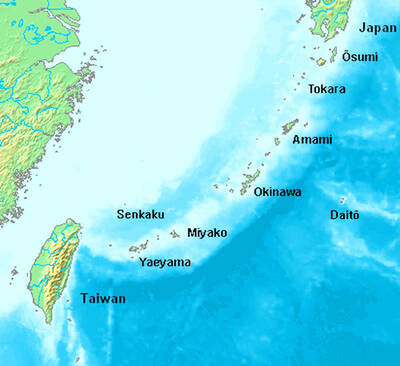
The conference in late June of “scholars” of the People’s Republic of China (PRC) that announced out of the blue that the Batanes Islands of the Philippines were “Chinese,” based on the PRC claim to Taiwan, was not a one-off event. It was an outstanding instance of a pattern in the production of PRC territorial claims: the announcement by a scholar or scholars that a place, hitherto never identified as Chinese, had a completely different identity that somehow implied it was part of China. A few of these private expansionist projects I have touched on in other columns. The “maps of
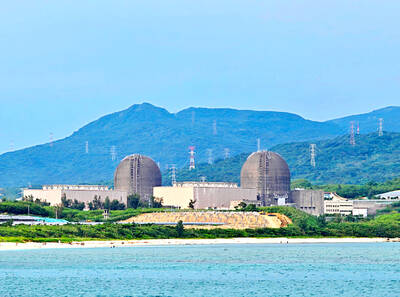
The referendum, the regulator and the budget settle whether Taiwan wants reactors. Fuel fabrication, enrichment and the back end decide whether it can run them. Taiwan pays to store nuclear fuel in the US that it has never burned. Taiwan Power Co (Taipower, 台電) bought the bundles for the Lungmen Nuclear Power Plant in New Taipei City’s (新北市) Gongliao District (貢寮), which never opened; lawmakers ordered them shipped back to the manufacturer in 2018, and the last 120 left in March 2021. Keeping them there costs the utility NT$100 million to NT$200 million a year, chairman Tseng Wen-sheng (曾文生) said in
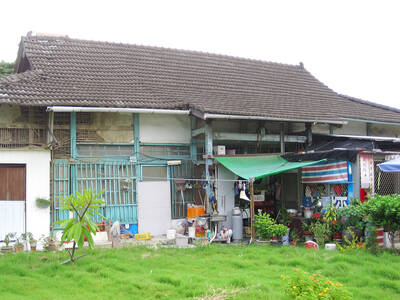
Aug. 3 to Aug. 9 The sounds of clashing swords and judo grappling once echoed around Tainan Prison during the 1930s, when its wooden martial arts hall served as a training ground for staff. This reflected the Japanese martial arts culture that permeated the colony at the time. Initially established through the police system, these halls were later expanded to secondary schools, where students trained and competed in national tournaments in Japan. Many were built during the 1930s as the colonial government accelerated its assimilation efforts, and during wartime they also became assembly halls for local police

In August of 1939 Nazi Germany and the Soviet Union concluded an agreement on credit that enabled trade between the two dictatorships to boom. This was followed by two economic agreements in February of 1940 and January of 1941. By the summer of 1940 the Soviet Union “had become the most important supplier of raw materials” to Germany, accounting for almost a third of its oil imports. A year later Nazi Germany invaded the Soviet Union, its most important trade partner. This history, and that of Imperial Japan, which at one point pursued belligerent policies that were to bring it into


 RSS
RSS