

The referendum, the regulator and the budget settle whether Taiwan wants reactors. Fuel fabrication, enrichment and the back end decide whether it can run them
Taiwan pays to store nuclear fuel in the US that it has never burned. Taiwan Power Co (Taipower, 台電) bought the bundles for the Lungmen Nuclear Power Plant in New Taipei City’s (新北市) Gongliao District (貢寮), which never opened; lawmakers ordered them shipped back to the manufacturer in 2018, and the last 120 left in March 2021. Keeping them there costs the utility NT$100 million to NT$200 million a year, chairman Tseng Wen-sheng (曾文生) said in May. The stranded fuel is worth roughly NT$8 billion (US$255 million), the auditor-general told lawmakers. No sale has been publicly announced.
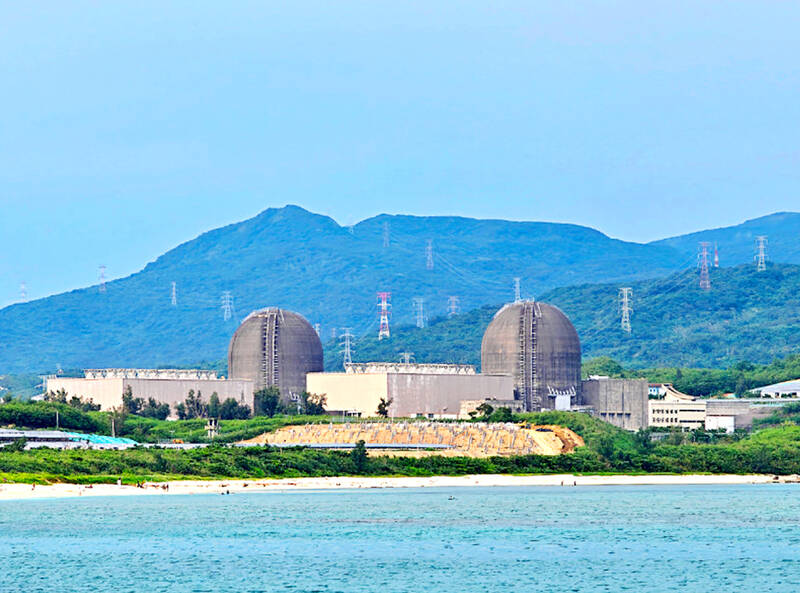
Bringing it home would solve nothing. General Electric, the maker, requires fuel past its warranty to return to its works whether Taiwan burns it or scraps it, and no licensed reactor exists to load it into. Nor can the rods simply move south. Lungmen’s two 1,350 megawatt (MW) units are General Electric advanced boiling water reactors; the Ma-anshan Nuclear Power Plant in Pingtung County’s Hengchun Township (恆春) runs two 936MW Westinghouse pressurized water reactors. Fabricators build each assembly for one specific core, Tseng says. Nothing transfers.
TT file photo
SIX REFERENDUMS AND A REGULATOR
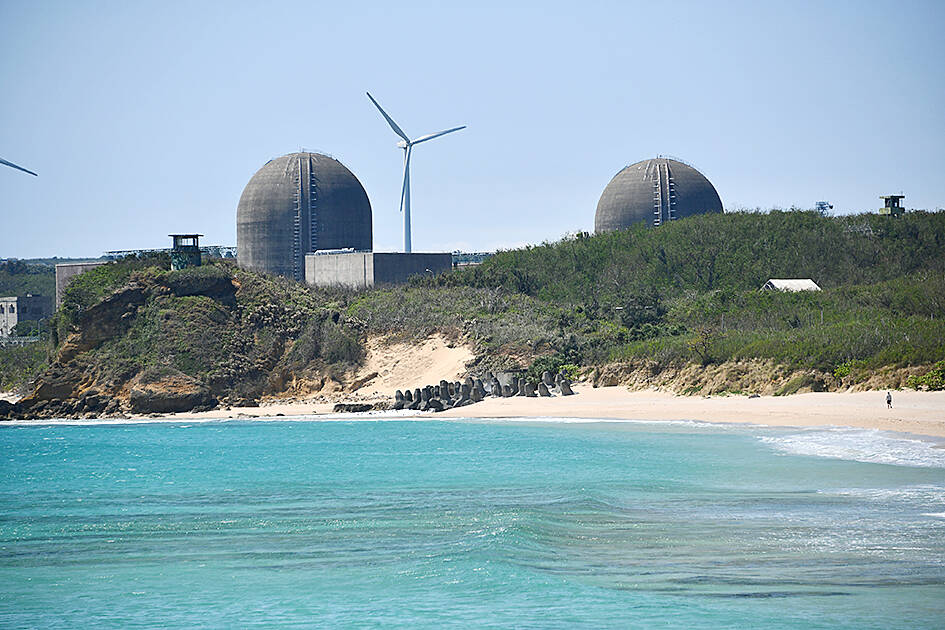
At home, Taiwan is deciding everything it can, in every forum it has. Taipower filed its Ma-anshan restart plan on March 27; safety inspections should take 18 to 24 months before the regulator rules. Nuclear Safety Commission (核安會) chairman Chen Min-jen (陳明真) opened the review in April, and the Ministry of Environment launched an environmental impact assessment alongside it. In May, the Control Yuan told the government to rethink emergency planning around aging plants and extreme weather.
The opposition wants voters in the room too. Its caucuses have tabled six referendum proposals for the Nov. 28 local elections, including one to end the “nuclear-free homeland” policy outright; the Chinese Nationalist Party (KMT) said on July 20 the nuclear question comes first. It would be the fourth such vote since 2018, and the attempt in August last year died on turnout: 4,341,432 people voted “yes,” 74.17 percent of ballots cast, but only 29.53 percent showed up, short of the 5,000,523 threshold.
TT file photo
The numbers behind the push keep growing. The Ministry of Economic Affairs expects consumption to rise 13 percent by 2030 from 2023, with artificial intelligence alone demanding 2.24 gigawatts by 2028. In a country grid with no interconnections, argues Tsung-Kuang Yeh (葉宗洸) of National Tsing Hua University, nuclear offers the shortest route back to stable, low-carbon baseload.
Tsui Shu-hsin (崔愫欣) rejects the premise. Taiwan mines no uranium, the Green Citizens’ Action Alliance (綠色公民行動聯盟) secretary-general wrote in answers to the Taipei Times, and it buys every stage of the cycle abroad, from mining through enrichment and fabrication to transport. All the plants came from the US, so the original vendors supply the components, the control systems, the fuel and the technicians. Restarting a plant idle for years means sourcing parts, replacing digital instrumentation and recertifying equipment: not, she says, flipping a switch back on, whatever outsiders imagine. Taiwan should shed its dependence not on one fuel but on a single supply chain and one large centralized system. Turning gas dependence into nuclear dependence, she argues, changes nothing.
SIGNED BY OTHERS
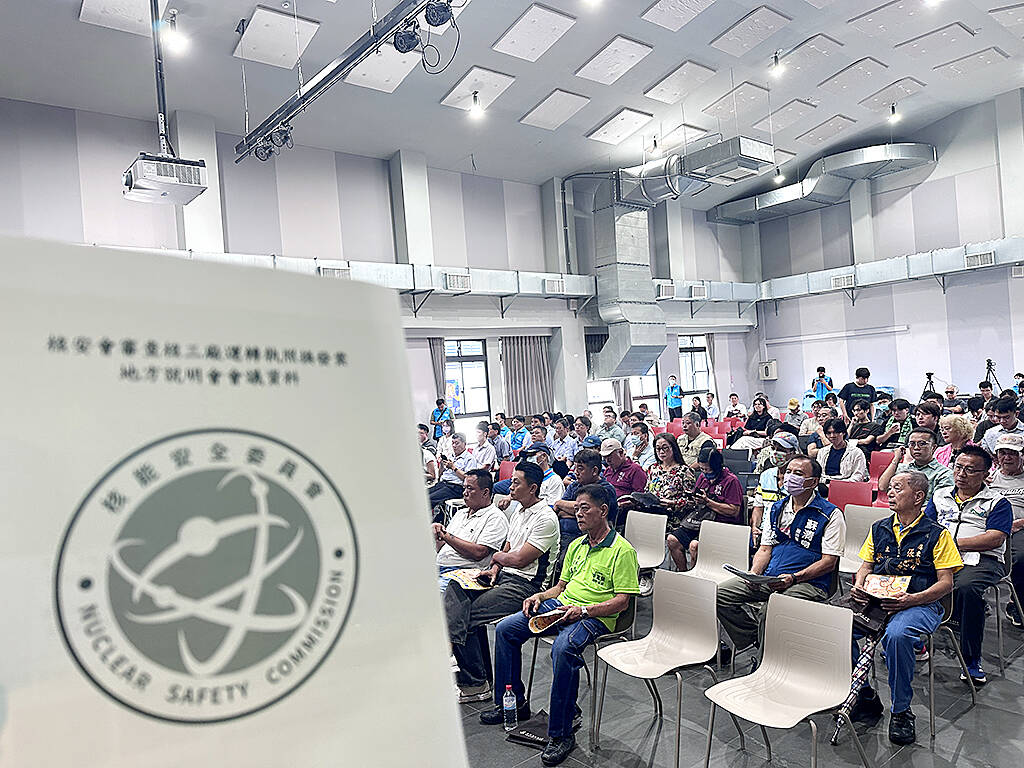
Photo: Tsai Tsung-hsien, Taipei Times
Every arrangement governing Taiwan’s fuel cycle shares one feature: Taipei signed none of them under its own name. The American Institute in Taiwan negotiated the 123 agreement — so-called because it falls under section 123 of the Atomic Energy Act and is required before countries can cooperate on nuclear materials — that covers Taiwan, and the Arms Control Association ranks it among those with “gold standard” provisions, a commitment to forgo enrichment and reprocessing that Taipei volunteered in 2012. Safeguards follow the same pattern: a 1964 trilateral agreement handed inspections to the International Atomic Energy Agency, and outlived Taiwan’s exclusion from the agency in 1971.
Even that is not the tightest constraint on Taiwanese energy sovereignty. Taiwan imports about 96 percent of its energy. Gas generated 42.4 percent of its power in 2024; nuclear, 4.2 percent. The government wants to stretch liquefied natural gas (LNG) reserves from about 11 days to 14 by next year, and Chinese military drills have already named LNG terminals as targets.
Gas flows; nuclear fuel stocks. An LNG cargo lives days at sea, while fuel assemblies would sit inside the reactor building for years: Taipower’s first order would cover at least 18 months, and the company must place it well in advance for a 2028 restart. Tsui grants the point, but objects that the stock is not the whole chain: a plant still needs spare parts, maintenance and specialist crews, and export controls or a blockade could cut all three.
TT file photo
The ledger has its ironies. Between December 2022 and June last year, Taiwan ranked fifth among buyers of Russian coal, and early last year it became the world’s largest importer of Russian naphtha after Formosa Petrochemical lifted its Russian share from 9 to 90 percent. A country that treats Beijing and Moscow as one strategic problem spent most of last year financing half of it through its fuel bill. Researchers Aleh Cherp and Jessica Jewell distinguish sovereignty, robustness and resilience as three perspectives of energy security. Taiwan argues its nuclear debate almost entirely in the first; its binding constraints live in the other two.
FROM NAIMEY TO OAK RIDGE
The gold-standard bargain assumes a working market. That market is coming apart. Niger moved in June last year to nationalize Somair, operator of its only working uranium mine, a year after revoking Orano’s Imouraren project license. An arbitration tribunal ordered Niamey not to sell the withheld uranium; Orano says a shipment left anyway in November. Niger supplied a quarter of the EU’s natural uranium in 2022, and the EU keeps a dedicated supply agency for moments like this. Taiwan has no such body, no supplier relationship in its own name and no seat at the agency that inspects it.
TT file photo
Ma-anshan and Lungmen burn standard low-enriched fuel; high-assay low-enriched uranium (HALEU) matters only if Taiwan one day looks past restarts, to small modular reactors or the fourth-generation designs Chen says he remains open to. Taipei’s gold-standard pledge covers producing such fuel, not buying it. The trouble lies with the sellers: only Russia and China produce HALEU at scale. Rosatom, Russia’s atomic energy corporation, controls roughly 40 percent of global enrichment services, and China is buying record volumes of Russian enriched uranium well below Western prices. Beijing is becoming both marginal buyer and producer of last resort in the market Taipei would have to rely on. Washington committed US$2.7 billion in January to buy its way out.
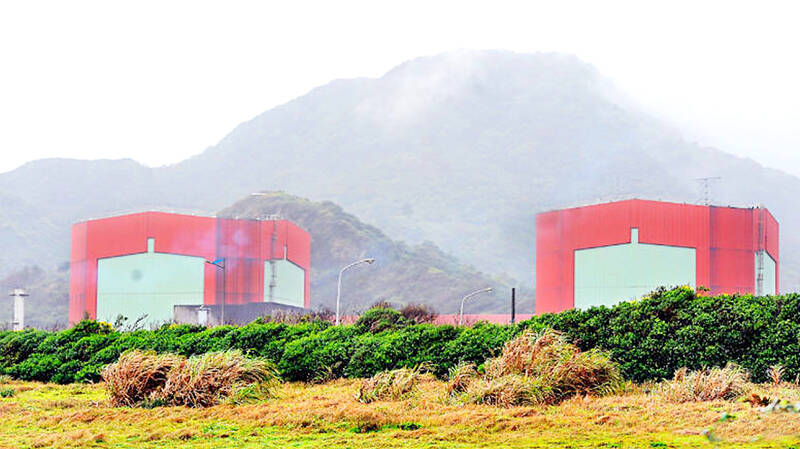
France has supplied Taipower before, under a 2008 fuel contract for Jinshan Nuclear Power Plant in New Taipei City’s Shihmen District (石門) and the Kuosheng Nuclear Power Plant in New Taipei City’s Wanli District (萬里), and its industry could help again: on fabrication; on enrichment, where Orano is building a US$5 billion plant at Oak Ridge, Tennessee; and on experience. The French regulator ruled in 2021 that EDF’s 32 units of 900MW, descendants of a Westinghouse design, could run beyond their 40-year design life. No regulator has fresher practice taking such reactors past 40, which is what Ma-anshan now faces. None of it closes the gap. France keeps no diplomatic relations with Taipei, and US consent rights follow US-obligated material wherever it travels.
WHAT A CITY HALL CAN STOP
One part of the cycle belongs genuinely to Taiwan, and it is the part where least has happened. In February 2015, Taipower tendered a contract worth up to NT$11.26 billion to reprocess 1,200 used fuel bundles abroad. Legislators froze it a month later pending a budget review, and there the matter died. The obstacle was domestic.
Eleven years on, the same file blocks a reactor. Crews can only unload the used fuel at Kuosheng once dry storage operates, and inspectors need an empty core before they begin. Taipower says the hot test cannot proceed because New Taipei City has not issued a completion certificate for soil and water conservation works. A municipal permit is holding up part of the national restart timetable. The final disposal site, Tsui notes, exists on paper only: no siting law has passed, and dry storage buys decades, not a solution.
Whether the reactors come back, Taiwan will decide, in more forums than most countries would bother to convene. Whether anyone can fuel them, maintain them and one day empty them, others will decide: in Niamey, in Moscow, in Washington and in a New Taipei City planning office. None of it appears on the November ballot.
Romain Blachier is an associate fellow at the Fondation Jean-Jaurès. He works in the renewable energy sector, is a consultant and teaches political science.
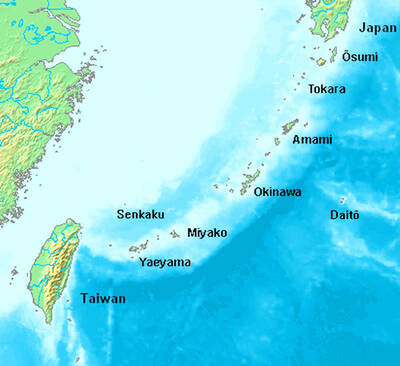
The conference in late June of “scholars” of the People’s Republic of China (PRC) that announced out of the blue that the Batanes Islands of the Philippines were “Chinese,” based on the PRC claim to Taiwan, was not a one-off event. It was an outstanding instance of a pattern in the production of PRC territorial claims: the announcement by a scholar or scholars that a place, hitherto never identified as Chinese, had a completely different identity that somehow implied it was part of China. A few of these private expansionist projects I have touched on in other columns. The “maps of
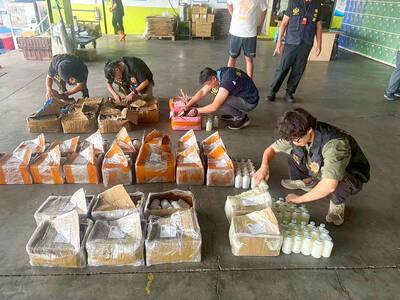
This paper ran a piece this week on the rampant smuggling of Kaoliang liquor from Kinmen through customs to Xiamen in the People’s Republic of China (PRC). Our paper reported that “Chinese frequently approach passengers heading to Xiamen and offer them 80 yuan (US$11.82) to carry kaoliang liquor through customs.” The couriers are then photographed and the images sent to smugglers on the other side of customs at the Wutong Ferry Terminal. The liquor couriers can pay half the cost of their ferry ticket from the transaction, the report said. In the PRC this tactic of splitting smuggling of goods
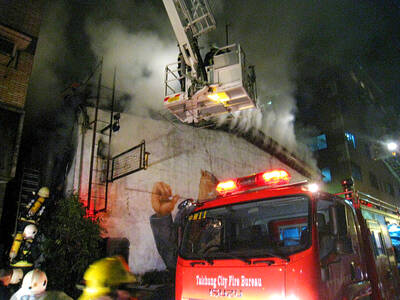
Prior to March 6, 2011, Taichung was the place to be. Known as the “city of culture” in the 1920s, Martial Law crackdowns had made Taichung a sleepy backwater by the 1990s. Taipei, and even the port city of Kaohsiung, were more exciting and cosmopolitan. In the 2000s, Taichung began to punch well above its weight. Taiwan joined the WTO, the High Speed Rail arrived and the Central Taiwan Science Park opened. In 2001, former foreign minister Jason Hu (胡志強) was elected mayor, and he set about reimagining the city as a cosmopolitan center for business, sports, arts and culture. His
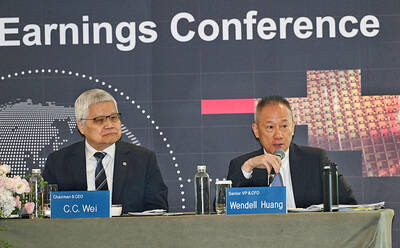
On July 16, Taiwan Semiconductor Manufacturing Co (TSMC, 台積電) reported second-quarter revenue of US$40.2 billion and a gross margin of 67.7 percent, supported by global demand for AI chips. The following day, the TAIEX (台股加權指數) recorded its largest-ever single-day point decline. The Index fell 2,953.71 points, or 6.47 percent, as foreign institutional investors sold a net NT$189.04 billion in shares. TSMC fell NT$180. Meanwhile, local individuals set a record for odd-lot trading, buying quantities smaller than the standard 1,000-share lot. So, why were strong AI earnings followed by a market seizure? The answer lies in how artificial intelligence has rewired Taiwan’s financial system.


 RSS
RSS