

This week a flood of news on the great divide in Taiwan. Not the Blue-Green one, but the other divide, between the haves and the have-nots.
The government announced that real wages (wage growth after inflation) grew 1.16 percent in the first six months of this year, marking the strongest real wage growth in six years for the same period, according to the Directorate General of Budget, Accounting and Statistics (DGBAS). Good news!
The statistics also mapped the demographic strain on the workforce: average monthly overtime hours was 17.8 hours per employee in the first half of the year. That was the highest level in 22 years. Overtime in the electronics and component manufacturing sectors reached its highest level in 47 years of statistics-keeping. The economy cannot be sustained without either rising birthrates or rising in-migration.

Photo: Reuters
Employers are also reluctant to hire because laying off employees is legally difficult. That gives firms a good excuse to substitute overtime for new hires.
K-SHAPED GROWTH
Consumer confidence, which had improved in June, fell again last month. This occurred despite the booming economy and rising economic forecasts for the near future. The Taipei Times quoted National Central University’s Research Center for Taiwan Economic Development (RCTED) executive director Dachrahn Wu (吳大任): “This reflects a K-shaped growth, in which some industries are benefiting while others are being left behind.”
Indeed, technology workers account for less than 10 percent of the workforce, while, as the DGBAS also reported, over 70 percent of employees earned less than the average regular monthly wage in the first six months of this year, another record high. The number of lower-paid foreign industrial workers and part-time employees grew faster than the number of full-time workers.
Why are average wages high? Because that tiny slice of tech workers yanks the average up. The median monthly regular wage was just NT$39,283 in the first half of this year, nearly NT$10,000 below the average wage, DGBAS said.
Despite the gaudy GDP numbers, the average Taiwanese is experiencing an economy in deep trouble. An excellent piece from the Taiwan Political Economy Collaborative runs the numbers. In 2024, it observes, nominal GDP grew by 9.1 percent, but total nominal wages increased by only 4.4 percent, while the number of employed people increased by 0.6 percent. Since output growth was twice wage and employment growth, labor’s share of GDP fell from 44.3 percent in 2023 to 43.1 percent. The collaborative estimates that the labor share of GDP will collapse to just 35.1 percent in the first quarter of this year. Workers are being shut out of the economy as returns increasingly go to capital. Even tech workers don’t earn what they should.
DGBAS statistics show that the share of GDP accruing to the traditional economy fell 2.2 percent in 2024 and slid again last year. The economy that ordinary workers are experiencing is an economy in long-term recession, not the economy that people on the outside see. The “real wage growth” of 1.16 percent is an illusion created by high average wages in the tech sector. As the above collective observes, roughly half of all industrial subsectors are experiencing real wage declines. Workers accept overtime because they experience their own wages shrinking.
A savage editorial from Storm Media strongly criticized the administration of President William Lai (賴清德) and its fixation with the stock market. Taiwan’s elders often criticize the young for being lazy and having no financial skills, Storm said. “Why aren’t you investing in TSMC?” is something younger workers hear all the time from their elders. Of course, younger workers don’t have the cash for that, it is all they can do just to survive. Storm observes that while wages are what the real economy pays for a worker’s productivity, a stock price is the market’s bet on a firm’s future, two completely different things. It thunders: “When a society begins to treat the gap between the two as a personal investment failure rather than a structural policy problem, it has quietly declared that the value of work no longer matters.”
GENERATIONAL DIVIDE
The long-term slump in the labor share of GDP also reflects another great divide, the generational one. Taiwan’s economy is increasingly aging, with returns accruing to older people who no longer work. As Storm Media noted, the old in that economy frequently criticize the young on moral grounds. When a group failure is explained as a moral failure, a structural issue is being hidden, because it favors the group making the criticisms.
A puzzling issue, especially to outsiders, is why there isn’t more rebellion among ordinary workers. The increasingly lopsided economy seems to have few political consequences for the major parties. Part of this is a function of overwork: people who work 50-60 hours a week don’t have the time or energy to engage in political action. The Martial Law economy compelled a six-day work week for precisely that reason: it suppresses political opposition. That is why as the nation democratized it moved to a five-day work week. The authoritarianism is gone, but its attitudes and effects linger.
The Storm Media nod to the behavior of older people provides another clue: younger workers who are victims of structural policy failure internalize that policy failure as their own inadequacy. If someone hears “It’s your fault you are poor!” often enough, they may start to believe it.
The tide of overtime and overwork also suppresses responses to other urgent issues. Workers cannot have children, they lack the time and money. They can’t respond meaningfully to the threat from the thugs across the strait. Indeed, for many it may be rationalized away as a change of masters that will have no meaningful effect on their own lives. Some survey data shows this. A February seminar at Stanford given by Academia Sinica scholar Wen-chin Wu (吳文欽), Wu said that survey data shows that “younger respondents exhibit substantially lower willingness to fight than older cohorts.”
Taiwan’s apparent success also suppresses ordinary workers’ reactions to their economic struggles. Whatever their economic status, people take pride in Taiwan’s economic accomplishments. The ordinary person, despite the slumping domestic economy, is much better off under Lai, following eight years of incremental improvement under president Tsai Ing-wen (蔡英文), by almost any measure. The convenience of life in Taiwan also helps suppress sustained political response to declining real wages.
Will the long-term decline in the non-export economy manifest itself in the next election? Perhaps, but more by voter absence than by swings in the vote. And by the babies who are never born to vote for the pro-Taiwan parties because elites in both major parties have decided to let the nation die rather than address the political economy of labor and land development.
All the democracy and resilience and economic growth in the world won’t matter one whit if that decline isn’t reversed.
Notes from Central Taiwan is a column written by long-term resident Michael Turton, who provides incisive commentary informed by three decades of living in and writing about his adoptive country. The views expressed here are his own.
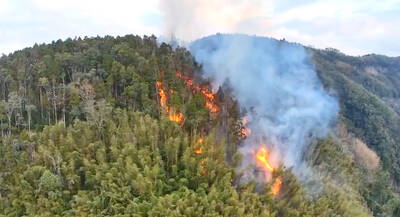
It is forest fire season in Europe and North America, and the news is filled with harrowing images of disastrous fires filling the air with smoke. What about Taiwan? Taiwan has a unique forest fire profile. Unlike other nations, where the threat peaks in the dry summer months, that period is wet. Instead, major forest fires typically occur during October to April, when the country is drier. Moreover, “high temperatures are not the primary drivers of forest fires” as a study in Theoretical and Applied Climatology noted. Rather, the consensus is that dryness is the trigger of forest fires here, with

When Gary Melyan, a longtime Taiwan resident who died on July 7 at age 83, arrived in Taipei for the second time in 1971, he was a graduate student trying to complete a doctoral thesis on the Taiping Rebellion. Wanting to assemble some fellow academics for a regular meal, he initiated a Saturday lunch, which quickly shifted to Saturday dinner. Then, sometime in 1974 or 1975, it became a weekly Wednesday night meal. Melyan never finished his PhD, but the weekly Wednesday dinner, now known as the Wednesday Night Old Farts (WNOF), has continued for more than half a century

The next three weeks will be intense for the Chinese Nationalist Party (KMT) and Democratic Progressive Party (DPP) ahead of candidate registration for this year’s local nine-in-one elections. Registration opens Aug. 31 and ends on Sept. 4. The Central Election Commission (CEC) will vet the candidates and if they pass muster, the formal list of candidates will be released on Oct. 16. Election day is Nov. 28. Both parties are afraid of breakaway party members running as independents, challenging their nominees and splitting the vote. KMT Chair Cheng Li-wun (鄭麗文) is in overdrive, and the DPP has enlisted former president
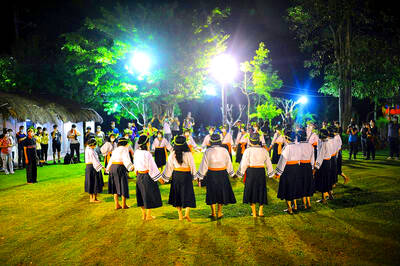
Aug.10 to Aug.16 Yuko remembers getting into frequent fights with children from neighboring villages who called him huana (番仔), a derogatory term for Indigenous people meaning “savage.” “I was mad because they made fun of me. I had no idea that it had anything to do with my identity,” the Pataran (北投洋) resident in Tainan’s Jiali District (佳里) told me when I visited in 2019. Yuko’s experience was not unusual among the Siraya and other Pingpu (plains Indigenous) groups, who hid their Indigenous identity amid stigma and discrimination, leaving later generations unaware of their ancestry. When anthropologist Melissa J. Brown


 RSS