

An interesting essay in the spring issue this year of International Security by Kerby Davis and Eugene Gholz explores the possibilities and outcomes of simulated missile attacks by the People’s Republic of China (PRC) on Taiwan’s ports to carry out a blockade.
“Substantively,” they conclude in Blockade by Fire: China’s Potential to Blockade Taiwan Using Missile Attacks on Ports, “our article raises serious concern about Taiwan’s vulnerability to Chinese military coercion. Even if Taiwan and the United States take steps to better prepare for a Chinese blockade, they face a greater threat from China than analysts previously believed.”
The authors see the missile blockade as a better choice for Beijing than a traditional ship-based blockade.
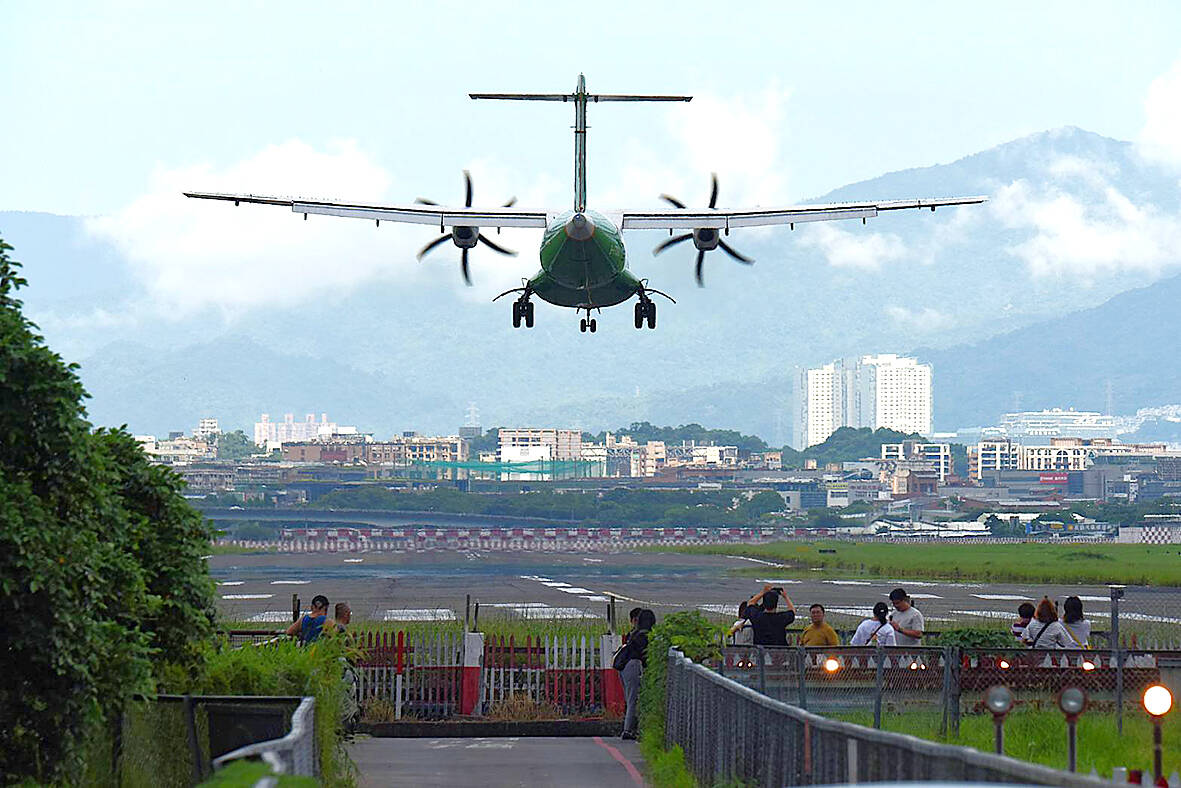
Their models look at a wide range of variables, including missile types, target types (cranes, cranes and ships in harbor, etc), and what rules the PRC will use to govern its choices. In their baseline scenario, the PRC aims to reduce cargo throughput in the ports to 25 percent of its pre-strike level. Hence, whenever a port recovers to 25 percent of its normal activity, the PRC launches a fresh wave of missiles. Other scenarios assume constant firing of missiles. Cranes are key targets because it is difficult to unload cargo from large ships without them, and they are hard to replace. It should be noted that the dominant global maker of cranes, Zhenhua Heavy Industries, is a firm based in Shanghai.
“But considering the mix of costs and benefits,” the authors contend, “the continual-firing strategy using DF-11As, targeting only cranes, and offsetting the aimpoints inland, away from ships, looks dangerously promising from the Chinese perspective.”
The authors recommend that Taiwan adopt responses to this scenario.
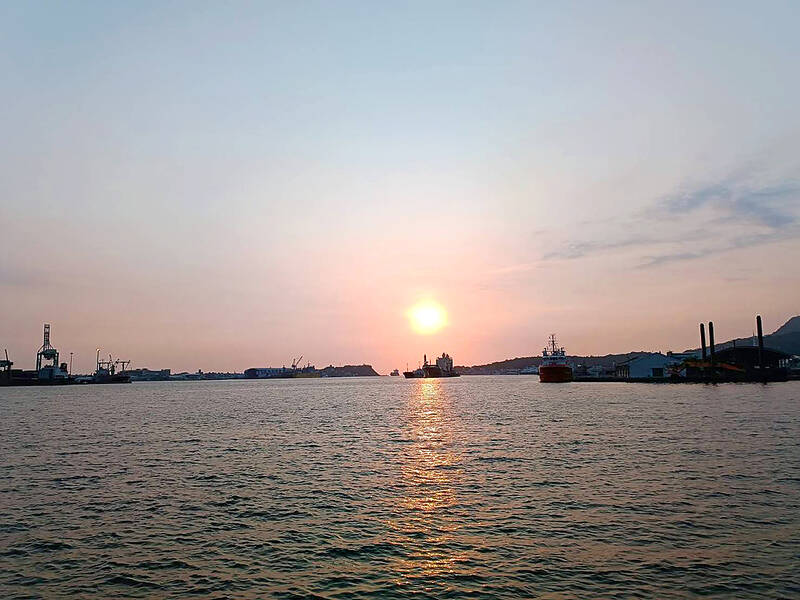
Photo: Hung Ting-hung, Taipei Times
Davis and Gholz observe that Taiwan does have large shipping firms such as Wan Hai Lines Ltd (萬海航運) and Evergreen Marine Corp (長榮海運) that could easily supply ships to run a blockade. But having access to ships is not the same thing as having crews willing to sail them into a combat zone. Taiwanese carriers employ multinational crews, and seafarer availability could become an important constraint. Few commentators writing on blockade scenarios have considered the problem of crewing the ships that are supposed to run the blockade, though media reports of crews refusing Black Sea assignments are common.
“Fear of being killed, rather than merely caught in the crossfire, is prompting experienced officers to refuse Black Sea assignments as attacks on merchant shipping intensify,” Lloyd’s List reported last month. Davis and Gholz point out that the PRC will also be actively chartering crews and ships to hinder their use as blockade runners, a common tactic in blockades during war.
The authors do discuss the Russian attacks on Ukraine Black Sea ports, which failed to knock them out. Moreover, once international shippers realized the risk was low and manageable, they continued to send in ships. Russia’s efforts to close the ports via naval surface blockade and missile attacks have thus far not been completely successful, though as recent media reports show, they are having an effect.
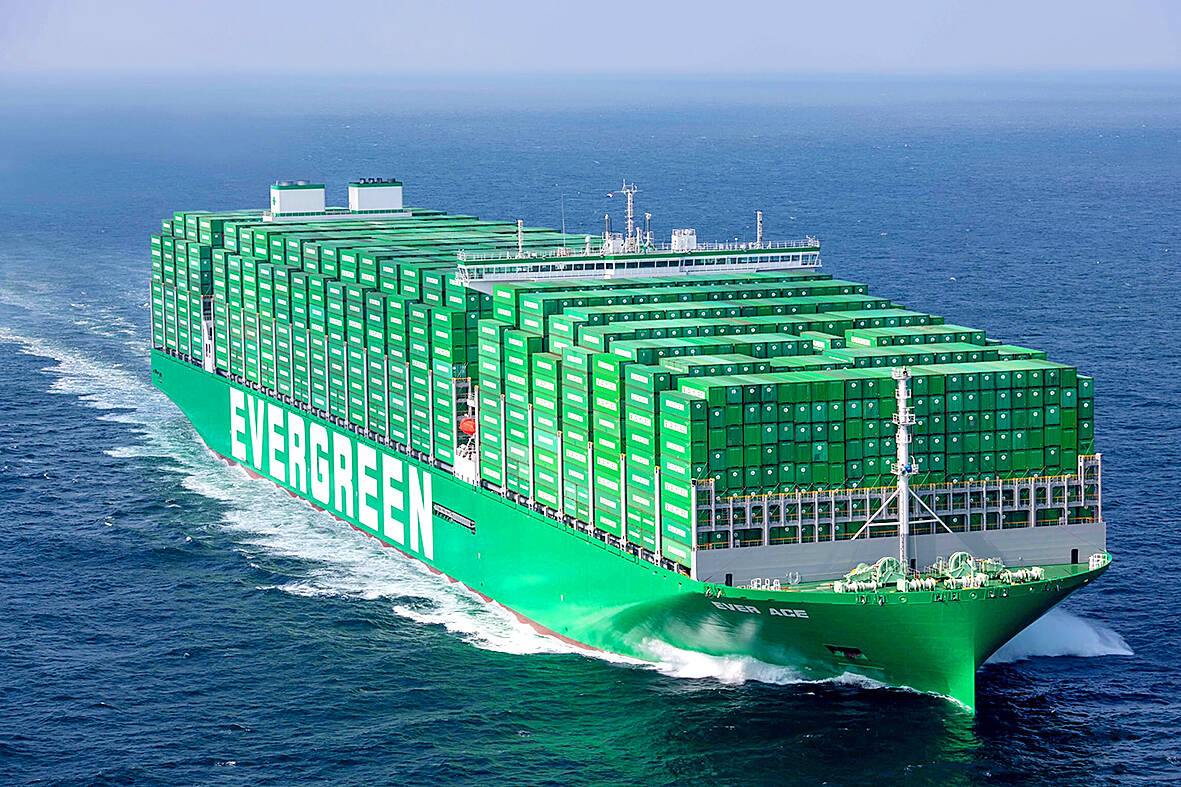
Photo courtesy of Evergreen Marine Corp
There are few other examples of major ports being knocked out by missile attacks in the modern era, but in fact in the 1971 India-Pakistan War, in Operations Trident and Python, Indian missile boats armed with Russian Styx missiles hit the port of Karachi, destroying several ships in port and setting major fuel-storage facilities ablaze. The loss of the fuel tanks (also hit by air raids) badly disrupted Pakistan’s principal port, along with billions in repair costs. This damage was applied with a handful of relatively unsophisticated missiles.
One interesting aspect of Indian naval ownership of the sea around Pakistan is that after the second Indian attack on the port, a de facto Indian blockade arose. Initially, neutral ships sought safe passage from the Indian authorities before heading to Karachi. Later, commercial traffic to Karachi largely dried up.
The political implications of a Taiwan blockade by fire raised by the Indian success with Karachi are obvious. If neutral carriers felt compelled to seek Chinese assurances or safe passage before entering Taiwanese ports, Beijing could exploit those requests as evidence that it exercised effective control over access to Taiwan — even though requesting safe conduct would not itself constitute recognition of Chinese sovereignty. The purpose of a blockade by fire may thus include this political goal. Davis and Gholz note that one advantage of missile attacks is they don’t take place in the land, sea, or air space of other nations, playing to PRC propaganda that Taiwan is an “internal” matter.
The Davis and Gholz paper focuses on the direct effects of strikes on Taiwan’s ports. What happens to Taiwan’s other industries? They note that the last round of PRC drill simulated attacks on ports and energy facilities. If missiles start landing on Taiwan’s ports, what happens to the migrant workers that Taiwan depends on to run its tech and construction industries? Will they remain? Does the government have a “danger pay” policy? Does it plan to compel migrant workers to remain in Taiwan?
Many of Taiwan’s highest-value semiconductor shipments leave by air. Shipments of chips will continue until stockpiles run out, if the airports are open. If they are open, people — from migrant workers to engineers to executives — will want to flee. Ukraine has suffered severe losses of workers, both through flight and through people entering the military, seriously impeding its recovery efforts. So will Taiwan. The PRC could theoretically leave the airports functioning for just that reason.
Further, construction workers will be at a premium if Taiwan needs to quickly repair its ports. The Taiwan International Ports Corp, the state-owned firm that owns the ports, had a total workforce of 2,086 workers in 2024, all but nine full-time, and another 389 workers under contract. That is far too small a workforce to carry out rapid, major repairs on half a dozen international ports all at once. Workforce strain will become acute if construction workers must clear ports and fix energy facilities simultaneously.
Taiwan’s much-touted resilience?
“Taiwan’s military and homeland security organizations have not organized exercises with port operators to practice responses to national security emergencies,” Davis and Gholz dolefully observe, based on interviews from June 2024.
Neither Taiwan’s shipping firms nor the Taiwan International Ports Corporation have practiced scenarios involving destruction at the ports, nor have they reserves of parts and equipment for that, they learned from their interviews.
That NT$10,000 AI industry dividend that the administration of William Lai (賴清德) and the Legislature take turns promising to the public would be much better spent on creating rapid response engineering and repair teams, drills for port attacks and repairs and practicing the logistical headaches of shifting workers out of Taiwan’s endless apartment construction and into port clearing and repairs.
We may need them soon.
Notes from Central Taiwan is a column written by long-term resident Michael Turton, who provides incisive commentary informed by three decades of living in and writing about his adoptive country. The views expressed here are his own.
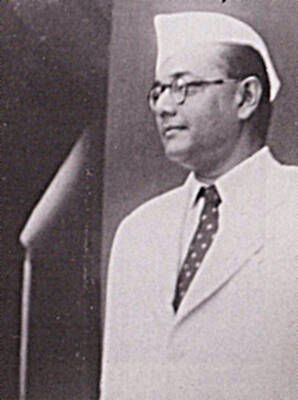
Aug. 17 to Aug. 23 Subhas Chandra Bose was meant to be in Taiwan for no more than two hours. After refueling at today’s Songshan Airport in Taipei, the Mitsubishi Ki-21 bomber carrying the Indian independence leader took off for Japan — and crashed almost immediately. It was Aug. 18, 1945, three days after Japan announced its surrender to the Allies. Bose, who advocated armed struggle to free India from British rule, had worked closely with Imperial Japan. He was attempting to reach the Soviet Union via Manchuria in the hope of gaining support

The Tzu Chi Foundation, the globally known Buddhist charity, announced on July 21, 2021 that it had signed a deal to purchase 5 million doses of the Pfizer-BioNTech (BNT) COVID-19 vaccine. It said that the vaccine doses would be donated to the government’s COVID vaccine program. In October the Centers for Disease Control (CDC) made a public announcement thanking the Buddhist foundation and others for the 889,200 doses of the BNT vaccine they had collectively donated. FRAUD Earlier this month, the public was stunned to learn that prosecutors had indicted former Changhua Bar Association chairwoman, Chen Yu-hsuan (陳昱瑄), and others on suspicion

These few weeks will decide who ends up on the ballot, and who does not, in this year’s elections. Registration closes on Sep. 4, but until then, politicians may drop in or drop out of the race. Both the pan-green Democratic Progressive Party and the its supporters (DPP) and the pan-blue Chinese Nationalist Party (KMT) have nominated 19 candidates for 22 of the top-level mayor and county commissioner posts. The KMT is also promoting a “great opposition alliance” in the remaining three, backing two independents and one candidate from the KMT-aligned Taiwan People’s Party (TPP). For more context and a

Starting dramatically on a historic trail built by the Japanese above a hot springs town and ending unceremoniously on a muddy, leech-infested forest road after what could be your worst night’s sleep ever in the mountains, the Mabolasi Traverse (馬博拉斯橫斷) is full of challenge and reward. For fit hikers who can survive the former and still enjoy the latter, “Mabo” is the route for you. UP, DOWN AND UP AGAIN The first challenge of the trip: three days of uphill walking with a heavy backpack. From the hot springs town of Dongpu (東埔) in Nantou County, the route follows the Japanese-built Batongguan


 RSS
RSS