


This could be a make-or-break year for the Taiwan People’s Party (TPP), far more so than 2020, 2022 or 2024, when it was an up-and-coming party and expectations were lower.
Now the party is an established fixture on the political scene, though still far smaller than the Democratic Progressive Party (DPP) and the Chinese Nationalist Party (KMT).
Historically, third parties have had a strong run of roughly four or five years, before fading into obscurity — sometimes slowly, sometimes quickly. Consider the electoral heydays of the New Party (1994-1998), People First Party (2001-2006), Taiwan Solidarity Union (2001-2005, since renamed “party”) and the New Power Party (2016-2020). The TPP first found electoral success in 2020, in part because it happened during party founder Ko Wen-je’s (柯文哲) successful runs for Taipei mayor in 2014 and 2018 as an independent.
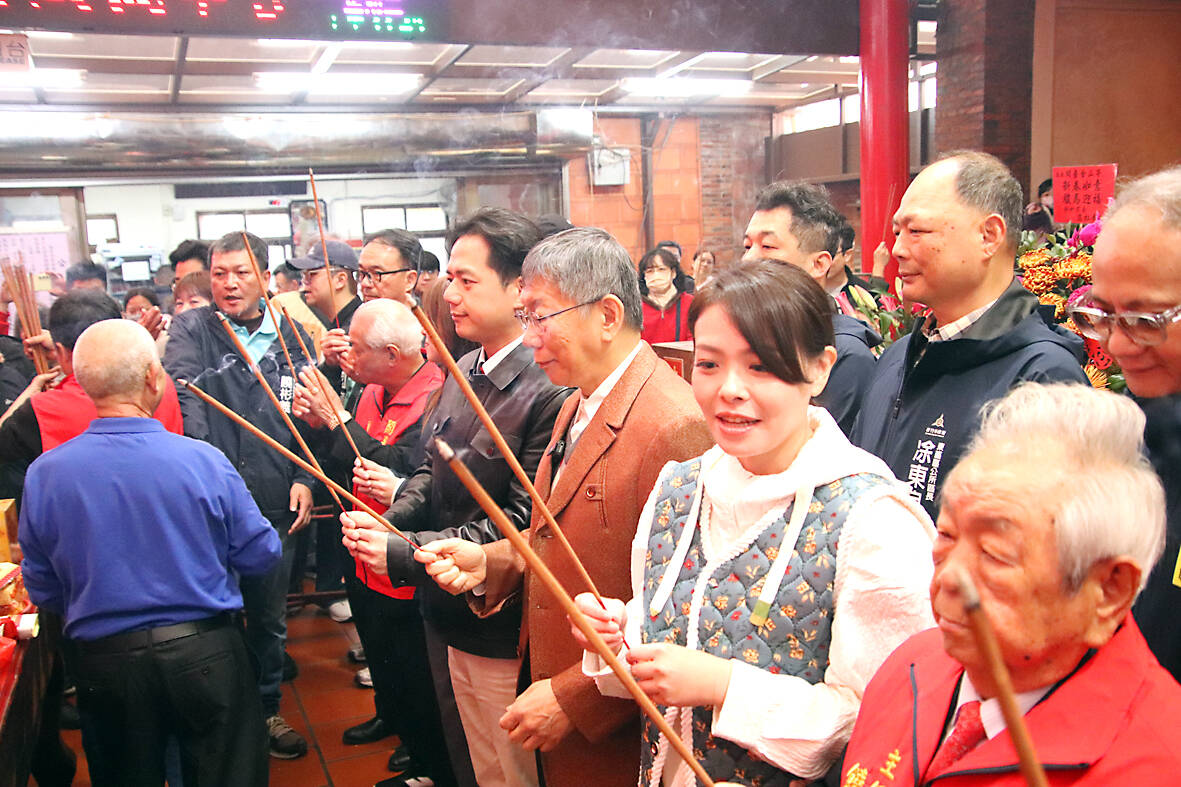
Photo: Huang Mei-chu, Taipei Times
In a column last month, “The TPP enters the year strong, but faces headwinds” (Jan. 8, page 12), I wrote that despite all the legal troubles and scandals that plagued the party last year, entering this year “recently the TPP has been showing signs of health, discipline and fitness.”
However, it is not hard to envision the party collapsing if both Ko and current party Chairman Huang Kuo-chang (黃國昌) end up in jail. Ko’s trial for alleged corruption wraps up on March 26, and allegations are swirling around Huang’s role in the “paparazzi” scandal.
Losing both would decapitate the TPP. The party has sidelined and degraded the careers of the two previous party stars who could have stepped in to replace them: Vivian Huang (黃珊珊) and Tsai Pi-ru (蔡壁如). Both are talented, and sidelining them was a big strategic error.
DEFINING SUCCESS
As a smaller third-party success looks very different. For analysis on the dominant parties entering this election year, see “The ugly math facing the DPP this election year” (Feb. 7, page 12) and “The KMT’s wildcard election year” (Feb. 12, page 12).
A highly successful result for the TPP would be to win two “headline” positions, such as mayor or county commissioner and to secure enough city and county council seats to form caucuses in at least five administrative regions. Though easy targets for the bigger parties, if the TPP can pull this off, they will be setting the stage for expansion and be high-profile enough to remain in the public eye.
The TPP’s goal is to win four “headline” positions. They have nominated candidates in New Taipei City, Yilan and Chiayi City. They won Hsinchu City in 2022 and gained the Kinmen County Commissioner, but he cannot run again.
Convincing Hsinchu City Mayor Ann Kao (高虹安) to rejoin the party would be a big win. Following her conviction on corruption charges, she resigned from the party. She has since been cleared of the most serious charges on appeal, and has resumed her post as mayor.
Kao is playing her cards close to her chest, and this is sound strategically. She can run under the banner of the TPP, KMT or as an independent. If the party survives legal challenges and is looking strong, she can be a big fish in the TPP pond. However, the KMT is strong and well-established, offering considerable resources. It makes sense for her to play for time as long as possible.
To win the other three will require negotiating with the KMT to work out a deal where one party steps aside to let the other run unopposed by the other party to take on the DPP one-on-one. If the negotiations fail, the anti-DPP vote will be split.
Ko and Huang often take different stances on relations with the KMT and DPP. Huang is resolutely and fiercely opposed to the DPP and is all-in on negotiating a common political platform with the KMT. Ko has always preferred the party to be more independent, and while preferring to work with the KMT, he consistently leaves open the option of working with the DPP on specific issues.
Some — especially political opponents — are hopeful that this will lead to a split between the two that will tear the party apart. I have seen no evidence that this is the case, and the two appear to get along well. However, the stakes will be much higher when negotiations begin, adding pressure to the relationship.
It appears likely that the KMT will nominate their candidates in New Taipei City, Yilan and Chiayi City on March 11. Negotiations are expected to begin in mid-to-late March.
On the surface, it would appear the KMT holds all the cards. However, the party relies on TPP support in the legislature to pass their agenda, and would be powerless without them.
Additionally, the TPP reaches some supporters that the KMT cannot — especially younger voters. Active support by the TPP could boost KMT candidates by a few percentage points, which could be crucial in close races. The KMT is running strong candidates in the DPP strongholds of Tainan and Kaohsiung and is salivating at the thought of winning both, but without TPP support, those move from the long shot category to very improbable.
In the big prize of New Taipei City, it appears likely the decision will be made by opinion polling showing which party’s candidate is stronger. The KMT’s likely candidate, Hammer Lee (李四川), is way ahead of Huang Kuo-chang in polling, so if this is the arrangement even as party chair, Huang may have to swallow his pride and accept the results unless he can turn around public opinion.
In theory, also deciding who the Yilan and Chiayi City candidates are by polling would make sense. However, if the TPP lost both, they could be without any candidates running for top positions anywhere in the country, which would be disastrous. Even a losing campaign boosts the profile and viability of the party for a future run.
Likely, the TPP will press to get one or two of those through negotiation, rather than risk getting wiped out due to poor poll results. In Yilan the KMT is mired in corruption scandals, so that might be an easy one for them to give away. Another possibility is for the TPP to press the KMT to pressure Ann Kao to rejoin the TPP.
Both sides have a lot to lose if negotiations fail, so odds are good they come to some sort of arrangement.
BUILDING LONG-TERM VIABILITY
The TPP is also hoping to run a candidate for every city and county council seat, though it is doubtful they will find that many warm bodies. However, these are multiple member districts, so where they can find plausible candidates, they have a decent shot at winning even with relatively few votes.
There is talk of a wave of people defecting from the TPP, including several potential council seat candidates. As a percentage, compared to the big parties, it is indeed a lot.
However, the big parties have long talent pipelines, and run candidates that have been vetted, trained and are embedded in their parties. The TPP can only take what they can get, and often these people were rejected by the other parties or are fiercely independent and easily offended.
The real comparison should be with previous third parties, and by that standard, the TPP is doing reasonably well. If they can win three council seats, they can form a caucus. This gives the party both more influence and more ability to develop their own talent pipelines. The challenge will be recruitment.
Donovan’s Deep Dives is a regular column by Courtney Donovan Smith (石東文) who writes in-depth analysis on everything about Taiwan’s political scene and geopolitics. Donovan is also the central Taiwan correspondent at ICRT FM100 Radio News, co-publisher of Compass Magazine, co-founder Taiwan Report (report.tw) and former chair of the Taichung American Chamber of Commerce. Follow him on X: @donovan_smith.
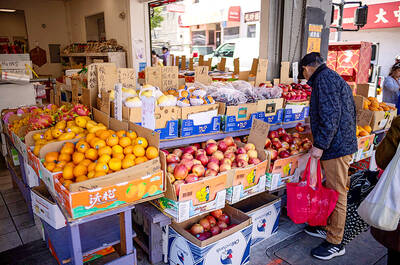
Ajay Verma, a consultant gastroenterologist at Kettering general hospital in Northamptonshire, says our gut is a “complex machine.” “It is constantly providing us with the nutrition we need, initially to grow and develop, and then for us to survive, thrive and repair from injury and illness.” How can we keep it functioning well? Put simply: “Make sure what you put into it is balanced, and that you clear out its waste products adequately,” Verma says. “In a general gastroenterology clinic, the most common conditions we see are irritable bowel syndrome (IBS), gastroesophageal reflux disease, inflammatory bowel disease and constipation,” says Nisha
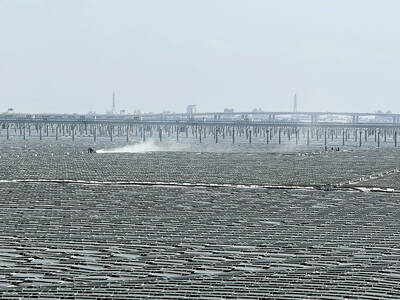
The arithmetic is straightforward and uncomfortable. By the end of 2025, Taiwan had committed itself to a 50-30-20 electricity mix — half natural gas, 30 per cent coal, 20 per cent renewables. The Ministry of Economic Affairs’s (MOEA) own monthly energy reports tell a different story. Natural gas reached 47.8 per cent of generation last year. Coal stood at 35.4 per cent, comfortably above its target ceiling. Renewables came in at 13.1 per cent, well short of the 20 per cent Taipei had pledged a decade earlier. Installed renewable capacity reached roughly half of the 12 gigawatts (GW) the government

Last week US President Donald Trump was asked by a reporter whether he would speak on the phone to the President of Taiwan. “l’ll speak to him. I speak to everybody. We have that situation very well in hand,” Trump said. This marked the second time in a couple of weeks he had said he would talk to the President of Taiwan. In 2016 he famously took a call from then-president Tsai Ing-wen (蔡英文), when he was president-elect. Despite warnings that the apocalypse was nigh because of a phone call, the world quickly forgot about the conversation between two democratically-elected presidents.
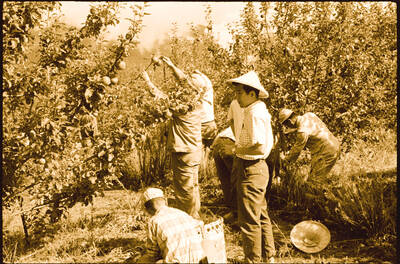
May 25 to May 31 Few believed that apples could be cultivated on a commercial scale in Taiwan’s high mountains. When horticulturalist Cheng Chao-hsiung (程兆熊) first proposed the idea in 1955, both American and Taiwanese colleagues dismissed it as implausible, arguing that temperate fruit could not be reliably grown on a subtropical island, especially on rugged terrain. However, it was this terrain in the Central Mountain Range where many Chinese Civil War veterans were resettled in the late 1950s. With limited job prospects and no family in Taiwan, they were placed on cooperative farms aimed toward self-sufficiency. Some say the conditions


 RSS
RSS