


Another moment of the US making permanent concessions for transient gains, which appears to be longstanding US policy with the People’s Republic of China (PRC), occurred last week when President Donald Trump announced that weapons sales to Taiwan would be delayed in order to arrange a meeting with the PRC dictator Xi Jinping (習近平). There were “concerns among some in the Trump administration that greenlighting the weapons deal would derail Trump’s coming visit to Beijing, according to US officials,” the Wall Street Journal reported. It attributed the suspension of the weapons sale to pressure from Xi.
While some might shrug and say the US could always sell the weapons later, time was lost, and cannot be regained. That is a permanent effect.
Like rabbis clashing over a Torah interpretation, a huge debate broke out among Taiwan policy aficionados on social media platforms over the Six Assurances, the Reagan Administration’s reassurance to Taiwan after the 1982 Communique. The online fight was over the wording of the original line, which reads that the US “has not agreed to consult with the PRC on arms sales to Taiwan.”
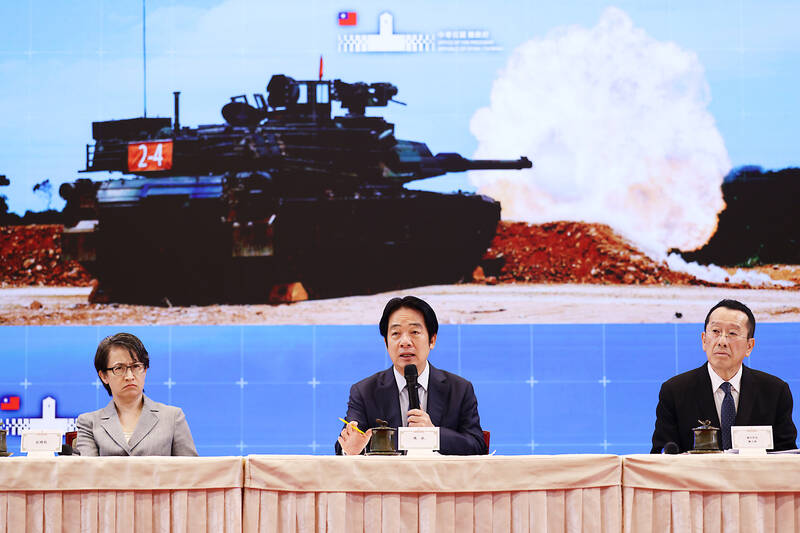
Photo: EPA
Trump’s detonation of this airburst over longstanding US policy triggered a rush of supporters who text-mined the various versions of the Assurances (declassified in the first Trump administration) to make excuses for Trump. They insisted on a narrow reading of only the grammar of the text. “Has not,” after all does not mean “will not.”
US UNRELIABILITY
But as Rush Doshi, who was US president Joe Biden’s national security director from 2021-2024, noted on a long Twitter thread, that was never the intent of Congress nor any previous administration. After listing Congressional and scholarly affirmations that the intent of the Assurances was the US would not consult with the PRC, he observed: “These Congressional acts have been broadly consistent with executive branch policy. Again, for 40 years, US policy has been that we “will not” or “would not” negotiate arms sales.”
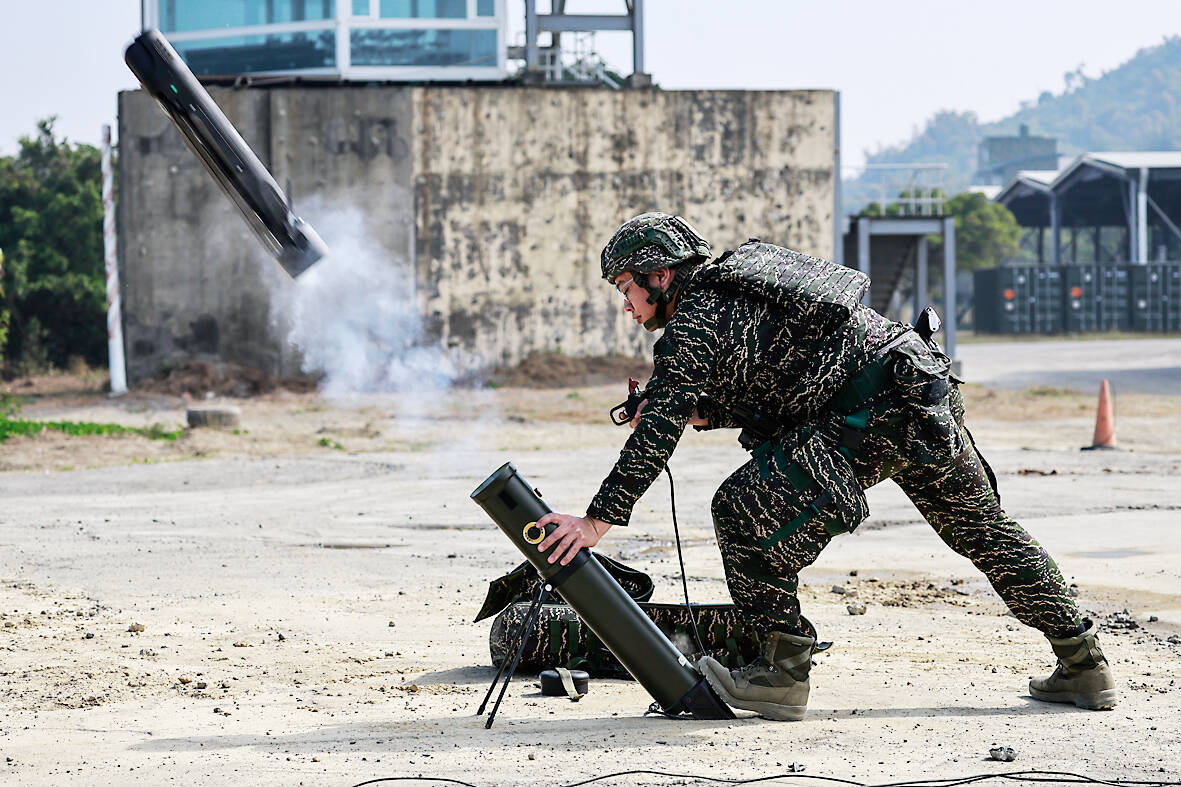
Photo: EPA
“It’s unacceptable for Trump to run America’s Taiwan policy or arms sales decisions by Beijing for preclearance,” said Democrats on the House Foreign Affairs Committee in a post on X.
This post was a reminder that Congress still takes a deep interest in Taiwan’s fate. Well, half of it. Phelim Kine at Politico laughed on X: “GOP lawmakers who normally profess deep support for Taiwan are notably absent from the furor over Trump suggesting that US weapon sales to the island may be a negotiation point in talks with Xi Jinping.”
There were calls for codifying the Six Assurances into law, as if making something illegal would stop Trump.
A number of commentators made the connection between Trump’s announcement and Taiwan’s domestic political debates. After months of bipartisan yelling at the Chinese Nationalist Party (KMT) and its allied pro-China parties in the legislature over the blocking of the review of the special defense budget, the US president suddenly reverses course on weapons sales. This simply confirms what pro-China voices in Taiwan claim about the reliability of the US. Brilliant.
Trump was in fact behaving like many US presidents before him. Whenever the US needs something from the PRC, it dangles changes to Taiwan policy in front of Beijing. George W. Bush came to power in 2001 claiming that he would do “whatever it took to help Taiwan defend herself.” A few years later there was an enormous backlog in arms sales and a de facto weapons freeze. The administration of president Barack Obama attacked then-presidential candidate Tsai Ing-wen (蔡英文) in 2011 and supported her rival Ma Ying-jeou (馬英九), who depressed defense spending and sought to tie Taiwan to the PRC with economic agreements. The second Obama administration halted a US$1 billion arms sale because it wanted PRC cooperation on climate change.
So here we are where we’ve always been: Americans yelling at Taiwan to purchase weapons, without checking the mirror to take stock of their own unreliability.
‘PIVOT TO ASIA HAS FAILED’
This is a theme across America’s Asia policy. Last week Zack Cooper of the American Enterprise Institute observed in Foreign Affairs that “The pivot to Asia has failed.” That was Obama’s pivot, Cooper notes, quoting the US president: “Let there be no doubt. The United States of America is all in.” The Pivot was simply vapor. It never occurred. Instead, the idea of the Pivot is now another sad monument in the cemetery of US unreliability.
Last week Ryan Hass at the Brookings Institution warned that Trump advisors increasingly see Taiwan as a liability.
“The solution, according to some of Trump’s advisors and supporters, is to rapidly lessen dependence on Taiwan and lower America’s exposure to events in the Taiwan Strait,” Hass said.
Both Hass and Cooper warn that deterrence will fail because the US has so little credibility.
“The longer the gap between pledges and action is allowed to remain, the greater the risk of a disastrous failure of deterrence,” wrote Cooper. Alas, this gap between pledges and action has been institutionalized by a panoply of US presidents.
This position that Taiwan is disposable is the inevitable outcome of a foreign policy that treats Taiwan as unrelated to Japan and the Philippines, exactly the stance the PRC wants the US to adopt. Trump administration advisors have been manipulated by the PRC’s tension-mongering.
Hass argues that conflict is not inevitable. He argues for a new narrative emphasizing that Taiwan is critical to America’s AI future and that the US role is to “keep open a path for leaders in Taipei and Beijing to peacefully and non-coercively resolve their differences, however long that may take.”
This second claim points to a problem across US policymaking: Taiwan is the problem. Contending that Beijing and Taipei have “differences” is like arguing that a thief and his victim have “differences.” In the real world the problem is entirely on Beijing’s side: it wants to annex Taiwan. Yet Hass’ formulation creates an equivalence that treats Taiwan as part of the problem. Taiwan has only two choices: submit or fight. There is no space for negotiation there. Hass’ formulation does not address this issue: PRC expansionism.
Hence, any new narrative as proposed by Hass must start with the forthright statement that the problem is not Taiwan but Beijing. The next statement that follows must recognize that abandoning Taiwan cannot solve the problem because it does not address the issue: Beijing’s expansionism (it in fact makes it worse). Were the US to give up Taiwan, it would find itself in the same place with Manila and Tokyo as Beijing put pressure on them, but without all the advantages of holding Taiwan. This leads naturally to the conclusion that supporting Taiwan helps keep in check that expansionism and the hegemonic warfare that will follow from its occupation.
Keeping Taiwan free is saving American lives. Make that the narrative, and win.
Notes from Central Taiwan is a column written by long-term resident Michael Turton, who provides incisive commentary informed by three decades of living in and writing about his adoptive country. The views expressed here are his own.

Ajay Verma, a consultant gastroenterologist at Kettering general hospital in Northamptonshire, says our gut is a “complex machine.” “It is constantly providing us with the nutrition we need, initially to grow and develop, and then for us to survive, thrive and repair from injury and illness.” How can we keep it functioning well? Put simply: “Make sure what you put into it is balanced, and that you clear out its waste products adequately,” Verma says. “In a general gastroenterology clinic, the most common conditions we see are irritable bowel syndrome (IBS), gastroesophageal reflux disease, inflammatory bowel disease and constipation,” says Nisha
The arithmetic is straightforward and uncomfortable. By the end of 2025, Taiwan had committed itself to a 50-30-20 electricity mix — half natural gas, 30 per cent coal, 20 per cent renewables. The Ministry of Economic Affairs’s (MOEA) own monthly energy reports tell a different story. Natural gas reached 47.8 per cent of generation last year. Coal stood at 35.4 per cent, comfortably above its target ceiling. Renewables came in at 13.1 per cent, well short of the 20 per cent Taipei had pledged a decade earlier. Installed renewable capacity reached roughly half of the 12 gigawatts (GW) the government
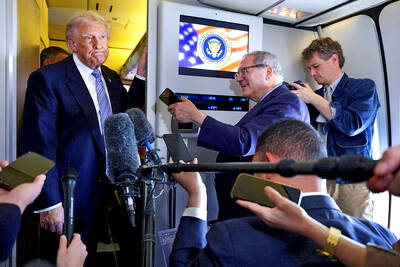
Last week US President Donald Trump was asked by a reporter whether he would speak on the phone to the President of Taiwan. “l’ll speak to him. I speak to everybody. We have that situation very well in hand,” Trump said. This marked the second time in a couple of weeks he had said he would talk to the President of Taiwan. In 2016 he famously took a call from then-president Tsai Ing-wen (蔡英文), when he was president-elect. Despite warnings that the apocalypse was nigh because of a phone call, the world quickly forgot about the conversation between two democratically-elected presidents.

May 25 to May 31 Few believed that apples could be cultivated on a commercial scale in Taiwan’s high mountains. When horticulturalist Cheng Chao-hsiung (程兆熊) first proposed the idea in 1955, both American and Taiwanese colleagues dismissed it as implausible, arguing that temperate fruit could not be reliably grown on a subtropical island, especially on rugged terrain. However, it was this terrain in the Central Mountain Range where many Chinese Civil War veterans were resettled in the late 1950s. With limited job prospects and no family in Taiwan, they were placed on cooperative farms aimed toward self-sufficiency. Some say the conditions


 RSS
RSS