


As Kevin Wang (王可), the translator to Terao Tetsuya’s (寺尾哲也) Spent Bullets (子彈是餘生) points out in his afterword to the novel’s English version, during the 1960s and 1970s, there was a popular saying in Taiwan: “Come come, come to National Taiwan University; leave, leave, leave for the USA.”
Tetsuya is the nom de plume for Taiwan’s 37-year-old literary wunderkind Tsao Cheng-hao (曹盛濠), who during his 20s followed this “ladder to heaven” to become a coder for Google in Silicon Valley. After quitting the big tech rat race in 2021, he wrote this novel about a group of coders whose lives become so abjectly meaningless that some among them long for nothing less than suicide.
The book, Tsao’s 2022 debut, has already proven something of a sensation for young Taiwanese, winning two top prizes at the 2023 Taiwanese Literature Awards and a film deal with Taiwan-based Each Other Films (彼此影業). Readers have resonated with his characters, college students and young tech workers who obsessively strive for achievements and a sense of belonging in groups that offer them no real happiness.
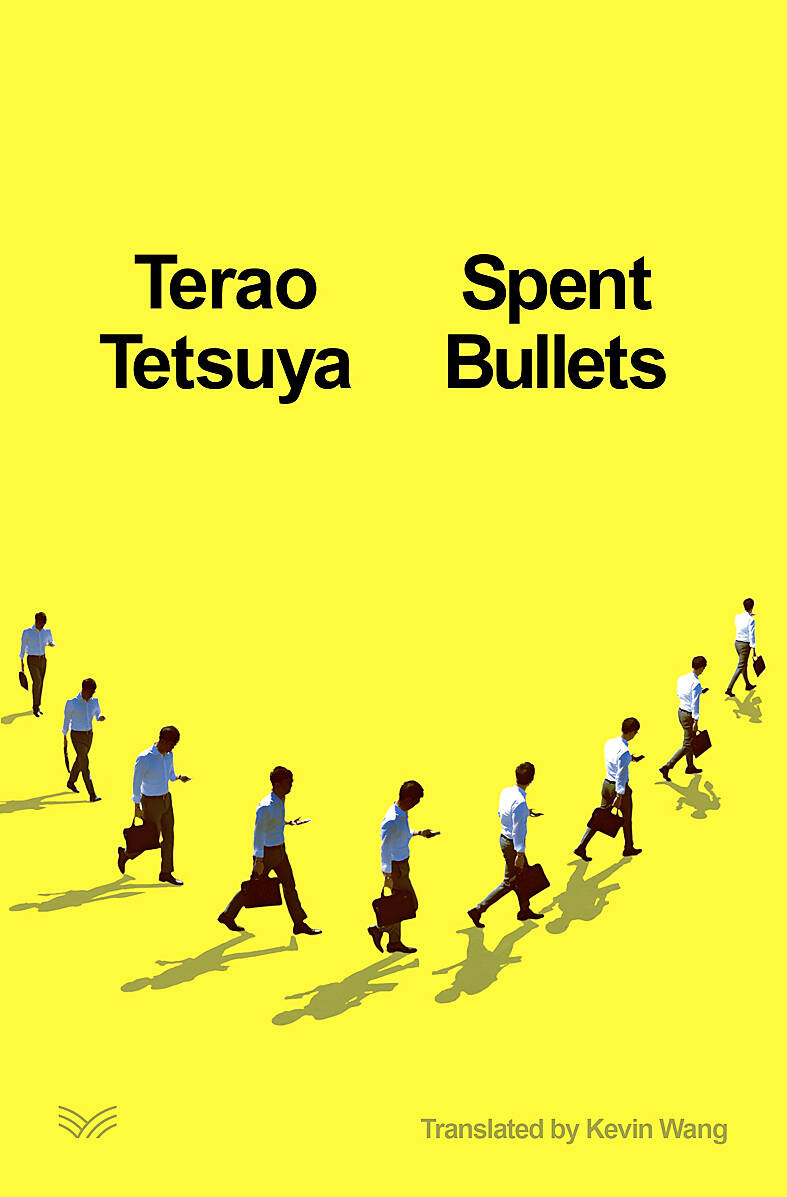
The novel, which in a sort of Faulknerian way is told from the point of view of multiple narrators, is also ingenious in its puzzle-like construction. Each chapter arrives like a new piece of a shattered mirror, reflecting a larger but always slightly disjointed story. Readers are forced to fill in the narrative gaps and also ask themselves big questions, like what does this all mean?
Tsao’s storytelling, which uses coldly dispassionate narrators who reveal almost nothing of their own thoughts or feelings, bears similarities to contemporaries like Taiwanese writers like Sabrina Huang (黃麗群) and Chang Yi-hsun (張亦絢) and Chinese novelist Shuang Xuetao (雙雪濤), according to Wang.
I also found echoes of French existentialist Albert Camus and his modern day acolytes, like Fight Club author Chuck Palahniuk and France’s current cultural ambassador of nihilism Michel Houellebecq. Like them, Tsao gives us characters who perceive their lives as so absurd and meaningless that they no longer care about their own potential self-extinction.
The novel is very roughly framed around two Taiwanese friends, both NTU grads now working in Silicon Valley, who undertake some minimally explained, personal pilgrimage to Las Vegas. On the desert highway, their conversatoin pries open a dark closet of the inexplicable suicide of the most brilliant coder in their college class, Jie-heng. Through denials and partial admissions, they begin to unearth their own uncomfortable complicities in his deeply troubling story.
As a group, these coders have all encountered a profound sense of alienation in America.
“America was geographically vast,” says one, “but in our first-generation immigrant psyche, it might as well be as narrow as a cabin in a snowstorm.”
Living in the bubbles of big tech campuses, theirs is a disrupted existence of psych meds, performance evaluations and eating disorders. Reality only intrudes through un-processable events like campus shootings. It’s hardly the promised land of their parents’ dreams.
America’s philosophical bleakness is posed in contrast to Taiwan, which is still a place of obligations, where politics potentially matter, and where actions might meaningfully affect the future. But even ideas of home have been poisoned.
Before joining a Taiwanese-American protest march in San Francisco — one held in solidarity with Taiwan’s 2014 Sunflower Movement — a Taiwanese graduate student in a US east coast university declares somewhat unsurely, “we have a vested interest in what happens back home. Aren’t we obligated to help?”
His friends, now working for tech companies that offer them huge benefit packages, smoke weed and engage in unsatisfying sex before joining him at the march. Though drawn by a vague sense of obligation, they view the protests as essentially pointless. Their participation amounts to little more than ironic commentary on how much their company life insurance plans will pay out should they die by police violence.
Episodes from their Taiwanese school years point to the roots of their nihilism. All are products of Taiwan’s suffocating educational culture, their success determined by Squid Game-like series of examinations, rankings and school competitions.
For some, the only release from this pressure cooker they can imagine is suicide: “Like rockets thrusting upward before achieving orbit, all we could do on our promised trajectory was sacrifice each other and ourselves, striving to ascend faster and faster until we broke into the cosmos, where nothing would impede our progress, where we would be just like Jie-heng.”
Sexuality, especially queer sexuality, adds a further degree of alienation — and it should be noted that there are very graphic descriptions of gay sex that some readers may not like. For Jie-heng and his tribe, this begins in junior high school, when one boy is locked inside a small closet, while another urinates on him through a vent. It’s a precursor to an adult sex life of bondage, domination, sadism and masochism (BDSM), but with a few new twists, like masochistic sugar daddies known as “paypigs.”
Other bizarre subcultural forays by this tribe lead them into underground Taipei gambling dens for the boardgame Go and a group-help meeting in San Francisco on overcoming same-sex lust.
When the duo on the road trip to Las Vegas finally arrive, there is no hope or excitement. Just the opposite, they say they want to lose big.
But even in this, they fail: “our luck was unstinting, slapping us in the face with win after win.”
This odd reversal is a core theme of the book. The coders’ feelings of individual worthlessness have turned their successful, perfectly secure lives into a perfect absurdity. As a result, they feel impelled to play careless and risky games. Only those too chicken for suicide continue to live on by going through the standard motions.
It’s an extremely dark vision, one in which love and redemption are wholly absent. It achieves its brutal force by reflecting uncomfortable truths. But at certain times it also rings false.
It slightly bothers me that Tsao has chosen a pen name that is a combination of his favorite characters from Japanese manga. It’s a sophomoric affectation and, while fairly common in Taiwan, it inclines me to take him seriously when he says that his writing is mainly an aesthetic exercise and does not intend any sort of social commentary.
While I found this book, as one online reader described it, “Brutal. Hard to read. Impossible to put down,” in just a few instances, Spent Bullets read too much like a hardboiled comic, a nerdy otaku vision of life by someone who hasn’t lived much of it. In those moments, I felt that Tsao opted for a kind of cinematic coolness over inner truth. It made me question how seriously one should take a novel that is in so many ways taut, masterful and revolutionary.
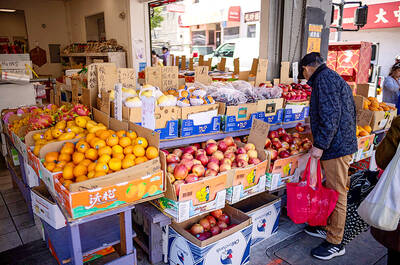
Ajay Verma, a consultant gastroenterologist at Kettering general hospital in Northamptonshire, says our gut is a “complex machine.” “It is constantly providing us with the nutrition we need, initially to grow and develop, and then for us to survive, thrive and repair from injury and illness.” How can we keep it functioning well? Put simply: “Make sure what you put into it is balanced, and that you clear out its waste products adequately,” Verma says. “In a general gastroenterology clinic, the most common conditions we see are irritable bowel syndrome (IBS), gastroesophageal reflux disease, inflammatory bowel disease and constipation,” says Nisha
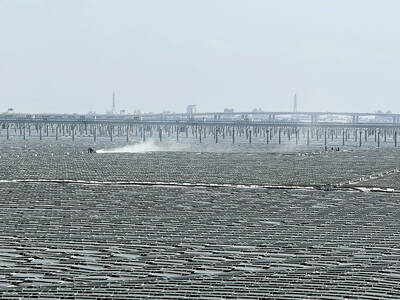
The arithmetic is straightforward and uncomfortable. By the end of 2025, Taiwan had committed itself to a 50-30-20 electricity mix — half natural gas, 30 per cent coal, 20 per cent renewables. The Ministry of Economic Affairs’s (MOEA) own monthly energy reports tell a different story. Natural gas reached 47.8 per cent of generation last year. Coal stood at 35.4 per cent, comfortably above its target ceiling. Renewables came in at 13.1 per cent, well short of the 20 per cent Taipei had pledged a decade earlier. Installed renewable capacity reached roughly half of the 12 gigawatts (GW) the government
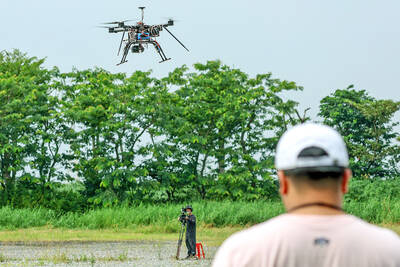
Taiwan’s drone exports are taking off, fuelled by the war in Ukraine, as Taiwanese companies seek a stake in the fast-growing global market for unmanned aerial vehicles (UAV). Low-cost drones used for reconnaissance and strikes are in high demand as governments around the world boost defense spending in the face of intensifying conflicts. A relative new player in the increasingly competitive industry, Taiwan’s pitch is to be an “Asian hub” for the production of UAVs and components free of Chinese materials, or “non-red.” That means its UAVs can be up to three times more expensive than their Chinese competitors, like the world’s biggest
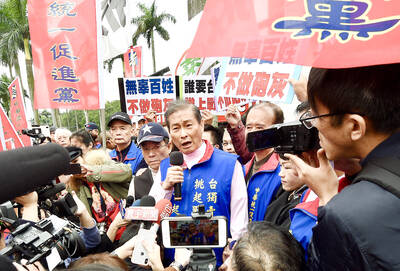
There are shadowy cabals plotting to sell out Taiwan to be annexed by China, by invasion if necessary. Fortunately, they are buffoons. In 2019, former Bamboo Union gangster and founder of the China Unification Promotion Party (CUPP), Chang An-le (張安樂, colorfully known as “White Wolf”), led a protest at the Legislative Yuan against comments made by then-premier Su Tseng-chang (蘇貞昌) that in the event of an attack by China, he would never surrender, but would protect the nation by fighting to the end, even if he only had a broom. Chang had party members bring a wooden casket that they


 RSS
RSS