


On the gray-skied morning of Dec. 21, a black luxury series BMW pulled into the parking lot of the oldest residence in Yilan County, a government-designated “historical building” amid the tranquil rice paddies just off Provincial Highway 9.
Wu Ding-guo (吳定國), the 73-year-old founder and CEO of FineTek Technologies, a manufacturer of specialized industrial gadgets called flow meters, had come to pay respect to his ancestor Wu Sha (吳沙), who opened Yilan County to Han Chinese settlement in the 1790s.
“I’ve come here to tell him that it is the solstice, and that winter has arrived,” said Wu, an eighth generation direct descendant of the pioneer.
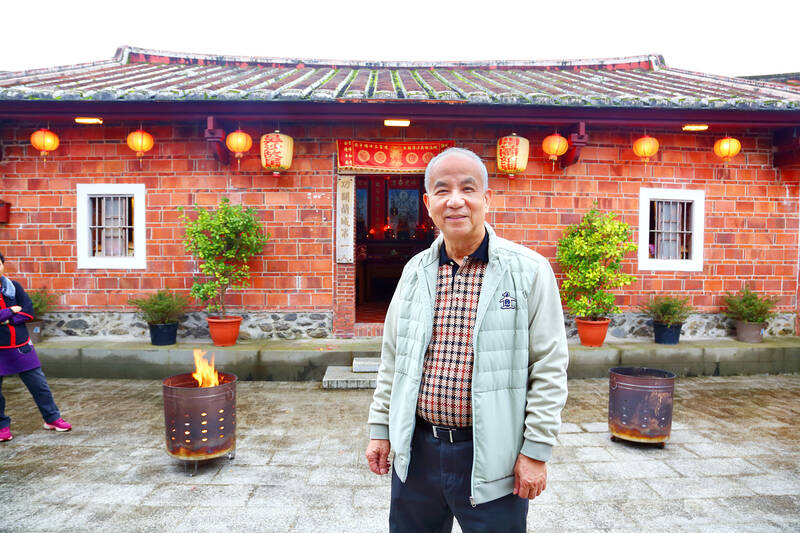
Photo: David Frazier
Wu Sha’s residence, a recently restored Fujian courtyard home of pale orange bricks and a tiled roof, had by the early 1800s become Yilan’s de facto administrative capital with a population of 1,000 Han settlers and 2,000 Kavalan aborigines, according to research by the Yilan Wu Sha Cultural Foundation (宜蘭吳沙文化基金會), where Wu Ding-guo serves as chairman.
Even today, a dozen households still live within a compound surrounding the home, all descendants of Wu Sha’s line. The pioneer’s name is everywhere in this little nook of Yilan County. The address plaques on houses read Wu Sha Village. A street vendor’s cart selling Wu Sha spring rolls. The ceremonial gate to the Zelan Temple, which houses the Mazu icon Wu Sha carried over from Zhangzhou, bears the mighty inscription: “Mazu of the Opener of Yilan, Wu Sha.”
“When Yilan was first planned, this area was to be the center,” said Wu Ding-guo, referring to Sijie Township, which is halfway between the hot springs mecca of Jiaosi (礁溪) and Yilan City.
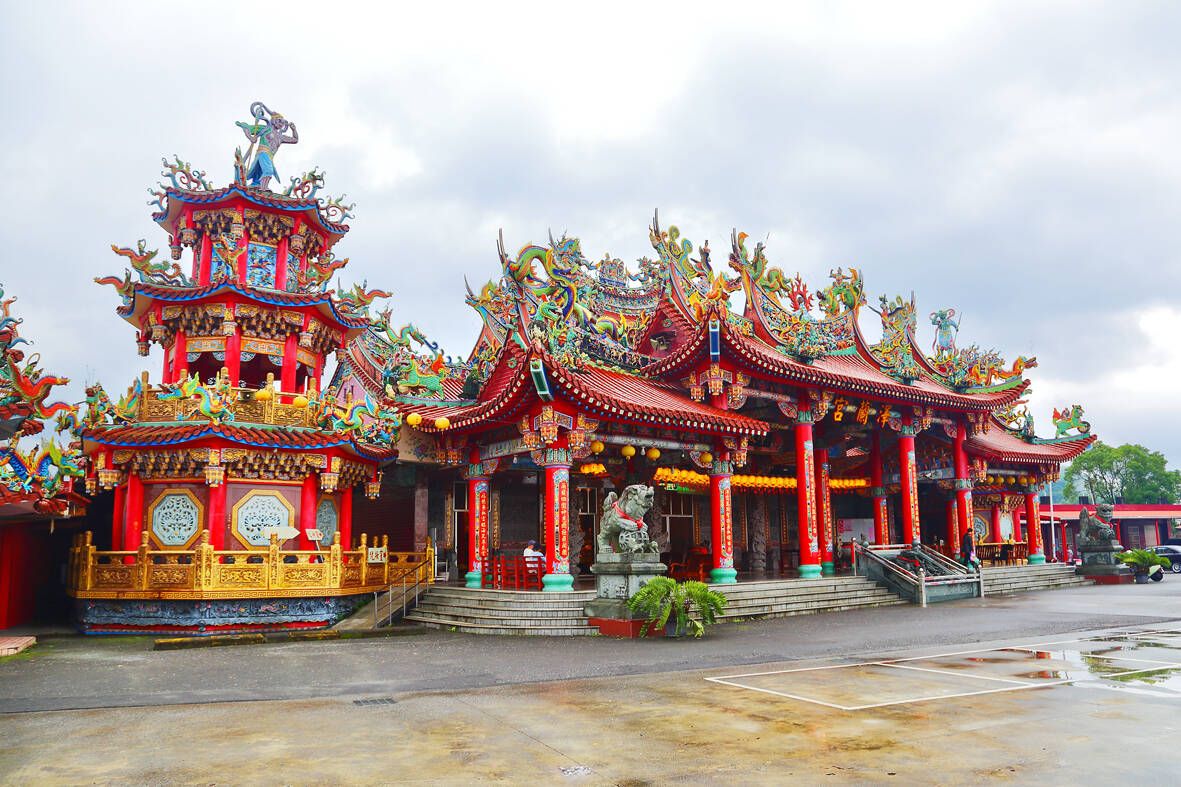
Photo: David Frazier
But between 1807 and 1811, when the Qing Dynasty planned Yilan’s first yamen, or government office, “to suppress the Wu Sha family, the location was shifted further south to the current location in Yilan City. They wanted to establish a new political center.”
CLAN HISTORY
Wu’s interest in his clan’s history began about 25 years ago, when he and his three brothers came to realize that their family lineage was not only crucial to the Han settlement of Yilan County, but that its reputation was also in need of rectification.
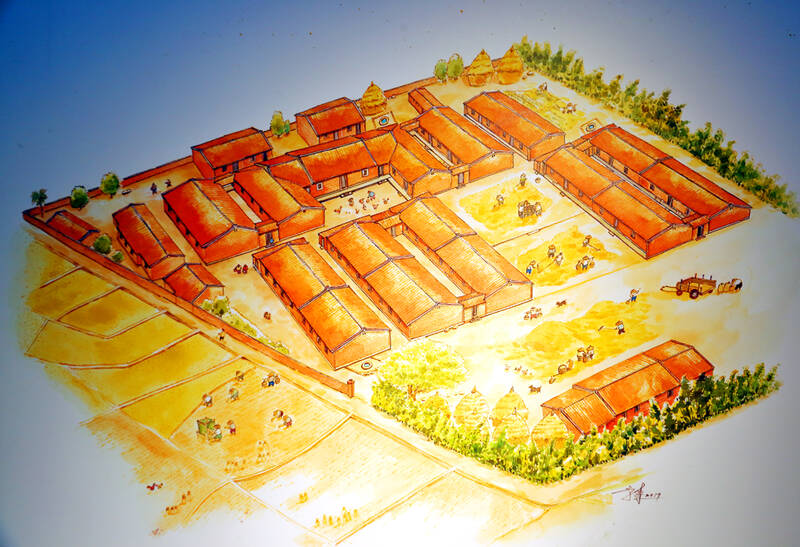
Photo: David Frazier
From the early 1810s, official Qing reports disparaged the powerful family’s reputation and whitewashed its accomplishments. The Qing even brought in an outside heir named Wu Hua (吳華), whom they claimed to be Wu Sha’s nephew, to serve as a top minister under the mandarin.
The Wu Sha foundation’s research however indicates the nephew was an imposter, stating “he was not a member of the Wu Sha clan” and describing him as “a political pawn of the then-Qing government.”
“Our family has suffered three persecutions,” Wu said, referring to various land seizures during the past 200 years. “The first time was during the Qing Dynasty. The second time was when the Japanese came. The third time was when the Chinese Nationalist Party (KMT) instituted land reform. Often these were for the greater good, but for our family, it was not always so good.”
Around 2000, Wu and his family began restoring the Wu Sha Residence — sometimes room by room as family members passed away or moved out — into a small but fascinating museum. The building dates to 1902, when Wu Sha’s fifth generation rebuilt the homestead after the Japanese burned it down.
The interior houses a family altar and historical displays, including a replica of a small cannon or musket used to defend settlements from bandits, rare Qing-era documents, agricultural implements and, most crucially, a remarkable history of the early days of Yilan’s settlement.
Wu Ding-guo began pouring resources into this historical research after establishing the Yilan Wu Sha Cultural Foundation in 2013. Enlisting the help of local scholars, he scoured the archives of Taipei’s National Palace Museum, various Beijing museums, Tokyo’s Althea University, Stanford University in the US and the Institute of Yilan County History. Through Japanese newspaper articles, local records, and official missives to the Qing emperor called zouzhang (奏章), or memorials to the throne, they discovered a string of often oblique references that has helped them piece together Wu Sha’s story.
“After collecting all these materials, I was finally able to see and understand why and how he came here.”
SEEKING A BETTER LIFE
Wu Sha was born in 1731 in Zhangzhou, a prefectural capital in Fujian Province and a major trading center. Population pressure was sending waves of settlers to Taiwan, and in 1773, Wu Sha sailed, along with his wife and two sons, across the Taiwan Strait to seek a better life.
After landing in an already teeming Tamsui, the clan sought out their own homestead, following the mountain valleys east of Taipei until they came to a “wilderness” south of Keelung — Sandiaoling (三貂嶺) in today’s New Taipei City.
There, Wu, a practitioner of martial arts and traditional medicine, recruited and trained his own militia. As the village strongman, he forged amicable relations with the indigenous communities that controlled the surrounding mountains, learning their language and engaging in trade.
The security Wu carved out of his rugged valley took on great importance a decade later, when in 1786, a major rebellion engulfed much of Taiwan.
The insurgency was launched in retaliation for the jailing of a member of a pro-Ming Dynasty triad. The nephew of the accused, Lin Shuang-wen (林爽文), murdered the Qing-appointed Governor of Taiwan, Sun Jing-sui (孫景燧), then rallied a militia that swelled to around 50,000 and, at its height, occupied much of southern Taiwan.
It took the Qing two years and more than 20,000 troops to put down the insurgency and execute its leaders. In the wake of this unrest, a major ethnic feud swept Taiwan that saw Quanzhou settlers ruthlessly attacking those from Zhangzhou — the homeland of not only Lin and many of his insurgents, but also Wu Sha. In parts of Taiwan, entire villages were forced to flee.
Wu Sha’s safe haven in Sandiaoling absorbed around a thousand of these Zhangzhou refugees. The village headman also assisted Qing officials in hunting down Lin’s remaining revolutionaries, thereby cementing his position in the government’s good graces. But the influx left Sandiaoling wanting for elbow room.
Yilan, an expansive, alluvial plain of rich farmland behind a range of high mountains to the southeast, was already known to the Han. But it was still controlled by the Kavalan indigenous peoples and, owing to prohibitions from the Qianlong Emperor in Beijing, no Chinese had yet settled there.
After the emperor died in 1796, Wu Sha saw his chance to make a move. His clan financed a seaborne expedition to Yilan’s northernmost natural port, Wushi Harbor (烏石港), which is still a major center for fishing and tourism today.
Upriver, they built a mud fort at a settlement they dubbed Touwei, meaning the “first walled town.” Today the town is known as Toucheng Township (頭城), or “first city,” and is home to Yilan’s oldest temple, the Qing Yuan Temple, or “first temple of the Qing.”
Wu Sha’s initial settlement at Touwei didn’t last long. The indigenous Kavalan took up arms against the Han invaders and drove him back to Sandiaoling.
But just a year later, a major epidemic — possibly smallpox, according to the Wu Sha Foundation’s research — decimated the Kavalan.
According to the foundation, Wu Sha and his wife returned to aid the be-plagued aborigines, using their knowledge of traditional Chinese medicine to save hundreds of lives. In gratitude, the Kavalan allowed them to settle.
Other accounts however allege that Wu Sha killed the Kavalan and forced them off their lands, effecting a migration that pushed the indigenous people to Hualien.
Nine decades later, Canadian missionary George Leslie MacKay lamented the state of the Kavalan in Yilan, writing that “the greedy Chinese would… either by winning their confidence or by engaging them in dispute… rob them of their lands…It sometimes makes one’s blood boil to see the iniquities practiced upon these simple-minded creatures by Chinese officials, speculators, and traders.”
Wu Ding-guo however insists that such abuses only began after the Qing government took over Yilan in 1812. His research shows that the Kavalan, who lived in plains villages near the coast, used Wu Sha’s Han settlers to create a buffer zone between themselves and another warring indigenous group, the headhunting Atayal, who ruled the mountains.
“They lived in harmony,” he said.
The string of settlements pioneered by Wu Sha’s clan, namely Toucheng, Ercheng, Sancheng (“first city,” “second city,” “third city”) and up to Wucheng (“fifth city,” or present day Yilan City) sits along that original settlement axis. The strip is still Yilan’s major transportation corridor, holding both the east coast railway line and Provincial Highway 9. The cities in this zone all have Chinese names, while those in coastal areas have names derived from the Kavalan language.
“This is something that the Qing Dynasty did not study. No one knew about the history before. Only the locals knew,” said Wu Ding-guo.
‘STAY OUT OF GOVERNMENT’
Just one year after Wu Sha made his settlement deal with the Kavalan, he died in 1798 at age 68. He was succeeded by his son Wu Guang-yi (吳光裔), who together with his widow Zhuang Suo-niang (莊梳娘), established the current family hearth at Sijie.
Guang-yi became a major force in Yilan’s early governance, administering land partitions among the Han settlers and fending off two pirate attacks — at Wushi Harbor in 1806 and Suao Harbor in 1807 — all before the Qing commenced their administration of Yilan.
“But the Qing Dynasty never recognized Guang-yi, because they were very afraid,” said Wu Ding-guo.
Following the Lin Shuang-wen rebellion, the government was wary of local, populist leaders. Yilan’s first mandarin repeatedly divested the Wu clan of farmland. Then in 1815, after Guang-yi’s name appeared on documents forged by a business partner, he was jailed and summoned for trial in Beijing. As if things couldn’t get any worse, the ship transporting him across the Taiwan Strait sank in a typhoon. He was presumed drowned.
From that day forward, the Wu Sha clan adopted its creed, “the family best stay out of government.”
When I asked Wu Ding-guo about this, he chuckled, “That’s no longer necessarily the case. But we still have a concept that one should avoid the front line [in legal disputes]. It’s better to not get involved.”

Ajay Verma, a consultant gastroenterologist at Kettering general hospital in Northamptonshire, says our gut is a “complex machine.” “It is constantly providing us with the nutrition we need, initially to grow and develop, and then for us to survive, thrive and repair from injury and illness.” How can we keep it functioning well? Put simply: “Make sure what you put into it is balanced, and that you clear out its waste products adequately,” Verma says. “In a general gastroenterology clinic, the most common conditions we see are irritable bowel syndrome (IBS), gastroesophageal reflux disease, inflammatory bowel disease and constipation,” says Nisha
The arithmetic is straightforward and uncomfortable. By the end of 2025, Taiwan had committed itself to a 50-30-20 electricity mix — half natural gas, 30 per cent coal, 20 per cent renewables. The Ministry of Economic Affairs’s (MOEA) own monthly energy reports tell a different story. Natural gas reached 47.8 per cent of generation last year. Coal stood at 35.4 per cent, comfortably above its target ceiling. Renewables came in at 13.1 per cent, well short of the 20 per cent Taipei had pledged a decade earlier. Installed renewable capacity reached roughly half of the 12 gigawatts (GW) the government

Last week US President Donald Trump was asked by a reporter whether he would speak on the phone to the President of Taiwan. “l’ll speak to him. I speak to everybody. We have that situation very well in hand,” Trump said. This marked the second time in a couple of weeks he had said he would talk to the President of Taiwan. In 2016 he famously took a call from then-president Tsai Ing-wen (蔡英文), when he was president-elect. Despite warnings that the apocalypse was nigh because of a phone call, the world quickly forgot about the conversation between two democratically-elected presidents.
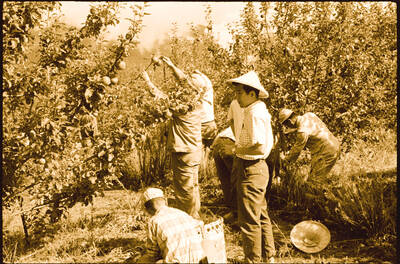
May 25 to May 31 Few believed that apples could be cultivated on a commercial scale in Taiwan’s high mountains. When horticulturalist Cheng Chao-hsiung (程兆熊) first proposed the idea in 1955, both American and Taiwanese colleagues dismissed it as implausible, arguing that temperate fruit could not be reliably grown on a subtropical island, especially on rugged terrain. However, it was this terrain in the Central Mountain Range where many Chinese Civil War veterans were resettled in the late 1950s. With limited job prospects and no family in Taiwan, they were placed on cooperative farms aimed toward self-sufficiency. Some say the conditions


 RSS
RSS