


The current political wrangling over the constitution is so farcical that it would be funny if the stakes were not so high.
The fundamental problem began when the Chinese Nationalist Party (KMT) and Taiwan People’s Party (TPP) used their combined majority in the legislature to pass a law to increase the minimum quorum required for the Constitutional Court to deliberate to 10 of the 15 grand justices. They then twice rejected the administration’s nominees to fill seven empty seats, leaving the court short of that quorum and unable to function.
They then proceeded to pass some laws of dubious constitutionality, but lacking the ability to appeal to the Constitutional Court, the Executive Yuan (aka the cabinet) countersigned the laws and sent them to President William Lai (賴清德) for promulgation, which he duly did.
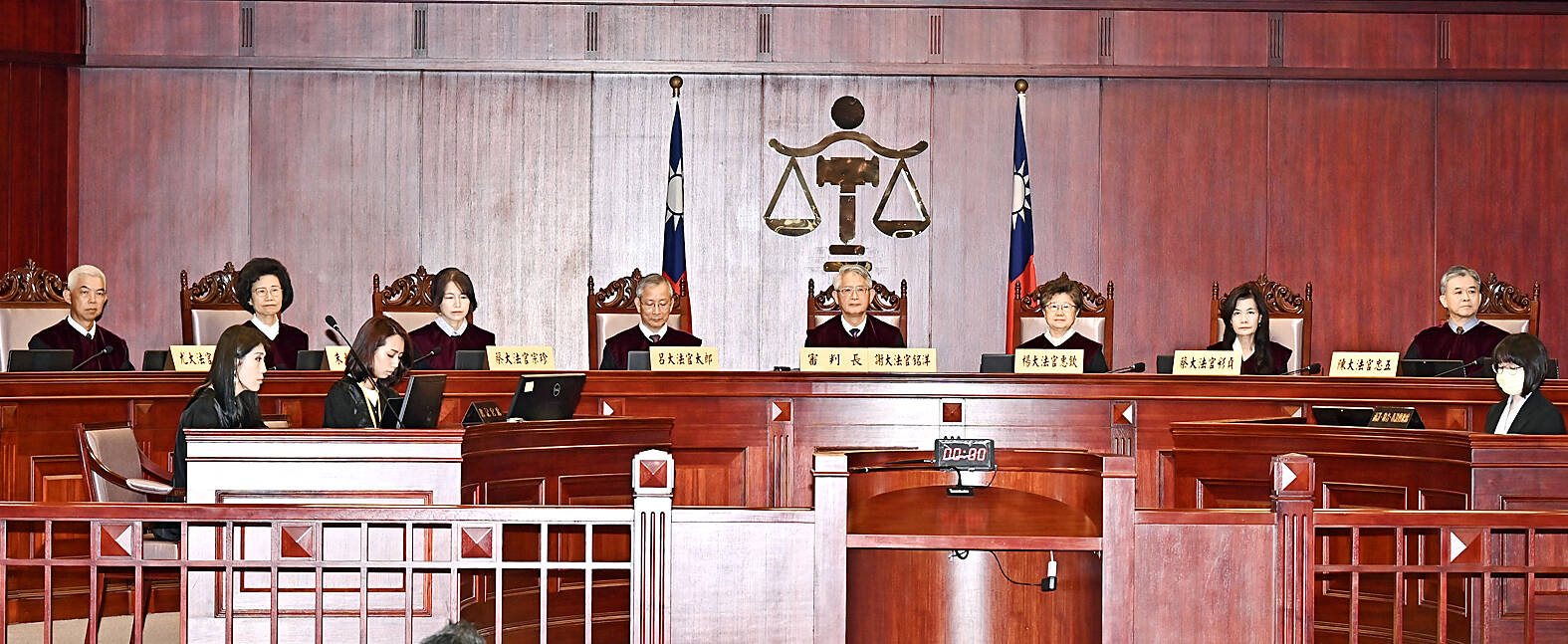
Photo: Tu Chien-jung, Taipei Times
Then the legislature passed a budget the cabinet deemed impossible to apply because it would exceed the statutory debt limit, forcing them into the impossible position of breaking one law or another. Again, the Constitutional Court was out of action.
So the cabinet struck back, and President of the Executive Yuan (aka the premier) Cho Jung-tai (卓榮泰) refused to countersign, citing an article in the constitution specifically requiring the countersignature to proceed to the president for promulgation. This effectively gave the premier the ability to not just veto, but entirely kill any legislation. President Lai backed Cho’s move.
The problem is that another additional article of the constitution also specifically states that under the circumstances, the premier “shall immediately accept the said bill.” So this action was also constitutionally dubious, but again no functional Constitutional Court to adjudicate.
This week, five of the eight sitting members of the Constitutional Court attempted to resurrect the court to head off a constitutional crisis by ruling the new law raising the quorum unconstitutional. The problem is that under the previous law, they still needed six to make a quorum.
The other three grand justices opposed this move and refused to attend. The other five, to get around the minimum six quorum, effectively discounted those three for non-attendance, treating them as recused or unsworn-in justices.
Naturally, those three consider this unconstitutional, creating the bizarre situation where the only body that can rule on the constitutionality is split on its very existence.
The KMT caucus yesterday proposed amendments that would allow rulings of the Constitutional Court to be overturned by a public referendum. With the TPP, they have the legislative majority necessary to pass it, but it would be an unprecedented law worldwide, and is of dubious constitutionality.
This then leaves the issue of whether the premier would countersign such a measure, or whether the rump ad hoc five-member Constitutional Court would rule it unconstitutional. Both options remain dubious constitutionally.
It gets weirder.
The opposition is planning to put forward a motion to impeach the president. This requires half of lawmakers to propose, two-thirds of lawmakers to approve and then it would proceed to — you guessed it — the Constitutional Court. The DPP has enough legislative seats to block it, but again, the absurdity is astounding.
On Tuesday, the opposition submitted a petition to the Control Yuan seeking the impeachment of Premier Cho. The Control Yuan is the branch of government tasked with oversight, and if over half of its members vote that Cho has committed a crime, it would be passed on to the Disciplinary Court.
The Control Yuan will likely take a dim view of this petition; the KMT and TPP slashed their budget by around 97 percent and have suggested they want to eliminate it. Oh, and previously, this sort of budgetary action to undermine another entire branch of government was ruled unconstitutional.
WHIFF OF WANG
The obvious solution is a negotiated deal on filling the vacant seats on the Constitutional Court and restoring it to a fully functional body that all will accept as legitimate.
There are a few signs that this is not impossible.
Despite all of this, on non-controversial issues, the executive and legislative branches are functioning normally. Recently, laws on extending electric vehicle subsidies, raising traffic violation fines and other day-to-day practical issues have been passed with minimal fuss or controversy.
The administration has proposed a slate of candidates for empty seats on the Central Election Commission (CEC), and they very carefully included candidates recommended by the KMT and TPP. Both parties have responded fairly positively, at least so far — leaving hope that this crucial body will not sink into a constitutional morass ahead of next year’s elections.
Former legislative speaker Wang Jin-pyng (王金平) has been in the news a fair bit recently. There is a strong whiff of wistful nostalgia to the reporting, and some are openly asking, “When will the next Wang appear?”
Taiwan’s democracy has been threatened before, and it was figures like former president Lee Tung-hui (李登輝) and Wang who kept the project on track.
The current problem is that the legislative speaker, Han Kuo-yu (韓國瑜), lacks the gravitas, the deep legal and institutional knowledge and remarkable dealmaking abilities of Wang. Han lacks Wang’s credibility with the DPP caucus and is too weak to influence his own KMT caucus.
Unlike in previous democratic crises, there is no central figure who can bridge the partisan gap. Worse, the threat from China is potentially existential, and Taiwan’s credibility with allies and partners is on the line.
Previously, protest movements like the Wild Lily and Sunflower movements brought public pressure to bear, altering the course of history and progressing the democratic project.
However, last year’s Bluebird Movement and the subsequent civil society recall campaigns arose specifically to address the early stages of the current constitutional breakdown. Disastrously, late in the recall campaigns the DPP decided to openly throw their full weight behind recalling KMT lawmakers, making the KMT’s claims that it was all a DPP plot to overturn the results of the 2024 election essentially true.
The public, which had previously been sympathetic to the civil society recall campaigns and with polling suggesting that some were likely to succeed, turned sharply against the recalls and the DPP and defeated them resoundingly.
With no towering figure like Wang, and the public pressure campaign defeated, what now?
There is still hope that a Wang-like figure could appear, but it is unclear who that might be. One possibility is to draft Wang himself to negotiate.
The public pressure well is likely not as dry as it might appear, but if it reappears, it may take a different form than in the past.
Most Taiwanese are passionate about preserving their democracy, despite sharp partisan differences.
If the current crises deepens, dysfunction continues to spread and partisan escalation continues, there will be a public backlash.
Both sides will be working hard to blame the other side, and it may yet be that the public sides with one or the other. The catch is that the next legislative and presidential elections are in 2028, and the situation could become untenable long before then.
If a backlash grows against all the parties ahead of the next elections, that could change the dynamic. Especially if a new political movement appears, which has happened before.
Unfortunately, time is limited, and there are no obvious candidates to lead it. Yet, no one saw the Sunflower movement coming, nor were those leaders widely known.
It also might not require a clearly defined movement; a growing widespread disgust with politicians would eventually be felt and responded to, especially with local elections next year. Polling may be the leading indicator if something like this is afoot.
Where this goes is hard to see now, but that is usually how it is before big, sudden shifts happen.
It is in unsettled and uncertain times like these that big changes occur, for better or worse.
Donovan’s Deep Dives is a regular column by Courtney Donovan Smith (石東文) who writes in-depth analysis on everything about Taiwan’s political scene and geopolitics. Donovan is also the central Taiwan correspondent at ICRT FM100 Radio News, co-publisher of Compass Magazine, co-founder Taiwan Report (report.tw) and former chair of the Taichung American Chamber of Commerce. Follow him on X: @donovan_smith.

Growing up in a rural, religious community in western Canada, Kyle McCarthy loved hockey, but once he came out at 19, he quit, convinced being openly gay and an active player was untenable. So the 32-year-old says he is “very surprised” by the runaway success of Heated Rivalry, a Canadian-made series about the romance between two closeted gay players in a sport that has historically made gay men feel unwelcome. Ben Baby, the 43-year-old commissioner of the Toronto Gay Hockey Association (TGHA), calls the success of the show — which has catapulted its young lead actors to stardom -- “shocking,” and says

The 2018 nine-in-one local elections were a wild ride that no one saw coming. Entering that year, the Chinese Nationalist Party (KMT) was demoralized and in disarray — and fearing an existential crisis. By the end of the year, the party was riding high and swept most of the country in a landslide, including toppling the Democratic Progressive Party (DPP) in their Kaohsiung stronghold. Could something like that happen again on the DPP side in this year’s nine-in-one elections? The short answer is not exactly; the conditions were very specific. However, it does illustrate how swiftly every assumption early in an
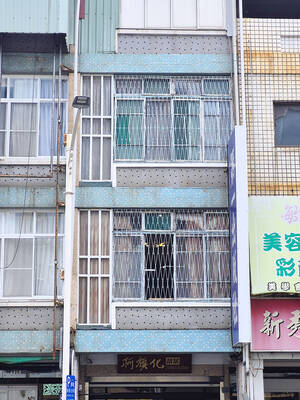
Inside an ordinary-looking townhouse on a narrow road in central Kaohsiung, Tsai A-li (蔡阿李) raised her three children alone for 15 years. As far as the children knew, their father was away working in the US. They were kept in the dark for as long as possible by their mother, for the truth was perhaps too sad and unjust for their young minds to bear. The family home of White Terror victim Ko Chi-hua (柯旗化) is now open to the public. Admission is free and it is just a short walk from the Kaohsiung train station. Walk two blocks south along Jhongshan
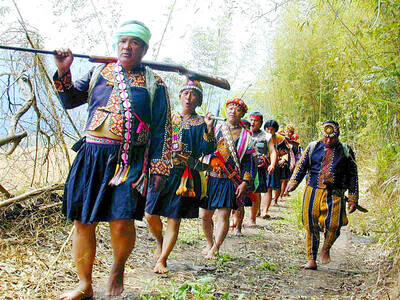
Francis William White, an Englishman who late in the 1860s served as Commissioner of the Imperial Customs Service in Tainan, published the tale of a jaunt he took one winter in 1868: A visit to the interior of south Formosa (1870). White’s journey took him into the mountains, where he mused on the difficult terrain and the ease with which his little group could be ambushed in the crags and dense vegetation. At one point he stays at the house of a local near a stream on the border of indigenous territory: “Their matchlocks, which were kept in excellent order,


 RSS
RSS