


One of the joys of living in Taiwan for three decades is witnessing the rescue of dilapidated yet appealing structures.
When I first arrived in Tainan, the long-shuttered Hayashi Department Store (林百貨) was in a pitiful state. Assuming this historic emporium would eventually be demolished, I held out no real hope until the authorities announced they’d set aside a budget to restore it.
Since its 2013 reopening, the department store has been one of the city’s most consistently popular tourist attractions. Earlier this year, however, it was in the news for the wrong reasons, when part of the exterior peeled off and crashed onto the road, damaging a parked car.
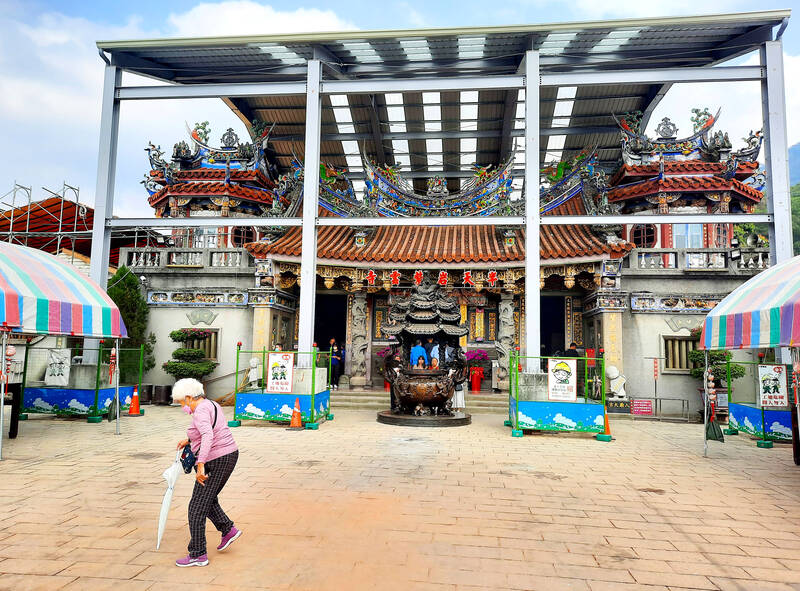
Photo: Steven Crook
Over the past few months, I’ve come across several ongoing renovations in the southern half of Taiwan. Like the rebirth of Hayashi Department Store, these projects are usually pricey and painstakingly slow, but more often than not the results are exquisite.
A HILLSIDE TEMPLE, A DOWNTOWN SHRINE
For self-driving travelers approaching the tea-growing settlement of Shihjhuo (石卓) from the lowlands, there’s an alternative to the busy main road to Alishan (阿里山), Provincial Highway 18. In addition to being scenic, Road 159A (159甲) provides access to Bantianyan Ziyun Temple (半天岩紫雲寺), a magnet for Buddhists since the late 17th century.
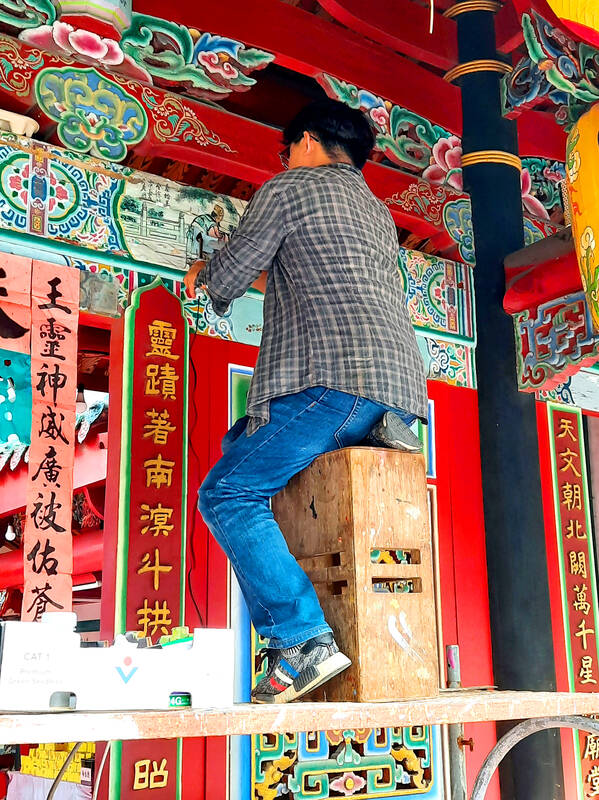
Photo: Steven Crook
Little remains of the original structure, in part because earthquakes struck this area in 1839, 1904, 1906 and 1941. By late 2022, the roof was leaking so badly that the temple’s management committee launched a fundraising drive. Anyone who donates NT$10,000 or more will have their name engraved on a list of benefactors inside the main hall, the committee promised.
Last year, a sturdy steel frame was erected over the heart of the complex, which includes pilgrims’ dormitories, offices, and kitchens. This is often the first step when a temple is about to undergo a thorough restoration, as it allows craftsmen to strip the roof tile by tile, replace rotten beams, and work on regardless of the weather.
It also means there’s no interruption to religious life. While many of those who spend time at Ziyun Temple are sightseers, compared to other landmark temples it seems to attract a large number of truly fervent pilgrims. Every time I’ve been here, I’ve seen pious individuals meditating or engaged in highly emotional prayer sessions.
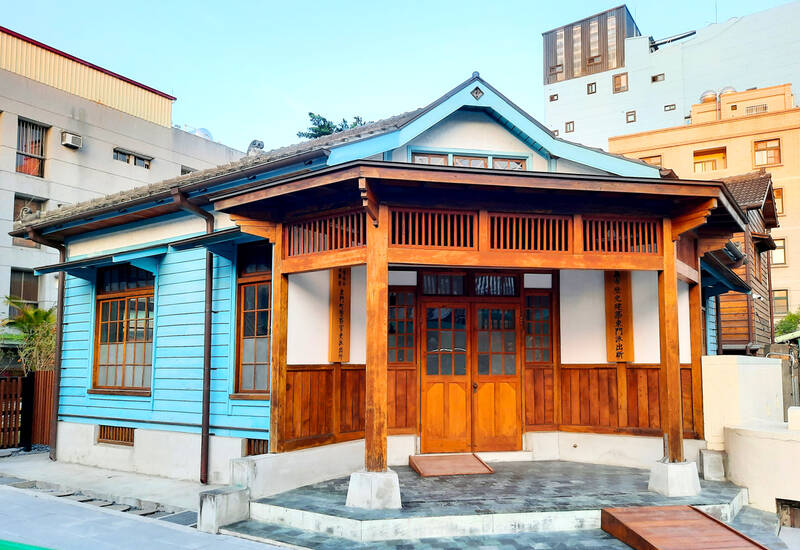
Photo: Steven Crook
Despite its great age and its proximity to Fort Provintia (赤崁樓) in central Tainan, Kaiji Lingyou Temple (開基靈祐宮) doesn’t see a lot of tourists.
The first two syllables of this shrine’s name, which roughly translate as “establishing an outpost,” signify that it was the first religious site on the island to honor Xuantian Shangdi (玄天上帝), a deity sometimes called the Emperor of the Mysterious Heaven. Having been founded in 1665, it predates Tainan’s better known Jiuling Beiji Temple (鷲嶺北極廟) by four years, and the Qing takeover of Taiwan by almost two decades.
In the middle of the 20th century, the temple suffered two major insults. The Japanese colonial authorities expropriated some of its land in order to expand the adjacent elementary school. Then, during World War II, it was hit during an air raid.
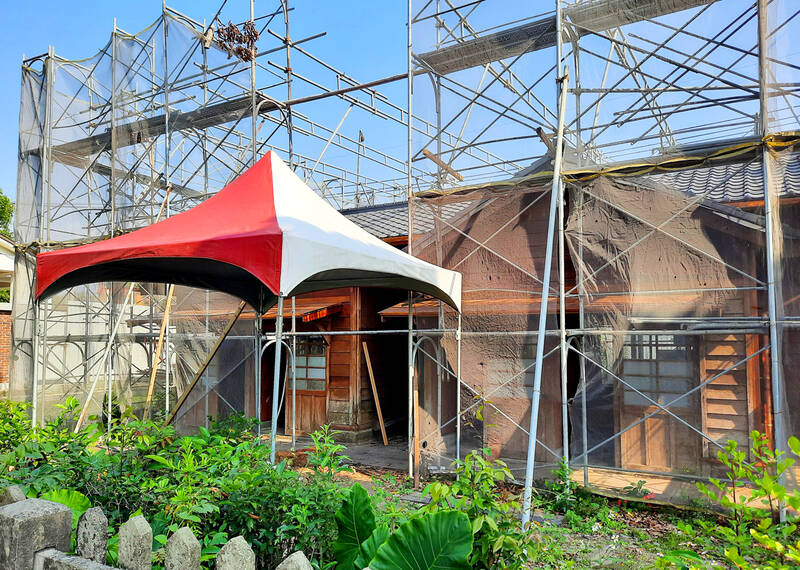
Photo: Steven Crook
Four of the panels inside were painted by Pan Yueh-hsiung (潘岳雄), a third-generation temple artist born in 1943. They appear to be in reasonable condition, but images posted on the temple’s social media accounts earlier this year show wooden beams affiliated by severe cracking, flaking and fading. At the time of writing, work was ongoing.
Like Bantianyan Ziyun Temple, Kaiji Lingyou Temple is remaining open as usual during renovations. It’s located at 86 Chikan East Street (赤崁東街), a 15-minute walk from Tainan TRC Railway Station.
AN ARRESTING SIGHT IN CHIAYI
Opened to the public just a few weeks ago, Chiayi’s former Dongmen Police Station (東門派出所) is now an attraction called Dongmending 1923 (東門町1923).
This node in the colonial authorities’ law-and-order system was established in 1923, hence the name. However, the oldest part of the compound — which includes a two-story dormitory and quarters for the station chief and his family — dates from 1931, because the previous year’s Tainan-Chiayi earthquake made complete rebuilding necessary.
As is typical of public buildings which date from the colonial period, there’s a mix of materials, including brick, concrete and timber. Some partitions are made of woven bamboo slats plastered with mud and then painted. The vent holes near floor level were intended to reduce problems resulting from dampness.
The reinforced-concrete bunker on the southwestern side of the compound was added sometime in the late 1940s, when the Chinese Nationalist (KMT) regime feared both Communist invasion and civil unrest.
According to a Feb. 16 report in the Chinese-language United Daily News, NT$21 million was budgeted for the restoration. The city government provided 55 percent of the total, with the remainder coming from the central government.
Making the old police station look as good as new took longer than planned, because soon after work began remnants of a Qing-era shrine were discovered. The renovation was put on hold so archaeologists could examine the site.
Dongmending 1923 is at 236 Gongming Road (公明路), 1.6km east of Chiayi TRC Railway Station. It’s open from 10am to 6pm, Tuesday to Sunday; there’s no admission charge.
ADMINISTRATING THE COLONY
Like Dongmending 1923, Fenyuan Town Hall (芬園庄役場) was part of the apparatus of modern government imposed on Taiwan by Japan after the island was ceded to Tokyo in 1895. These days, Fenyuan is a township within Changhua County with a population of 22,000.
Built in 1935 and located at 96, Section 4, Zhangnan Road (彰南路), this single-story was used by local bureaucrats until 1994, when newer offices were completed. After that, it served as a storage facility. The Web site Spectral Codex (spectralcodex.com), which is an excellent resource for anyone interested in old and/or odd structures around the country, has a photo of the interior filled with decommissioned sodium vapor street lights, put there by the local government after they’d been swapped out for LED lamps.
Changhua County Government declared it a county-level relic in 2014, but restoration didn’t get underway until 2021. The following year, a colonial-era safe found inside the building drew media attention. It couldn’t be opened, and no one had any idea what might be in it. The township office offered NT$10,000 to any locksmith who could crack it, but this turned out to be a poor investment. When it was finally opened — by an octogenarian from Taichung — there was nothing inside.
A month ago, Fenyuan Town Hall looked almost ready. The roof no longer sags, and the military green paint that covered its exterior after World War II has been replaced with more inviting shades of cream and brown. But I’ve not been able to find any announcement confirming that it’ll open to the public soon.
Other renovation projects worth keeping an eye on include one in rural Chiayi and two in central Tainan.
Lumachan Railway Station (鹿麻產車站) in Chiayi County’s Jhuci Township (竹崎), one of the the Alishan Forest Railway’s lowland stops, is a Japanese-style classic.
On the north side of Tainan’s Heyi Road (和意路), colonial-era buildings that once housed prison employees have been dismantled and reassembled using a mix of original and replacement parts. (The prison itself was demolished long ago.) And at 11, Lane 115, Youai Street (友愛街), Tang Te-chang’s Family Home (湯德章故居) is being madeover.
Tang, a lawyer, was murdered by the Chinese Nationalist (KMT) regime in the aftermath of the 228 Incident in 1947. Taxpayers who think that government-backed historical/cultural projects give society nothing but Instagrammable backdrops and souvenir shops are advised to pay a thoughtful visit to Tang’s former home when it reopens.
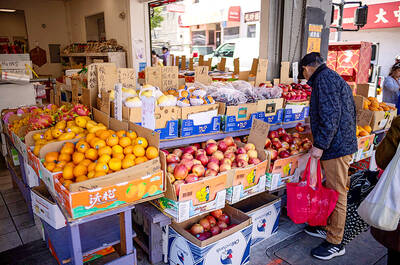
Ajay Verma, a consultant gastroenterologist at Kettering general hospital in Northamptonshire, says our gut is a “complex machine.” “It is constantly providing us with the nutrition we need, initially to grow and develop, and then for us to survive, thrive and repair from injury and illness.” How can we keep it functioning well? Put simply: “Make sure what you put into it is balanced, and that you clear out its waste products adequately,” Verma says. “In a general gastroenterology clinic, the most common conditions we see are irritable bowel syndrome (IBS), gastroesophageal reflux disease, inflammatory bowel disease and constipation,” says Nisha
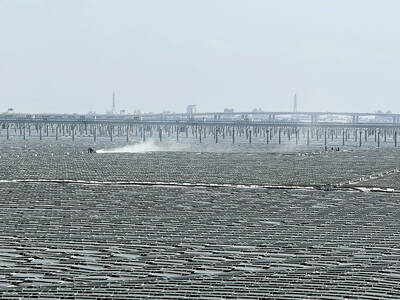
The arithmetic is straightforward and uncomfortable. By the end of 2025, Taiwan had committed itself to a 50-30-20 electricity mix — half natural gas, 30 per cent coal, 20 per cent renewables. The Ministry of Economic Affairs’s (MOEA) own monthly energy reports tell a different story. Natural gas reached 47.8 per cent of generation last year. Coal stood at 35.4 per cent, comfortably above its target ceiling. Renewables came in at 13.1 per cent, well short of the 20 per cent Taipei had pledged a decade earlier. Installed renewable capacity reached roughly half of the 12 gigawatts (GW) the government

Last week US President Donald Trump was asked by a reporter whether he would speak on the phone to the President of Taiwan. “l’ll speak to him. I speak to everybody. We have that situation very well in hand,” Trump said. This marked the second time in a couple of weeks he had said he would talk to the President of Taiwan. In 2016 he famously took a call from then-president Tsai Ing-wen (蔡英文), when he was president-elect. Despite warnings that the apocalypse was nigh because of a phone call, the world quickly forgot about the conversation between two democratically-elected presidents.
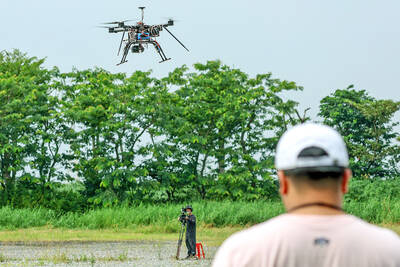
Taiwan’s drone exports are taking off, fuelled by the war in Ukraine, as Taiwanese companies seek a stake in the fast-growing global market for unmanned aerial vehicles (UAV). Low-cost drones used for reconnaissance and strikes are in high demand as governments around the world boost defense spending in the face of intensifying conflicts. A relative new player in the increasingly competitive industry, Taiwan’s pitch is to be an “Asian hub” for the production of UAVs and components free of Chinese materials, or “non-red.” That means its UAVs can be up to three times more expensive than their Chinese competitors, like the world’s biggest


 RSS
RSS