


On a bitterly cold morning near the banks of Jhelum River, Abdul Aziz Kozgar sits surrounded by the scent of roses, carrying the burden of legacy.
An ageing man with a trimmed white beard, Kozgar holds the poignant title of being the last maker of Arq-e-Gulab, or rosewater, in Kashmir.
His rosewater shop in the Khankah-e-Moula neighborhood in the old city of Kashmir’s main town Srinagar is a piece of history. Antique French and British bottles and jars are neatly placed on the shelves. The shop is as much rooted in the past as it is lost in the present.
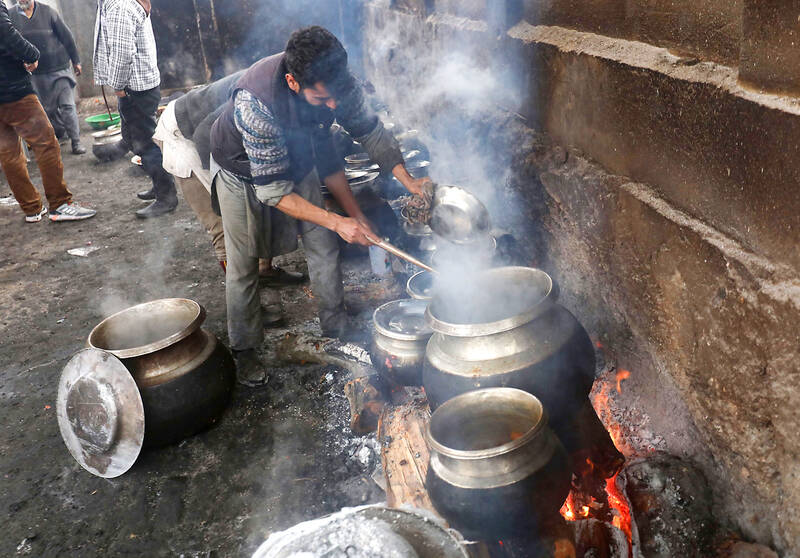
Photo: EPE-EFE
Kozgar’s family has been making rosewater for two centuries, both as popular as a fragrance for the face and skin, but mostly to be sprinkled in the region’s famed mosques and shrines, where it has long played a traditional role in acts of devotion.
“Our ancestors used to make rosewater for religious functions. It had a spiritual purpose,” Kozgar says, referring to the ritual of sprinkling fragrant water during religious gatherings at shrines across Kashmir valley. The scent added to the mystique and amplified the experiences associated with these places.
The traditional business of making rosewater, however, is not lucrative and the competition is immense. “Rosewater available in the market is made by machines and ours is a completely manual process. We make it by process of condensation,” he said.

Photo: EPE-EFE
TIME-HONORED TRADITION
The technique by which Kozgar makes his rosewater has been passed down from fathers to sons in his family over the centuries. The distillation process begins with boiling rose petals in water and letting it vaporize, which is then condensed to form a fragrant liquid. The exact details of the process are a secret kept within the family.
The mountainous region of Indian-administered Kashmir is famed for its beauty but has long been a source of conflict between India and Pakistan, and in recent years has been ruptured by conflict and pro-Pakistan militancy. In 2019, the Indian government unilaterally took control of the region, stripping it of its statehood and autonomy, and placed it under a strict crackdown. It had a devastating impact on the local economy, particularly for the state’s traditional craftsman.
Kozgar can trace his ancestry and the art of making rosewater to the Turkic tribes of central Asia from where, nearly six hundred years ago, his forefathers left to travel to Kashmir, a Himalayan valley famed for its cold water streams, picturesque landscape, and moderate summers.
One of his forefathers was said to have been a disciple of Mir Syed Ali Hamdani, a Sufi saint from the 14th century. Hamdanis were revered Muslim preachers from central Asia who made various visits to Kashmir and deeply influenced the people here, leading to mass conversions from Hinduism to Islam.
They and their disciples are also credited with introducing various central Asian traditions, crafts, architecture and cultural influences in to Kashmir.
ENCHROACHING MODERNITY
Yet many such crafts, which were intricately done indoors by men as well as women, have now gone out of vogue as machine manufacturing and oversaturated global markets have made profitability difficult for artisans.
Zareef Ahmad Zareef, an octogenarian Kashmiri poet and cultural activist, remembers visiting the Kozgar shop when he was a child to purchase herbal medicines.
“I do remember going there and purchasing different herbal syrups that were effective against cold and cough. They were the only family in Kashmir who were trained in making different types of herbal syrups and scents … those days they were very busy and it was a place filled with people,” says Zareef.
Zareef described the Kozgar family as sort of medieval pharmacists, who manufactured dozens of types of herbal syrups which were then prescribed by hakeems, the Muslim physicians who specialized in Greek and Arabic medicine.
“There was a hakeem in every neighborhood of Kashmir and they used to treat diseases with these herbal syrups produced by Kozgars,” he says.
The introduction of modern medicines in the early part of last century made the traditional treatments irrelevant and Kozgars lost their importance in the region. As their business of herbal syrups slumped, Kozgars could only maintain one product – rosewater.
At his shop in the old city, Kozgar said he makes very little money out of rosewater. “The market rate is Rs 100 (US$1.2) per 100ml but I have kept the price minimal at Rs 50 (US$0.6) per liter because it is associated with the faith of people,” he says, adding “I am doing it to keep alive the tradition of my ancestors. I want to keep their memory alive.”
Kozgar, however, is uncertain if his family’s next generation would keep the shop and tradition going. “It is up to them, but it is difficult to survive on this,” he says.
Zareef, who has written poems on Kashmir’s cultural past and traditions, says the importance of Kozgars is now lost on younger generations. “They were once important people,” he says.
“They were the center of medicine and treatment. They used to make syrups and medicines using God’s own herbs,” Zareef says. “This shop is open for now but soon it will be like a museum.”

Last week the government announced that by year’s end Taiwan will have the highest density of anti-ship missiles in the world. Its inventory could exceed 1,400, or enough for the opening two hours of an invasion from the People’s Republic of China (PRC). Snark aside, it sounds impressive. But an important piece is missing. Lost in all the “dialogues” and “debates” and “discussions” whose sole purpose is simply to dawdle and delay is what the Chinese Nationalist Party (KMT) alternative special defense budget proposal means for the defense of Taiwan. It is a betrayal of both Taiwan and the US. IT’S
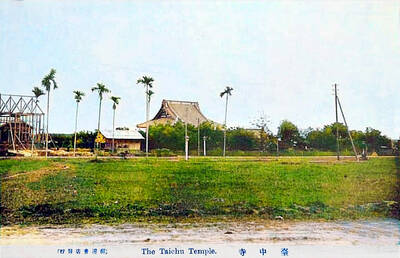
March 16 to March 22 Hidden for decades behind junk-filled metal shacks, trees and overgrowth, a small domed structure bearing a Buddhist swastika resurfaced last June in a Taichung alley. It was soon identified as a remnant of the 122-year-old Gokokuzan Taichuu-ji (Taichung Temple, 護國山台中寺), which was thought to have been demolished in the 1980s. In addition, a stone stele dedicated to monk Hoshu Ono, who served as abbot from 1914 to 1930, was discovered in the detritus. The temple was established in 1903 as the local center for the Soto school

Paul Thomas Anderson’s “One Battle After Another” was crowned best picture at the 98th Academy Awards, handing Hollywood’s top honor to a comic, multi-generational American saga of political resistance. The ceremony Sunday, which also saw Michael B. Jordan win best actor and “Sinners” cinematographer Autumn Durald Arkapaw make Oscar history as the first female director of photography to win the award, was a long-in-coming coronation for Anderson, a San Fernando Valley native who made his first short at age 18 and has been one of America’s most lionized filmmakers for decades. Before Sunday, Anderson had never won an Oscar. But “One Battle
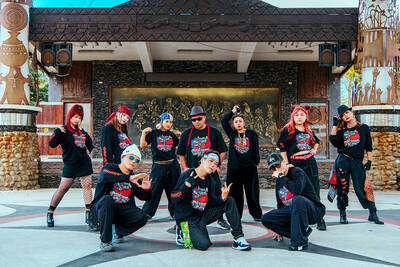
In Kaohsiung’s Indigenous People’s Park (原住民主題公園), the dance group Push Hands is training. All its members are from Taiwan’s indigenous community, but their vibe is closer to that of a modern, urban hip-hop posse. MIXING CULTURES “The name Push Hands comes from the idea of pushing away tradition to expand our culture,” says Ljakuon (洪濬嚴), the 44-year-old founder and main teacher of the dance group. This is what makes Push Hands unique: while retaining their Aboriginal roots, and even reconnecting with them, they are adamant about doing something modern. Ljakuon started the group 20 years ago, initially with the sole intention of doing hip-hop dancing.


 RSS
RSS