


Cultural upheavals can be a riddle in real time. Trends that might seem obvious in hindsight are poorly understood in the present or not fathomed at all. We live in turbulent times now, at the tail end of a pandemic that killed millions and, for a period, reordered existence as we knew it. It marked, perhaps more than any other crisis in modern times, a new era, the world of the 2010s wrenched away for good.
What comes next can’t be known — not with so much war and political instability, the rise of autocrats around the world, and the growing plausibility of a second Donald Trump term. Within the roil — or below it — one can hazard, at least, a hypothesis: a change is here and it should be named. A rebellion, both conscious and unconscious, has begun. It is happening both online and off, and the off is where the youth, one day, might prefer to wage it. It echoes, in its own way, a great shift that came more than two centuries ago, out of the ashes of the Napoleonic wars.
NEW ROMANTICISM
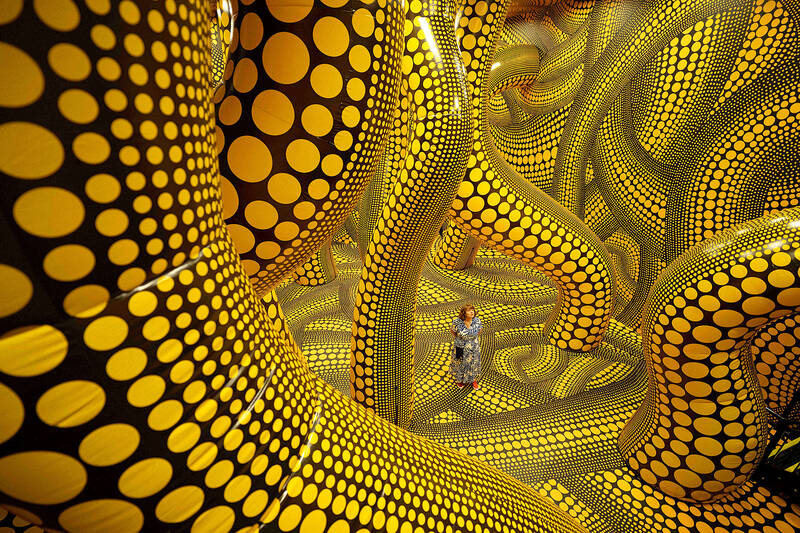
Photo: AFP
The new romanticism has arrived, butting up against and even outright rejecting the empiricism that reigned for a significant chunk of this century. Backlash is bubbling against tech’s dominance of everyday life, particularly the godlike algorithms — their true calculus still proprietary — that rule all of digital existence.
The famed mantra of the liberal left in the early months of the pandemic — trust the science — has faded from view, as hero worship ceases for the bureaucrat scientists (Anthony Fauci) and even for the pharmaceutical behemoths that developed, with federal assistance, the COVID vaccines.
Church attendance, long the barometer of the US’s devotion to the unseen, has continued to plummet, but taking its place isn’t any of the pugnacious New Atheism that tugged at the discourse for a stretch of the 2000s. Instead, it’s what can be loosely termed “spirituality” — a devotion to astrology, witchcraft, magic and manifestation — that has emerged, particularly among the young. Online life, paradoxically enough, has only catalyzed this spirituality more, with teenage TikTok occultists and “manifesting” influencers racking up ever more followers.
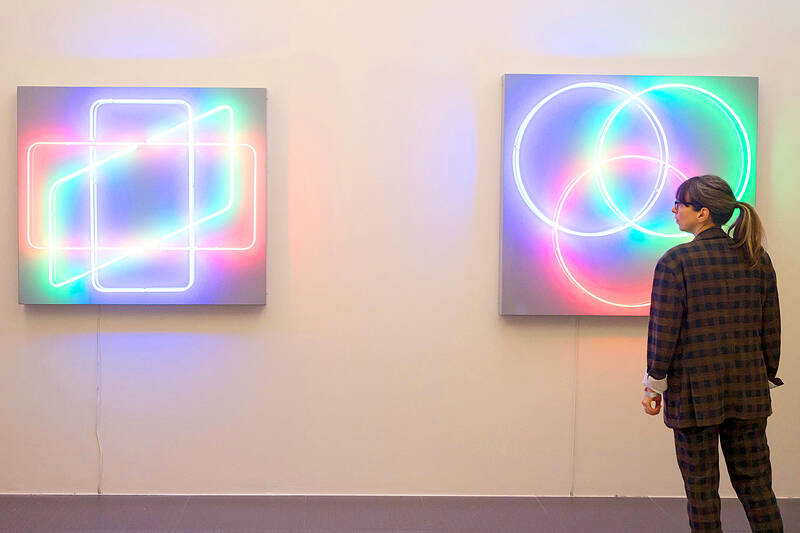
Photos: AFP
The late 2000s were characterized by what might have been the last burst of techno-optimism for decades to come. This all, as the writer Ted Gioia noted not long ago, might have been inevitable, given the societal disruption over the last 20 years. On Christmas Day 2003, Facebook, Instagram, YouTube, X (Twitter) and TikTok did not exist. Google was merely a popular search engine and web browser that was competing with the likes of Netscape Navigator for market share. Amazon had not eviscerated the bricks-and-mortar shopping giants of the 20th century. There was no such thing as an iPhone; cellphones were not ubiquitous, and could only make calls and text.
Online life then was clearly cleaved away from where one actually conducted an existence: gossiping with friends, shopping at the mall and congregating in physical groups to play video games. “Surfing the web” was a distinct activity undertaken at a desktop computer. It had, each day, an obvious beginning and end.
The digital explosion would forever change how we view the world and interact with one another. The late 2000s were characterized by what might have been the last burst of techno-optimism for decades to come. Facebook was credited, in part, for helping to elect Barack Obama, the first Black president, and the new social media and its attendant smartphone technology was treated with a kind of messianic reverence. “Learn to code” was the mantra of the age, STEM the only ticket to the American dream. When Steve Jobs died in 2011, it was like another Gandhi had left us, and the existence of Apple itself was regarded as an unalloyed blessing.
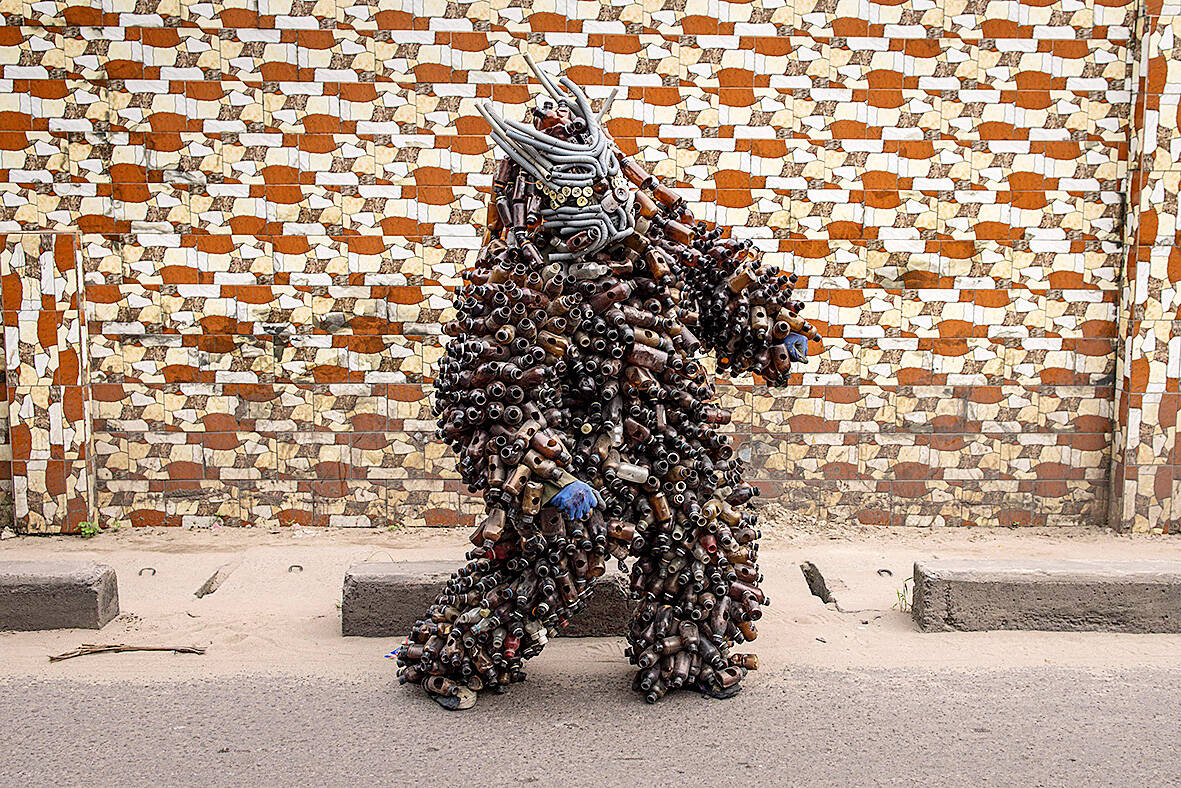
Photo: AFP
Trump’s shock election would permanently alter how Facebook was perceived — it was not merely a proving ground for the young liberal vanguard — and other social media platforms became increasingly terrifying places to come of age. Instagram wrecked body images, smartphones metastasized schoolyard bullying in a 24/7 enterprise and teen depression, even before the arrival of COVID, surged.
Adults weren’t much better off. For thousands of years, mature human beings knew how to be alone in their own thoughts and tolerate boredom. The smartphone’s addictive entertainments immolated attention spans. The market, meanwhile, was suddenly glutted with underemployed computer science and business majors. Surging interest rates strangled the startup economy. There would be no Uber 2.0.
OLD ROMANTICISM
None of this, by now, is new. But this 2020s romanticism is, and it might mirror what came long before us. In the early years of the 19th century, rationalism seemed ascendant, as the rapid technological changes brought about by the Industrial Revolution promised their own algorithmic models for daily life. Machines displaced the old craftsmen and the workers that remained were punished through all their waking hours, forced to meet productivity goals that would have been science fiction a generation before. The individual, flesh-and-blood human never meant less, now that wonders like the cotton gin and the coal-fired steam engine could accomplish so much.
The poets and painters, the influencers of their age, lashed the old gods of logic and gentility
Romanticism was the great, bloody cry against it all. Luddites began by burning factories to the ground. Artists declared war against the principles of the Age of Reason that had seemed to beget the new industrial drudgery. Mary Shelley’s Frankenstein offered a frightful riposte to those who believed science could only deliver bountiful good. Beethoven unleashed radical symphonies of a sweep and emotional intensity that had never been known before in western music. Ann Radcliffe, the English novelist, wrote a prescient defense of terror as a literary device, as the Gothic — dark swallowing light — rushed back into vogue.
The poets and painters, the influencers of their age, lashed the old gods of logic and gentility. There were William Wordsworth and Samuel Taylor Coleridge, blasting away at British cultural elites in Lyrical Ballads, and Percy Bysshe Shelley and Lord Byron hurling between profound ecstasy and crepuscular sorrow in their poetry. William Blake, beset by visions of trees glittering with angels, believed imagination was the most vital element of human existence, and became the herald for generations of metaphysical insurgents and revolutionaries. Ralph Waldo Emerson lectured about the invisible eyeball and the over-soul.
Not all of the old romantics were opposed to Judeo-Christian religion, but they were drawn, like the youth of today, to spiritual realms that operated far beyond any biblical teachings or rationalist precepts. They were deeply wary of technology’s encroachment on the human spirit. They feared, ultimately, an inhuman future — and hence their rebellion. Today’s romantics, still nascent, sense something similar. Why else, in such an algorithmic and data-clogged age — with so much of existence quantifiable and knowable — would magic suddenly hold such sway?
The greater hope for the new romanticism is, in some sense, art, and not the dominance of digital charlatans who promise all of life’s riches are at hand if only you visualize hard enough or utter the correct incantations. Embracing the paranormal or believing, wholeheartedly, that star positions can determine personalities can be harmless fun — until the delusions become life-consuming and despair takes hold when they inevitably do not deliver on their promise.
Irrationality, on its own, is no virtue, and some of the romantics of the 19th and 21st centuries succumb to the same ancient dross, magic alone as the supposed channel to transcendence. That spiritualism has spread with tech is an irony fitting of the age.
THE LOGIC OF ANTI-LOGIC
There is logic, though, in the anti-logic. Science is science, not a religion, but for many months in 2020 and 2021 it was treated as one, even as the scientists failed, in several striking instances, to adequately explain and predict the virus in our midst. Masks were a waste, ineffective, until they weren’t; the vaccines were a miracle cure that could immediately stop the spread of Covid, until the virus kept circulating anyway. Fauci was a cult hero who nevertheless became the face of a shambolic American pandemic response, his mythos swelling with the nation’s death toll.
Trust in the science did not curdle at the same instance as trust in the tech conglomerates, but they are not so dissimilar when weighed against the hype of progress. The new romantics wonder: what good has any of this done for us? Were hyper-sophisticated GPS devices, cameras and video recorders worth it? It is too soon to predict a revival of the Luddites, but there has been at least one press report of a teen group ditching smartphones altogether because “social media and phones are not real life.”
Science brought about these revolutions; science compressed once unimaginable computing power into a single handheld device. Science now promises a great leap forward with artificial intelligence, which seems intent on replacing the arts themselves — machines will now make mediocre art, music, literature and even fact-challenged journalism.
The amusement phase has passed. The modern creative class, beleaguered enough, barraged by two decades of digital technology that has radically cheapened music, television and cinema, is ready for combat, as the successful writers’ and actors’ strikes demonstrated earlier in the year. Newer writing platforms like Substack promise a discursive, algorithm-free mode of communication, with the gloriously shaggy and strange finding new readers. Naturally, in the romantic tradition, Substack elevates the individual.
For now, rapacious tech still has a mass buy-in. Smartphones are ubiquitous. Facebook, Apple, Amazon and Google are hegemonic. Mark Zuckerberg sculpts his pharaonic Hawaii compound. He and his ilk own the present. Whether they own the future, forevermore, is no longer clear. Generational change is hard on the incumbents. And romanticism won’t hold still; it promises, at the minimum, a wild and unsteady flame. What it burns is still anyone’s guess.
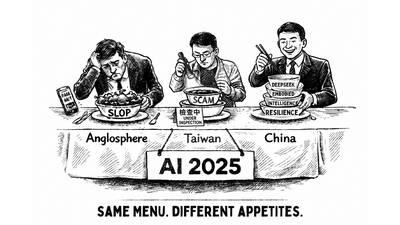
Words of the Year are not just interesting, they are telling. They are language and attitude barometers that measure what a country sees as important. The trending vocabulary around AI last year reveals a stark divergence in what each society notices and responds to the technological shift. For the Anglosphere it’s fatigue. For China it’s ambition. For Taiwan, it’s pragmatic vigilance. In Taiwan’s annual “representative character” vote, “recall” (罷) took the top spot with over 15,000 votes, followed closely by “scam” (詐). While “recall” speaks to the island’s partisan deadlock — a year defined by legislative recall campaigns and a public exhausted

In the 2010s, the Communist Party of China (CCP) began cracking down on Christian churches. Media reports said at the time that various versions of Protestant Christianity were likely the fastest growing religions in the People’s Republic of China (PRC). The crackdown was part of a campaign that in turn was part of a larger movement to bring religion under party control. For the Protestant churches, “the government’s aim has been to force all churches into the state-controlled organization,” according to a 2023 article in Christianity Today. That piece was centered on Wang Yi (王怡), the fiery, charismatic pastor of the
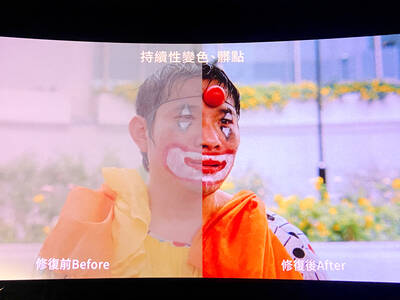
Hsu Pu-liao (許不了) never lived to see the premiere of his most successful film, The Clown and the Swan (小丑與天鵝, 1985). The movie, which starred Hsu, the “Taiwanese Charlie Chaplin,” outgrossed Jackie Chan’s Heart of Dragon (龍的心), earning NT$9.2 million at the local box office. Forty years after its premiere, the film has become the Taiwan Film and Audiovisual Institute’s (TFAI) 100th restoration. “It is the only one of Hsu’s films whose original negative survived,” says director Kevin Chu (朱延平), one of Taiwan’s most commercially successful
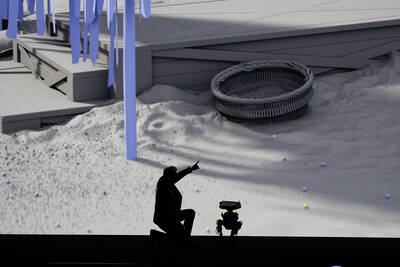
Sure, Nvidia, AMD and Intel all had important chip and AI platform announcements on the first day of CES 2026, but all audiences wanted to see more of was Star Wars and Jensen Huang’s (黃仁勳) little robot buddies. CES is a huge opportunity annually for companies both large and small to parade products they plan to put on shelves this year. And, as predicted, artificial intelligence was anchored in nearly everything as tech firms continue to look for AI products that will attract customers. NVIDIA GETS PHYSICAL The biggest buzzword in the air at CES is “physical AI,” Nvidia’s term for AI models


 RSS
RSS