


Ultra-processed food significantly raises the risk of high blood pressure, heart disease, heart attacks and strokes, according to two studies that one expert says should serve as a wake-up call for governments worldwide.
Global consumption of heavily processed items such as cereals, protein bars, fizzy drinks, ready meals and fast food has soared in recent years. In the UK and US, well over half the average diet now consists of ultra-processed food (UPF). For some, especially people who are younger, poorer or from disadvantaged areas, a diet comprising as much as 80 percent UPF is typical.
Stark new research adds to a growing body of evidence that experts say exposes a “tidal wave of harm” being caused directly by UPF. Two large studies presented at the world’s largest heart conference showed the devastating impact UPF is having on cardiovascular health.
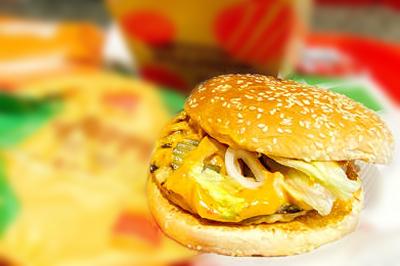
Photo: AFP
The first study, which tracked 10,000 women for 15 years, found that those with the highest proportion of UPF in their diet were 39 percent more likely to develop high blood pressure than those with the lowest. This was the case even after academics adjusted for the effect of salt, sugar and fat.
High blood pressure, or hypertension, increases the risk of serious heart conditions including heart disease, peripheral arterial disease, aortic aneurysms, kidney disease and vascular dementia.
The second study, a gold-standard meta-analysis of more than 325,000 men and women, showed those who ate the most UPF were 24 percent more likely to have cardiovascular events including heart attacks, strokes and angina.
Increasing daily UPF consumption in calorie intake by 10 percent was associated with a 6 percent increased risk of heart disease. And those with UPF making up less than 15 percent of their diet were least at risk of any heart problems, according to the research led by the Fourth Military Medical University in Xian, China.
The findings were revealed at the annual meeting of the European Society of Cardiology in Amsterdam, where thousands of the world’s leading heart doctors, scientists and researchers were briefed on the studies. The results prompted calls from experts for urgent action.
SALT, SUGAR, FAT
Ultra-processed foods are products that have gone through multiple processes during manufacturing. They are often high in salt and sugar and may contain additives and preservatives. Often, the foods are low in fiber and lacking the nutrients present in fresh or minimally processed foods, such as fresh fruit and vegetables, plain yoghurt and homemade bread.
Previous studies have linked eating high levels of ultra-processed foods with a range of health problems including obesity, type 2 diabetes and cancer.
Speaking to reporters in Amsterdam, one of the researchers behind the first study, Anushriya Pant, of the University of Sydney, said many people were unaware that food they assume is healthy, such as shop-bought sandwiches, wraps, soups and low-fat yoghurts, were in fact UPF.
“It could be that foods you think are healthy are actually contributing to you developing high blood pressure,” she said.
Women typically eat more UPF than men, Pant added. Further research is needed to establish whether this is driven by the marketing of ultra-processed diet and low-fat foods at women.
Chris van Tulleken, one of the world’s leading UPF experts and the author of the bestselling book Ultra Processed People, said: “The findings of these new papers are entirely consistent with a large and growing body of work showing that increasing consumption of UPF is associated with an increased risk of cardiovascular disease.
“Much of it will be familiar as ‘junk food,’ but there’s plenty of organic, free-range, ‘ethical’ UPF which might be sold as healthy, nutritious, environmentally friendly or useful for weight loss. Almost every food that comes with a health claim on the packet is UPF,” he said. “There is now significant evidence that these products inflame the gut, disrupt appetite regulation, alter hormone levels and cause myriad other effects which likely increase the risk of cardiovascular and other disease much in the same way that smoking does.”
WARNING LABELS
Van Tulleken called for black warning labels to be added to UPF packaging, as is already the case in Chile and Mexico, and said there should be a clampdown on marketing of UPF, and in particular adverts aimed at children.
The UK Department of Health and Social Care said it had already introduced legislation to restrict the placement and promotion of certain products in supermarkets to discourage unhealthy food choices.
Henry Dimbleby, the government’s former food tsar, said the studies presented in Amsterdam were among the first to suggest that the harm caused by UPF may be more than just because of the high fat, sugar and salt content of the products.
“This indicates there is something else going on,” he said. “Given that UPF represents 55 percent of our diet, that should be a wake-up call. If there is something inherent in the processing of foods that is harmful, then that is a disaster.”
He added that Britain is particularly bad for ultra-processed food.
“It is storing up problems for the future. If we do nothing, a tidal wave of harm is going to hit the NHS,” he said.
Sonya Babu-Narayan, an associate medical director at the British Heart Foundation, said more research was needed to understand the links between ultra-processed foods and cardiovascular disease.
“For example, we don’t know to what degree this is driven by artificial additives or the high levels of salt, sugar and fat that these foods tend to contain,” she said.
“We do know that the world around us doesn’t always make it easy for the healthy option to be the accessible and affordable option. On the contrary, less healthy foods often take center stage. To address this, we need a comprehensive strategy that creates an environment that can support people to live long and healthy lives.”

Growing up in a rural, religious community in western Canada, Kyle McCarthy loved hockey, but once he came out at 19, he quit, convinced being openly gay and an active player was untenable. So the 32-year-old says he is “very surprised” by the runaway success of Heated Rivalry, a Canadian-made series about the romance between two closeted gay players in a sport that has historically made gay men feel unwelcome. Ben Baby, the 43-year-old commissioner of the Toronto Gay Hockey Association (TGHA), calls the success of the show — which has catapulted its young lead actors to stardom -- “shocking,” and says

Inside an ordinary-looking townhouse on a narrow road in central Kaohsiung, Tsai A-li (蔡阿李) raised her three children alone for 15 years. As far as the children knew, their father was away working in the US. They were kept in the dark for as long as possible by their mother, for the truth was perhaps too sad and unjust for their young minds to bear. The family home of White Terror victim Ko Chi-hua (柯旗化) is now open to the public. Admission is free and it is just a short walk from the Kaohsiung train station. Walk two blocks south along Jhongshan

The 2018 nine-in-one local elections were a wild ride that no one saw coming. Entering that year, the Chinese Nationalist Party (KMT) was demoralized and in disarray — and fearing an existential crisis. By the end of the year, the party was riding high and swept most of the country in a landslide, including toppling the Democratic Progressive Party (DPP) in their Kaohsiung stronghold. Could something like that happen again on the DPP side in this year’s nine-in-one elections? The short answer is not exactly; the conditions were very specific. However, it does illustrate how swiftly every assumption early in an

Snoop Dogg arrived at Intuit Dome hours before tipoff, long before most fans filled the arena and even before some players. Dressed in a gray suit and black turtleneck, a diamond-encrusted Peacock pendant resting on his chest and purple Chuck Taylor sneakers with gold laces nodding to his lifelong Los Angeles Lakers allegiance, Snoop didn’t rush. He didn’t posture. He waited for his moment to shine as an NBA analyst alongside Reggie Miller and Terry Gannon for Peacock’s recent Golden State Warriors at Los Angeles Clippers broadcast during the second half. With an AP reporter trailing him through the arena for an


 RSS
RSS