


“Gay High School Fight Club” was the working title of the script that Emma Seligman and Rachel Sennott sent off to a producer a few years ago, riding a surreal wave of virtual goodwill after their film Shiva Baby became a kind of cult sensation during the pandemic.
This story was about two unpopular friends, PJ and Josie, who are eager to lose their virginity (ideally to two beautiful cheerleaders). The only way they can figure out how to get close to said cheerleaders, however, is to form an all-female self-defense class that quickly devolves into a bloody fight club. They knew it had the potential to be riotously funny, slyly insightful and boundary pushing for queer teen representation. But would anyone want to make it?
Though the cinematic misadventures of horny, flawed, straight teenage boys may essentially be its own genre with dozens of films spanning decades, there has not been an equivalent for queer girls. Thankfully, though, the producer who got the script was Alison Small, the head of film at Elizabeth Banks and Max Handelman’s Brownstone Productions (also behind another wild hit this year, Cocaine Bear). Instead of liabilities in untested concepts, Small thought it was the funniest thing she had ever read. It was smart, weird and original. They were in.

Photo: AP
The film, now called Bottoms, is on its way to theaters today (and expanding next week), featuring The Bear breakout Ayo Edebiri as Josie, Kaia Gerber as the cheerleader Sennott’s character PJ is lusting after, “Red, White & Royal Blue’s” Nicholas Galitzine as a toxic quarterback, and former NFL player Marshawn Lynch as a very unconventional teacher.
“We thought a lot about camp casting and, like, John Waters,” Seligman, who directed, said. “Taking people from all walks of life and all kind of industries — people who could make fun of their personas.”
Seligman and Sennott have been working on Bottoms since around 2017, writing the part of Josie for Edebiri specifically. The three met as students at New York University. Though they said the school didn’t exactly foster extracurricular collaboration between departments, Sennott helped create an environment where that was possible, encouraging people to help one another instead of just venturing out alone.
“You were like skipping your acting classes to work with the film students and meet the writing students and pushing to do stuff together and make sketches outside of school,” Seligman said in a joint interview with Sennott and Edebiri. “I don’t know what you were skipping to go audition for Shiva and make that happen, but I’m glad you did.”
The class, Sennott said, was Shakespeare.
“Nobody knows what they’re doing once they graduate,” Edebiri said. “Even if you think you have everything lined up, you’re still in the real world and there are still practical things like how do you get representation? Submit to festivals? How do you meet up with producers who maybe are more established? There aren’t classes for that. We were trying to figure out the answers while we were still in school. So then as soon as we graduated, we could just hit the ground running, like jump into it and do it together.”
And they all stayed true to their word, even if they weren’t directly working together. When Edebiri got a writing job, she told her friends what it was like. When Seligman started working on sets, she passed on her experiences. When Sennott and Edebiri teamed up for a short form (and short-lived) Comedy Central series Ayo and Rachel are Single, they learned how to take notes from a director as actors.
“I feel like we all helped each other forward,” Sennott said. “Some things you can only learn from doing.”
Bottoms, which is being released by MGM’s Orion Pictures, is coming at a time when its stars are having a moment too, with Edebiri now a household name after two seasons as Sydney in Hulu’s The Bear and Sennott having recently co-starred in the conversation-provoking HBO series The Idol as well as last year’s wild horror Bodies Bodies Bodies.
Seligman and Sennott have a library of references that helped inspire the tone of Bottoms, from Superbad and Drop Dead Gorgeous to Scott Pilgrim vs the World and Attack the Block, but it’s also just its own thing too and there were many, many discussions about exactly what reality this world existed in.
The answer isn’t abundantly clear — the town is a kind of “Anytown,” the sets and costumes and props are rooted in the 21st century but not anything hyper specific, and the intensity of a rivalry with a local football team is one that reaches absurd heights.
And then there’s the fight club, which they had to keep reminding everyone wasn’t just a joke. It was supposed to be very, very real.
“Once we actually started to shoot it and talk to other departments, we had to be clear that it was a real fight club and we were going to have real stunts and real blood,” Seligman said. “I think some people still thought it was just going to be a fun comedy. … As we kept on coming up against people asking, ’Wait, so are there going to be real stunts?” And for us it was like, ‘What did you think this was going to be like?’
“It became even more important as we were filming that we made clear that we wanted these girls to actually look really good as they were kicking ass.”

Just after 6am, I walked up to the ticket gate at Taipei Main Station and entered the Taiwan Railway platform without scanning any ticket; instead, I flashed the Sanrio Fun Rail pass on my phone to the gate worker and was admitted. I found my train and prepared to board. My destination? This very same station. I was embarking on a 13-hour journey on one of two round-the-island trains operated by ezTravel. They run each day, one counterclockwise around the island and one clockwise. They differ in a number of ways from an ordinary Taiwan Railway train and can make for
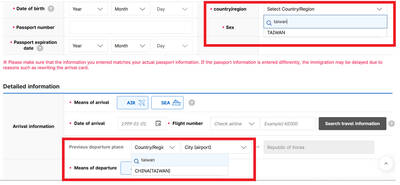
Jason Han says that the e-arrival card spat between South Korea and Taiwan shows that Seoul is signaling adherence to its “one-China” policy, while Taiwan’s response reflects a reciprocal approach. “Attempts to alter the diplomatic status quo often lead to tit-for-tat responses,” the analyst on international affairs tells the Taipei Times, adding that Taiwan may become more cautious in its dealings with South Korea going forward. Taipei has called on Seoul to correct its electronic entry system, which currently lists Taiwan as “China (Taiwan),” warning that reciprocal measures may follow if the wording is not changed before March 31. As of yesterday,
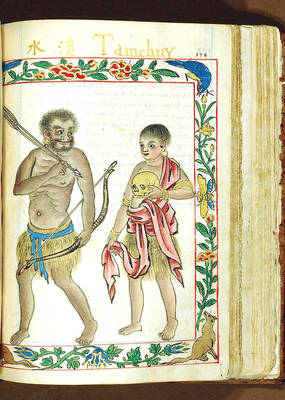
The Portuguese never established a presence on Taiwan, but they must have traded with the indigenous people because later traders reported that the locals referred to parts of deer using Portuguese words. What goods might the Portuguese have offered their indigenous trade partners? Among them must have been slaves, for the Portuguese dealt slaves across Asia. Though we often speak of “Portuguese” ships, imagining them as picturesque vessels manned by pointy-bearded Iberians, in Asia Portuguese shipping between local destinations was crewed by Asian seamen, with a handful of white or Eurasian officers. “Even the great carracks of 1,000-2,000 tons which plied

On Thursday, former Taipei mayor and founder of the Taiwan People’s Party (TPP) Ko Wen-je (柯文哲) was sentenced to 17 years in prison and had his civil rights suspended for six years over corruption, embezzlement and other charges. Seven others related to the case were also handed prison sentences, while two were found not guilty. It has been a bad week for the TPP. On Tuesday, prosecutors charged Chinese immigrant Xu Chunying (徐春鶯) with suspicion of taking part in Beijing-directed election interference. Xu has strong links to the TPP, which once offered her a party list legislator nomination. Tuesday also


 RSS
RSS