


One of the nation’s largest music events is back, as the Taichung Jazz Festival is set to kick off this weekend.
Starting Saturday, 20 jazz groups will perform over nine days in Civic Square (市民廣場主舞臺), the city’s premier outdoor music venue.
With large-scale music events just resuming, organizers are hoping the festival, now in its 18th year, returns to its pre-pandemic splendor.
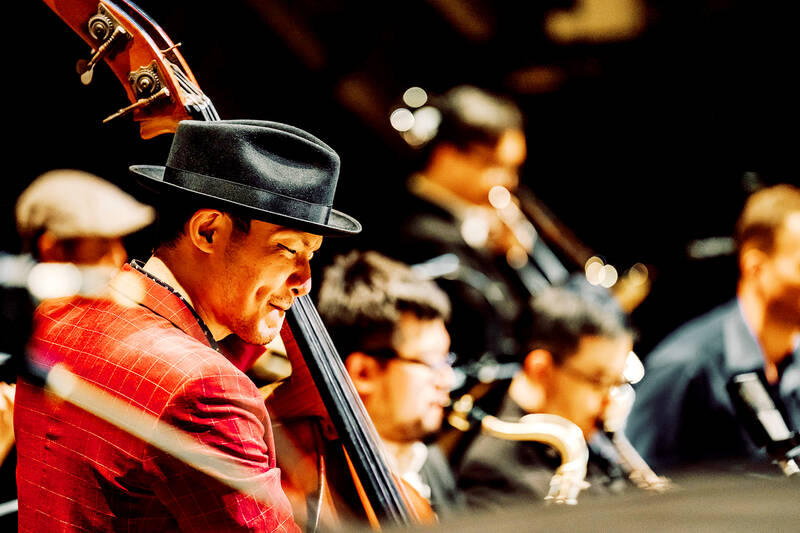
Photo courtesy of Taichung City Cultural Affairs Bureau
“People are so excited about this year’s jazz festival,” said Hsiao Jing-ping (蕭靜萍), head of performing arts for the city’s Cultural Affairs Bureau. “We’re expecting the same size crowd as before.”
As in years past, upwards of a million people are expected to revel in the free carnival-like atmosphere.
Last year’s festival was a scaled-down event with limits on crowd size. And in 2020, the festival was canceled outright.
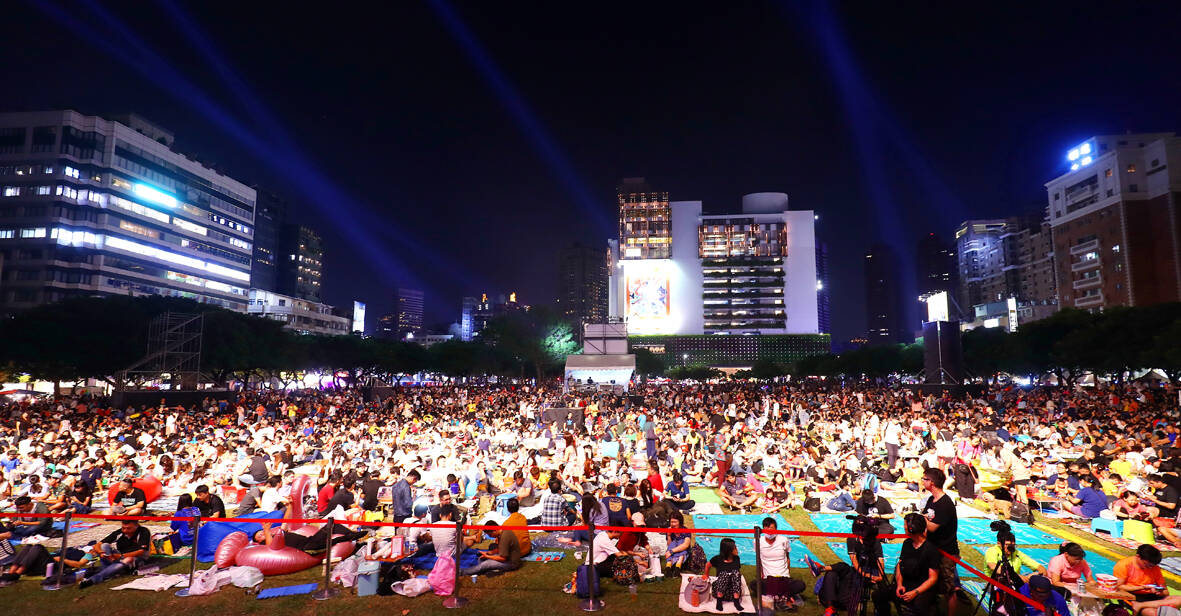
Photo courtesy of Taichung City Cultural Affairs Bureau
One notable difference this year is that spectators will not find the array of food and beverage vendors that typically line the park. However, people will be allowed to bring in their own supplies.
Another difference will be more performances by Taiwanese jazz bands, with fewer coming from overseas. In all, musicians from seven foreign counties, including Germany and the US, will take the main stage.
With upbeat rhythm and brass sections, the Taipei Jazz Orchestra will get things started at 7pm on Saturday.
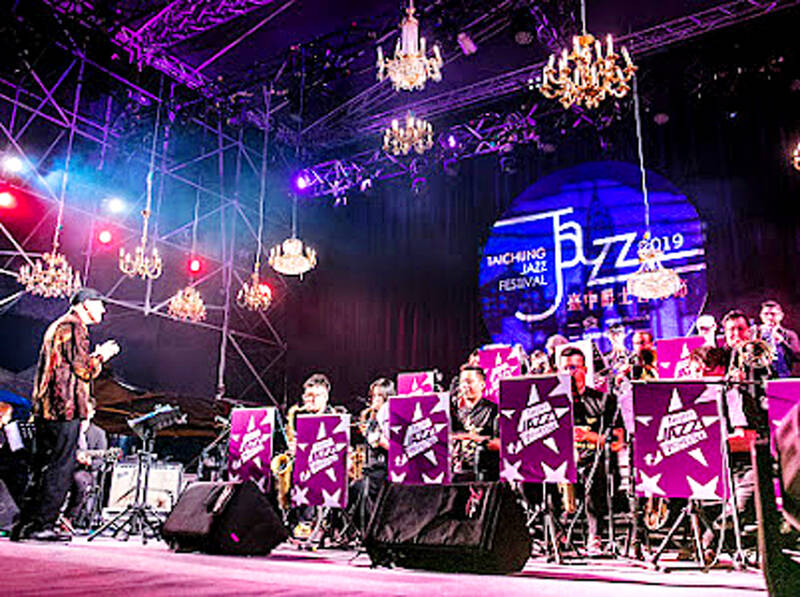
Photo courtesy of Taichung City Cultural Affairs Bureau
Later in the week, award winning singer-songwriter Lo Yen-ting (羅妍婷) takes the stage on Tuesday to show off her take on modern vocal jazz. The Kaohsiung native will debut new songs with her octet.
Closing the festival on Oct. 23 is German singer and pianist Julian Moreen, who also performed at the 2019 Taichung Jazz Festival. He is joined by a troupe of Taiwanese and international musicians to make a sound that’s described as a blend of pop, folk and jazz.
For the complete lineup and performance times visit the festival’s Web site: www.taichungjazzfestival.tw

Photo courtesy of Taichung City Cultural Affairs Bureau
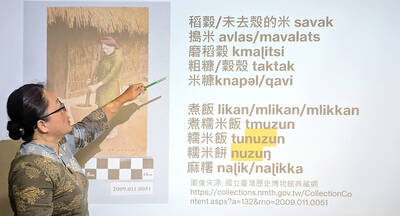
Jan. 26 to Feb. 1 Nearly 90 years after it was last recorded, the Basay language was taught in a classroom for the first time in September last year. Over the following three months, students learned its sounds along with the customs and folktales of the Ketagalan people, who once spoke it across northern Taiwan. Although each Ketagalan settlement had its own language, Basay functioned as a common trade language. By the late 19th century, it had largely fallen out of daily use as speakers shifted to Hoklo (commonly known as Taiwanese), surviving only in fragments remembered by the elderly. In
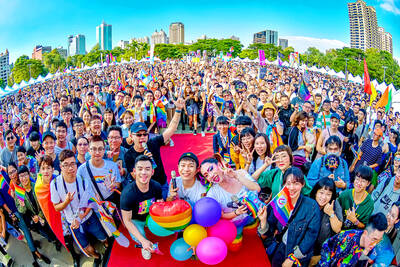
William Liu (劉家君) moved to Kaohsiung from Nantou to live with his boyfriend Reg Hong (洪嘉佑). “In Nantou, people do not support gay rights at all and never even talk about it. Living here made me optimistic and made me realize how much I can express myself,” Liu tells the Taipei Times. Hong and his friend Cony Hsieh (謝昀希) are both active in several LGBT groups and organizations in Kaohsiung. They were among the people behind the city’s 16th Pride event in November last year, which gathered over 35,000 people. Along with others, they clearly see Kaohsiung as the nexus of LGBT rights.

Dissident artist Ai Weiwei’s (艾未未) famous return to the People’s Republic of China (PRC) has been overshadowed by the astonishing news of the latest arrests of senior military figures for “corruption,” but it is an interesting piece of news in its own right, though more for what Ai does not understand than for what he does. Ai simply lacks the reflective understanding that the loneliness and isolation he imagines are “European” are simply the joys of life as an expat. That goes both ways: “I love Taiwan!” say many still wet-behind-the-ears expats here, not realizing what they love is being an

In the American west, “it is said, water flows upwards towards money,” wrote Marc Reisner in one of the most compelling books on public policy ever written, Cadillac Desert. As Americans failed to overcome the West’s water scarcity with hard work and private capital, the Federal government came to the rescue. As Reisner describes: “the American West quietly became the first and most durable example of the modern welfare state.” In Taiwan, the money toward which water flows upwards is the high tech industry, particularly the chip powerhouse Taiwan Semiconductor Manufacturing Co (TSMC, 台積電). Typically articles on TSMC’s water demand


 RSS
RSS