


The menu at The Canteen in southwest England doesn’t just let diners know how much a dish costs. They can also check its carbon footprint.
The carrot and beetroot pakora with yogurt sauce is responsible for just 16 grams of CO2 emissions. The aubergines with a miso and harissa sauce with tabbouleh and Zaatar toast caused 675 grams of carbon dioxide.
As customers weigh their options, the menu at the vegetarian restaurant in Bristol includes a comparison with a dish that it does not serve: the emissions from a UK-produced hamburger.
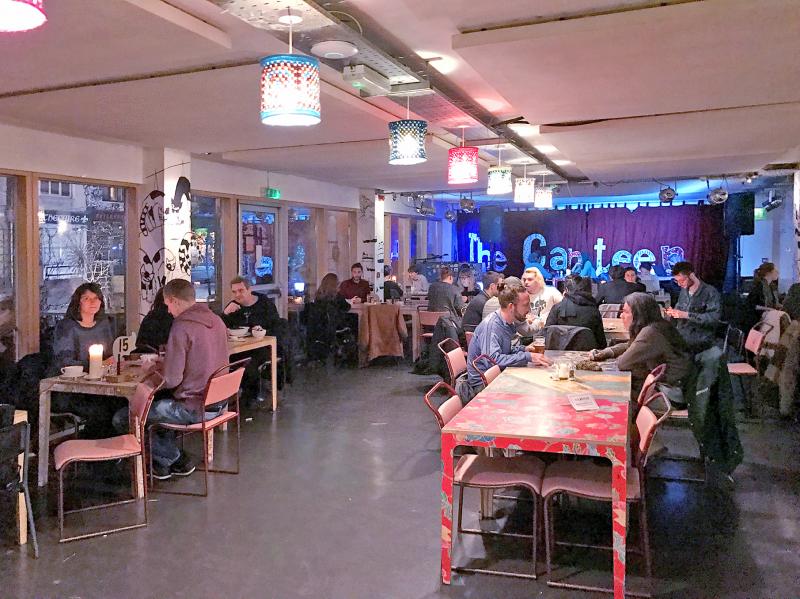
Photo courtesy of Heatheronhertravels.com
“Three kilos for a burger, wow! I can’t believe it,” exclaimed Enyioma Anomelechi, a 37-year-old diner sipping a beer outside in the sunshine.
The menu notes that a real beef burger’s emissions is “10 times the amount of its vegan alternative.”
The carbon footprints of businesses and consumers have come under growing scrutiny as countries scramble to limit global temperature increases to 1.5 degrees Celsius and to achieve net-zero emission by 2050.
The Canteen became last month the first restaurant to agree to put its carbon footprint on the menu under a campaign spearheaded by UK vegan campaigning charity Viva!
The restaurant’s manager, Liam Stock, called the move a way to “see what we are doing; to understand and improve ourselves.”
The average British person has an annual carbon footprint of more than 10 tonnes, according to UK government figures.
Britain has set the ambitious goal of reducing harmful emissions by 78 percent by 2035, compared with 1990 figures, in order to meet its international climate change commitments.
Switching to a plant-based diet is one of the most effective ways for an individual to reduce their carbon footprint, experts from the UN’s Intergovernmental Panel on Climate Change said in April.
The livestock industry replaces CO2-absorbing forests with land for grazing and soy crops for cattle feed. The animals also belch huge amounts of methane, a potent greenhouse gas.
Whether diners will let carbon footprints influence their order choices remains to be seen, but Stock said the menu innovation has stoked interest and support.
“In England if you’re a big chain restaurant, it’s the law that you have to have calories on (the menu),” he said. “But a lot of people are saying ... they’re more interested in carbon.”
While Anomelechi noted the “huge” difference in emissions between a hamburger and other dishes, he said he did not necessarily want to be burdened with knowing his order’s calorie count or carbon footprint.
“When I go out to eat I just want to enjoy,” he added, noting he would be more inclined to change his ways when grocery shopping.
Laura Hellwig, campaigns manager at Viva!, said the carbon footprint figure should become compulsory.
“We are in a climate emergency and consumers have to be able to make informed choices,” said the activist. In her view, “most people would actually choose for the planet” if confronted with a comparison between the carbon footprint of a meat-based meal and a vegan dish.
Stock said he knew his restaurant’s dishes would score low carbon footprints, as most of his ingredients are sourced regionally.
“We didn’t have to change anything,” he said, while admitting some surprises, such as learning that imported spices drive up emissions.
To calculate the dishes’ footprints, The Canteen sent its recipes and the source of the ingredients to a specialized company called MyEmissions.
It is able to calculate the carbon impact from “cradle to store,” taking into account farming, processing, transport and packaging.
“If I was choosing between two dishes, maybe depending on how hungry I was, I might choose the one with a lower footprint,” said Nathan Johnson, a 43-year-old diner at the restaurant. That day, he opted for the chef’s salad, which racks up 162 grams of carbon.
Another diner, 29-year-old Emma Harvey, also backed the idea of increased awareness of carbon footprints “and the ethical effects of the food that we’re eating.” “We have to incorporate things (like) that into everyday life,” she said.

As mega K-pop group BTS returns to the stage after a hiatus of more than three years, one major market is conspicuously missing from its 12-month world tour: China. The omission of one of the group’s biggest fan bases comes as no surprise. In fact, just the opposite would have been huge news. China has blocked most South Korean entertainment since 2016 under an unofficial ban that also restricts movies and the country’s popular TV dramas. For some Chinese, that means flying to Seoul to see their favorite groups perform — as many were expected to do for three shows opening
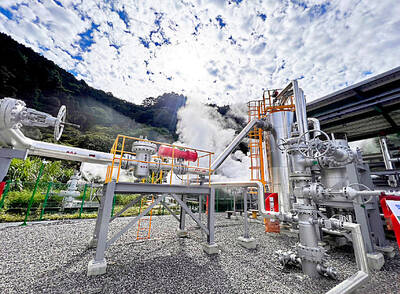
Taiwan’s semiconductor industry consumes electricity at rates that would strain most national grids. Taiwan Semiconductor Manufacturing Co (TSMC) alone accounted for more than 9 percent, or 2,590 megawatts (MW), of the nation’s power demand last year. The factories that produce chips for the world’s phones and servers run around the clock. They cannot tolerate blackouts. Yet Taiwan imports 97 percent of its energy, with liquefied natural gas reserves measured in days. Underground, Taiwan has options. Studies from National Taiwan University estimate recoverable geothermal resources at more than 33,000 MW. Current installed capacity stands below 10 MW. OBSTACLES Despite Taiwan’s significant geothermal potential, the

In our discussions of tourism in Taiwan we often criticize the government’s addiction to promoting food and shopping, while ignoring Taiwan’s underdeveloped trekking and adventure travel opportunities. This discussion, however, is decidedly land-focused. When was the last time a port entered into it? Last week I encountered journalist and travel writer Cameron Dueck, who had sailed to Taiwan in 2023-24, and was full of tales. Like everyone who visits, he and his partner Fiona Ching loved our island nation and had nothing but wonderful experiences on land. But he had little positive to say about the way Taiwan has organized its

The entire Li Zhenxiu (李貞秀) saga has been an ugly, complicated mess. Born in China’s Hunan Province, she moved to work in Shenzhen, where she met her future Taiwanese husband. Most accounts have her arriving in Taiwan and marrying somewhere between 1993 and 1999. She built a successful career in Taiwan in the tech industry before founding her own company. She also served in high-ranking positions on various environmentally-focused tech associations. She says she was inspired by the founding of the Taiwan People’s Party (TPP) in 2019 by Ko Wen-je (柯文哲), and began volunteering for the party soon after. Ko


 RSS
RSS