


The Hung (洪) brothers have earned a reputation for drawing on obscure musical influences — ones that have seeped into their submission for Taiwan Beats Showcase. Samples from an obscure 1970s British dub soul and funk outfit with African and Buddhist influences appear in the same tune as grooves pierced with the soundscapes of Korean minyo folk.
Their stage presence is equally enigmatic. The duo perform with red cloth wrapped around their eyes, a nod to the folk ritual guanluoyin (觀落陰 ,“visiting hell”), which has received renewed interest in pop culture.
“This [song] doesn’t have that many Taiwanese elements in the music,” says Jiun Chi (洪郡崎), the younger brother who plays guitar, keyboards and synths.
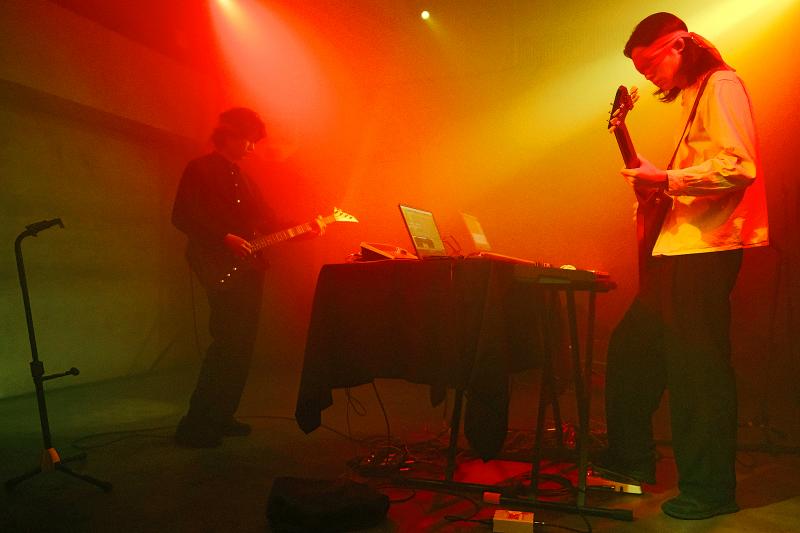
Photo courtesy of Taiwan Beats Showcase
Since the showcase required two songs, they chose A Nambra and Minyo Pop, which are often played together live due to their similar beats. The two spend a lot of time digging for obscure music and supernatural tales, which they weave into their musical fabric and other ventures such as a guide book to Taiwan’s scarier locales.
The duo was recently featured as one of six acts in a 51-minute Taiwan Beats Showcase video submitted to the US’s South by Southwest Festival (SXSW) after receiving positive responses — including a positive review in the Austin Chronicle — for its effort last year.
Spearheaded by the Ministry of Culture and executed by Young Team Productions and Fire On Music (火氣音樂), last year’s video featured just four artists, each one showcasing an essentially Taiwanese locale such as an indoor shrimp fishing venue, a temple, a medium-sized factory and the lush hills of Yilan.
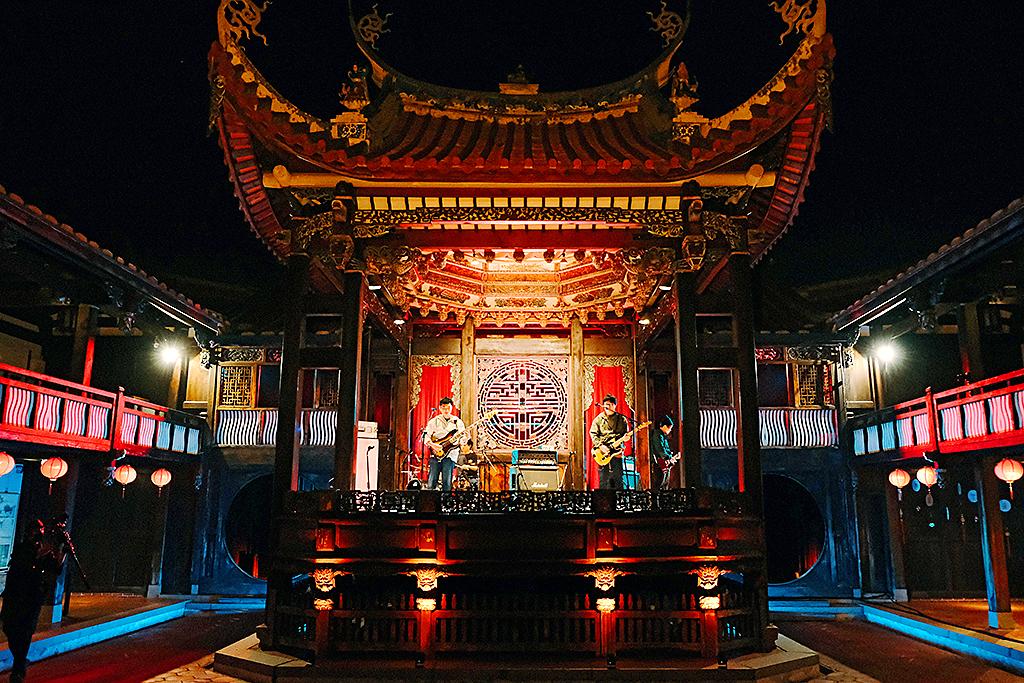
Photo courtesy of Taiwan Beats Showcase
This year’s production continues the concept with more acts on board: in addition to Mong Tong, there’s Elephant Gym (大象體操), DJ QuestionMark, Sorry Youth (拍謝少年), Olivia Tsao (曾雅雯) and Sleeping Brain (眠腦). The video premiered on Tuesday at Vieshow Cinemas Taipei Xinyi and is now available on YouTube.
DRAWING FROM TRADITION
While the previous three acts play in the more traditional sites of Lin Family Gardens in Wufeng (霧峰), an electric flower cart and one of Taiwan’s oldest movie theaters in Tainan, the Hung brothers jam on the dance floor of the smoky club Pawn Shop, known for its heavier, more experimental music.
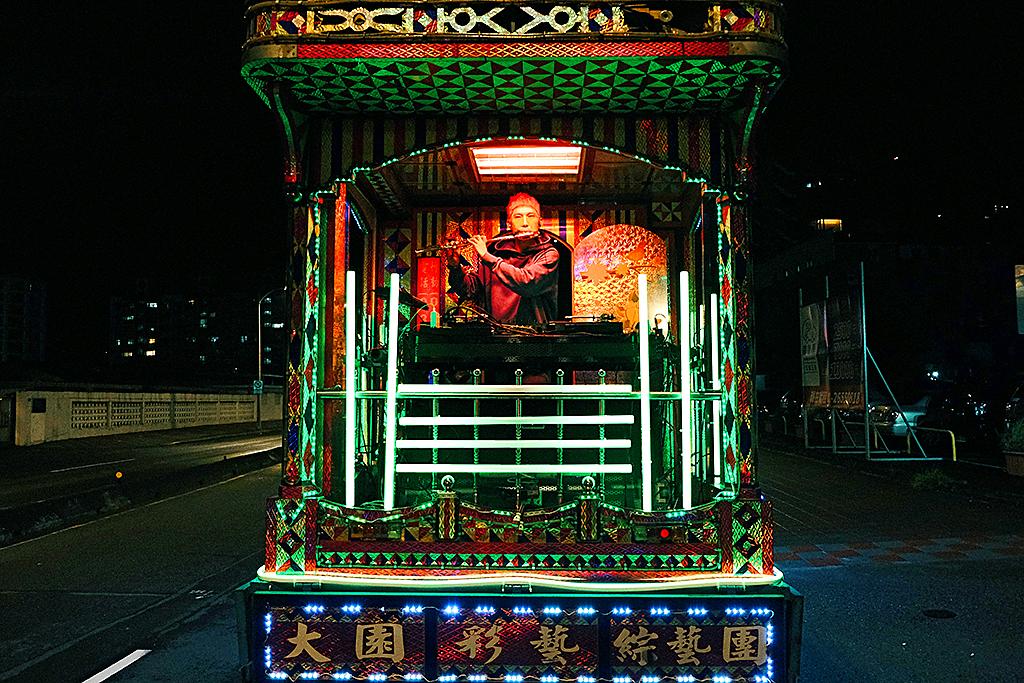
Photo courtesy of Taiwan Beats Showcase
“Pawnshop is a complete electronic music venue that echoes the techno bars of Berlin. The setting doesn’t have to be traditional Taiwanese every time.”
“I feel that this band is very driven by our personal interests,” Hom Yu (洪御) says. “Each place has its unique culture, and all we do is present sounds we liked as children and discovered as adults. We’re not trying to especially promote it to anyone.”
But a big part of their music draws from traditional Taiwanese influences, such as the sounds from funerals and temple festivals they often heard growing up in rural Changhua, the video game bleeps and bloops of their childhood as well as the 1990s occult television shows their parents tried to stop them from watching.
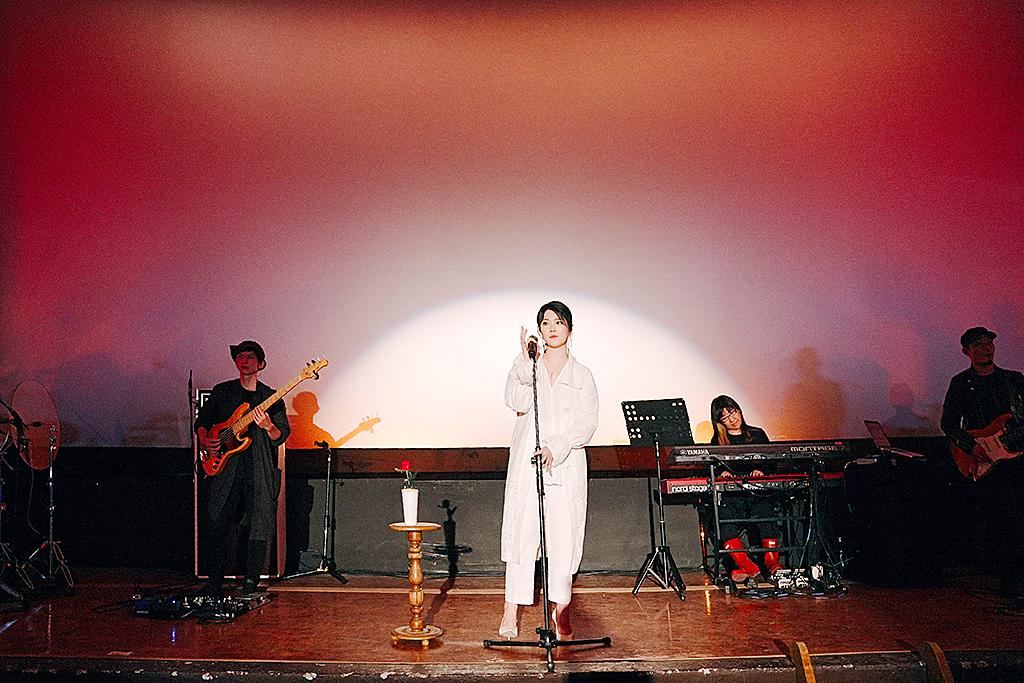
Photo courtesy of Taiwan Beats Showcase
“Whenever I saw a temple festival or funeral, I would stand there for a long time and space out,” Jiun Chi recalls. “I think that’s quite a psychedelic experience.”
Some memorable samples include Hsui Hao-ping (眭澔平) talking about the existence of aliens and a very specific video game noise from the old-school game Maplestory.
Mong Tong says they thought that their performance style would be more suited for Western audiences, but they’ve unexpectedly received a cult following in Taiwan. To local audiences, they say that they make “superstitious music” as they have a fascination with the supernatural.
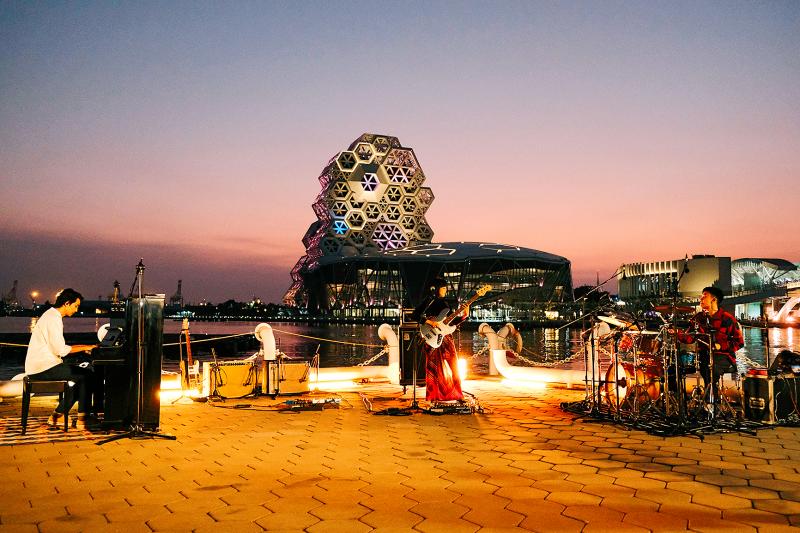
Photo courtesy of Taiwan Beats Showcase
The idea might get lost on those outside Taiwan, so they prefer to go with eastern or Taiwanese psychedelic. They don’t want to directly promote traditional Taiwanese elements to foreign viewers, they just want to pique their interest so they can come see for themselves.
“It doesn’t matter if we’re an electronic duo or an electronic band,” Hom Yu says. “I’m not quite sure myself. I think it’s like the status of Taiwan — just keep it mum.”
SOUTHEAST ASIA NEXT
Mong Tong has also released two guides on Taiwan’s haunted or paranormal sites, but as the word “superstitious” suggests, they don’t really believe in this stuff. However, Jiun Chi says he feels an inexplicable unease and pressure when he gets too deep into researching certain topics.
Minyo Pop is their latest single, one in a series of “pop” tracks they have in their repertoire such as Nakasi Pop and Mountain Pop. It’s an ongoing project, Hom Yu explains, where they hope to make a “poppier” song per year.
“Of course it’s not real pop, it’s just, well, poppier in mood.”
The duo picks a theme first before they make music — conspiracy theories, supernatural occurrences — “it’s like making music to a script,” Jiun Chi says. As long as they’re respectful when they visit the sites, they don’t see a problem.
In fact, Hom Yu says, “If these ‘beings’ know that we are using a different angle to explore and try to understand them, I think they would be quite happy.”
Mong Tong has been exploring the music of smaller countries, which often melds traditional elements to create something that’s rarely heard in the mainstream.
For their upcoming album, which they hope to finish by the end of the year, Mong Tong hopes to focus on music from Southeast Asia. Just a few days ago, Jiun Chi ate at Little Burma at Nanshijiao, and visited ASEAN square, which has a high concentration of Southeast Asian migrants.
“I didn’t go especially to collect anything, but actually many don’t realize that these places and these people are so easily accessible,” he says.
Upon hearing ASEAN square, Hom Yu began telling an urban legend regarding a deadly fire that happened in the previous building in 1995, steering the conversation back to the occult before it concludes.
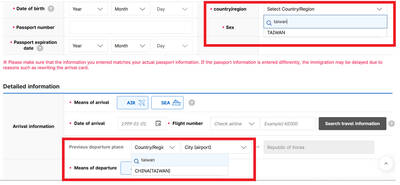
Jason Han says that the e-arrival card spat between South Korea and Taiwan shows that Seoul is signaling adherence to its “one-China” policy, while Taiwan’s response reflects a reciprocal approach. “Attempts to alter the diplomatic status quo often lead to tit-for-tat responses,” the analyst on international affairs tells the Taipei Times, adding that Taiwan may become more cautious in its dealings with South Korea going forward. Taipei has called on Seoul to correct its electronic entry system, which currently lists Taiwan as “China (Taiwan),” warning that reciprocal measures may follow if the wording is not changed before March 31. As of yesterday,

The Portuguese never established a presence on Taiwan, but they must have traded with the indigenous people because later traders reported that the locals referred to parts of deer using Portuguese words. What goods might the Portuguese have offered their indigenous trade partners? Among them must have been slaves, for the Portuguese dealt slaves across Asia. Though we often speak of “Portuguese” ships, imagining them as picturesque vessels manned by pointy-bearded Iberians, in Asia Portuguese shipping between local destinations was crewed by Asian seamen, with a handful of white or Eurasian officers. “Even the great carracks of 1,000-2,000 tons which plied
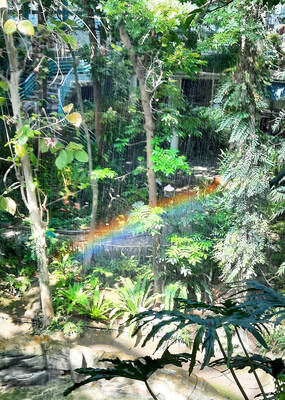
It’s only half the size of its more famous counterpart in Taipei, but the Botanical Garden of the National Museum of Nature Science (NMNS, 國立自然科學博物館植物園) is surely one of urban Taiwan’s most inviting green spaces. Covering 4.5 hectares immediately northeast of the government-run museum in Taichung’s North District (北區), the garden features more than 700 plant species, many of which are labeled in Chinese but not in English. Since its establishment in 1999, the site’s managers have done their best to replicate a number of native ecosystems, dividing the site into eight areas. The name of the Coral Atoll Zone might
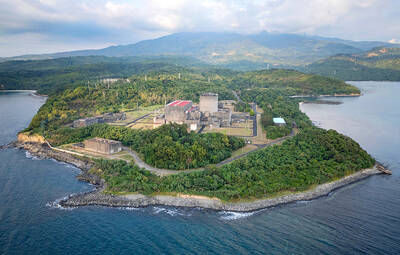
Nuclear power is getting a second look in Southeast Asia as countries prepare to meet surging energy demand as they vie for artificial intelligence-focused data centers. Several Southeast Asian nations are reviving mothballed nuclear plans and setting ambitious targets and nearly half of the region could, if they pursue those goals, have nuclear energy in the 2030s. Even countries without current plans have signaled their interest. Southeast Asia has never produced a single watt of nuclear energy, despite long-held atomic ambitions. But that may soon change as pressure mounts to reduce emissions that contribute to climate change, while meeting growing power needs. The


 RSS
RSS