


It’s not often I glimpse something from a bus that, in a second or less, convinces me to press the stop-request button earlier than planned. But just after crossing into Taichung’s Shihgang District (石岡) from Fongyuan District (豐原), we passed a building that was so distinctive I didn’t care if I’d end up with a long walk under the hot sun.
I’d never seen a fire station quite like it. The greater part was gray and somewhat bland, but to those familiar with Taiwan’s various architectural styles, the endearing cream-yellow entrance way screamed, “colonial-era public building.”
My hunch turned out to be right. What’s officially called Shihgang Branch of the Second Emergency and Rescue Corps, Taichung City Government Fire Bureau (台中市政府消防局第二大隊石岡分隊), dates from 1941, just four years before Japan’s 50-year domination of Taiwan ended.
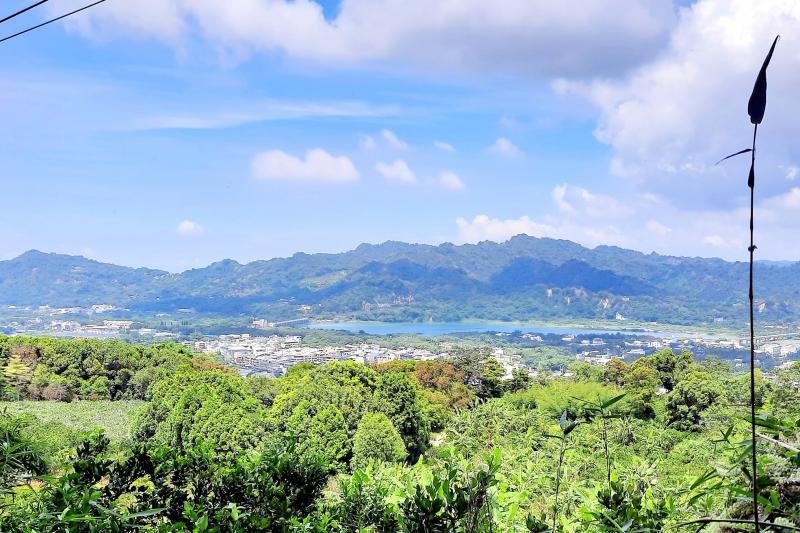
Photo: Steven Crook
The station, at 1171 Fongshih Road (豐勢路), has been recognized as a historic building by the city government. Seriously damaged 22 years ago by the 921 Earthquake, it was repaired and refurbished at a cost of NT$8 million.
ISHIOKA BARN
After snapping some photos of the fire station, I returned to the route I’d sketched out the previous day. Leaving the main road, I quickly found a better-known relic from the colonial period — Ishioka Barn (石岡穀倉) at 160 Jhongsiao Street (忠孝街). Ishioka is the Japanese pronunciation of Shihgang.
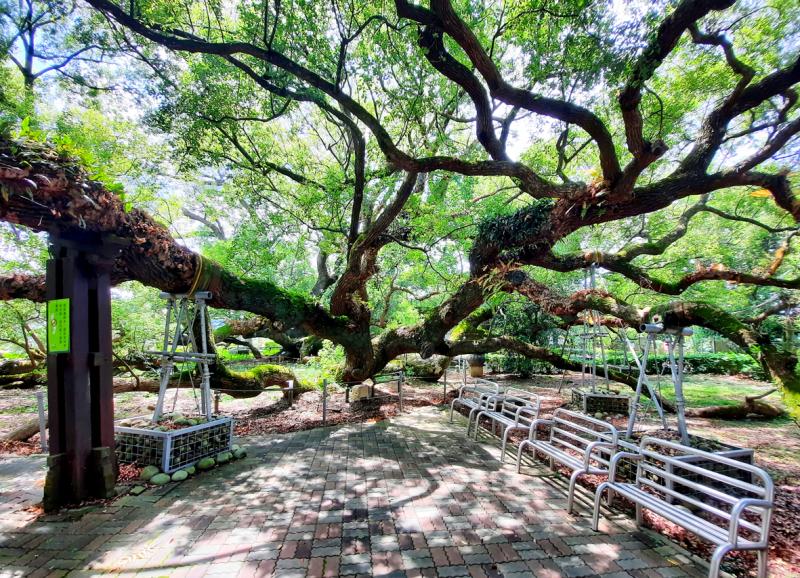
Photo: Steven Crook
The barn’s interior isn’t currently open to the public; this could change if pandemic countermeasures are relaxed. The exterior, however, deserves a proper look.
Built in 1942 as a rice mill and warehouse, it’s as tall as a modern three-story town house, with a considerably larger footprint. That a building made almost entirely of wood (Chinese fir, to be specific) and bamboo has survived everything Taiwan throws at man-made structures — typhoons, earthquakes and termites — for nearly eight decades is impressive.
From the barn, it was a short walk to Provincial Highway 3. Continuing southward once I’d got to the other side of that busy road, I set off down Jinchuan Lane (金川巷) and across Shihshueike Creek (食水嵙溪).
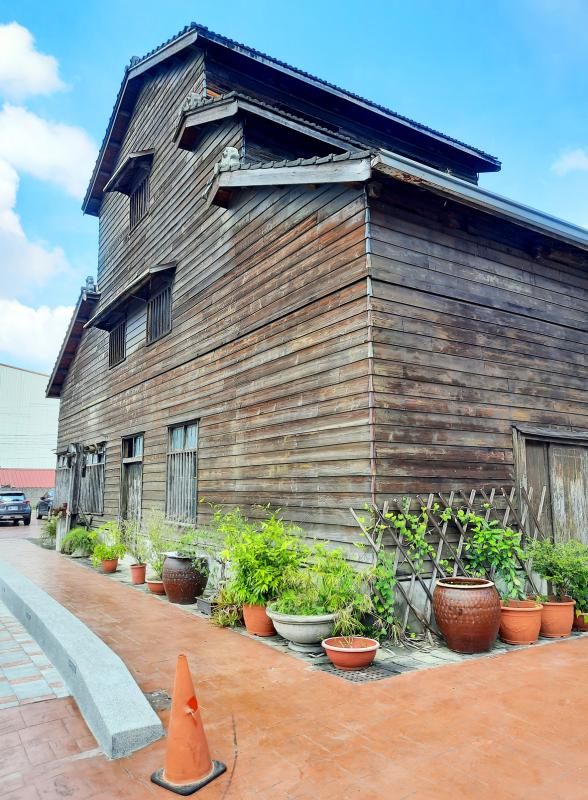
Photo: Steven Crook
TIAOWU ANCIENT PATH
My objective was Shihjhong Temple (石忠宮), on a hillside just over 1km from Fongshih Road.
I wasn’t expecting much from this fairly new temple dedicated to the sea goddess Matsu, and inside I found nothing remarkable. I tramped there because it’s the starting point of Tiaowu Ancient Path (挑物古道).
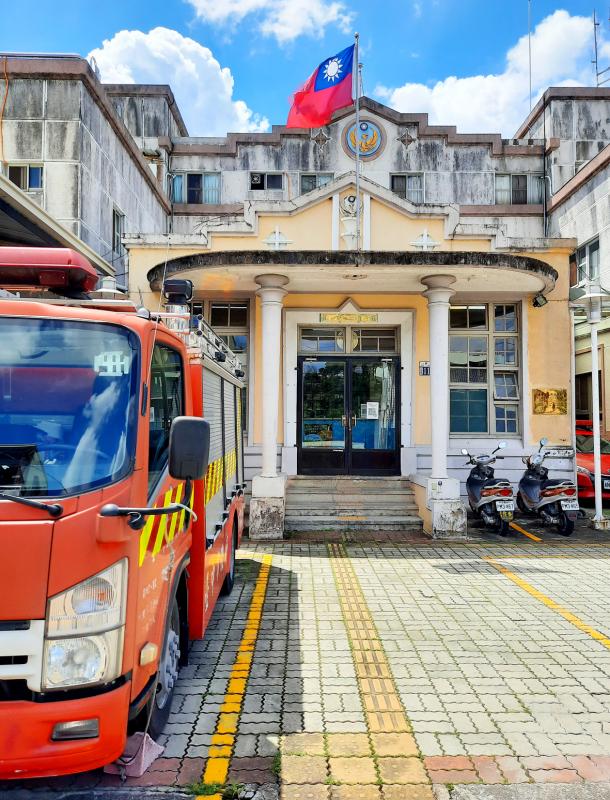
Photo: Steven Crook
The trailhead isn’t obvious, being somewhat hidden by a joss-paper furnace on the left as you face the front of the temple. Stepping around a system of pipes and steel boxes (retrofitted to reduce particulate emissions, I assume), I found steps leading up the hill.
Almost immediately, the path divides. According to an information board at the fork, what’s called Chiufang Village Trail (九房里步道), which veers to the left and then downhill, is currently closed for repairs. These are due to be completed by the end of January next year.
Tiaowu Ancient Path remains open. As its name suggests, it’s a trail with some history. In the 19th century, when almost everyone in Taiwan got around on foot, this route was used to transport goods to and from nearby settlements.
The path took me behind the temple and up onto a ridge. Most of the first 300m is faux-wood boardwalk. In several places, it lists noticeably to one side or the other. But if you hike with care, it’s probably no more dangerous than a city street.
The trail then follows a narrow concrete road used by farmers to access their orange orchards. When they go to work early in the morning, these agriculturalists surely enjoy superb views of the Central Mountain Range. I was hiking in the middle of the day, when clouds were already obscuring distant peaks, but what I could see more than justified the sweat and exertion.
WUFULINMEN SACRED TREE
After walking almost 1.6km, I came to Wufulinmen Sacred Tree (五福臨門神木). This arboreal landmark, which is around 450m above sea level, gained its name in the mid-1970s when it was discovered that it wasn’t a single tree, but actually a 350-year-old camphor entwined with four other species: A banyan, a type of laurel, an acacia and a hackberry.
Keeping Wufulinmen Sacred Tree healthy hasn’t been easy. Parts of it have suffered from fungus and pests. Because it was encircled by roads and sidewalks, rainwater wasn’t draining properly, causing problems for the roots.
In 2015-16, several tonnes of concrete were removed and waterjet technology was used to loosen compacted soil. Several limbs are now propped up by steel buttresses.
DONGFONG BIKE TRAIL
From the sacred tree, a decent trail leads northeast, down toward the center of Shihgang. Back on the north bank of Shihshueike Creek, I pounded the pavement until I reached Dongfong Bicycle Trail (東豐自行車綠廊).
The bikeway follows the route of a long-shuttered branch railroad, and one of the more interesting spots along it is a short section of track that was twisted by the 921 earthquake.
I pressed on because I wanted to be sure I’d have enough time at another piece of infrastructure that was damaged by that temblor.
EARTHQUAKE MEMORIAL PARK
Shihgang Dam (石岡壩), which spans the Dachia River (大甲溪), suffered a serious breach as a result of the quake. After repairs were completed, the damaged section was made the centerpiece of the Shihgang Dam 921 Earthquake Memorial Park (石岡壩九二一地震紀念公園).
The broken spillways are a striking sight, but if I return to this place, I’ll do so late in the afternoon. Because the dam faces west, the setting sun surely adds an appealing glow to both the barrage and the cascade at its base.
Steven Crook has been writing about travel, culture and business in Taiwan since 1996. He is the author of Taiwan: The Bradt Travel Guide and co-author of A Culinary History of Taipei: Beyond Pork and Ponlai.


Taiwan’s English education system is being pulled apart by three opposing forces. Bilingual Nation 2030 pulls students toward English and global communication. Artificial Intelligence (AI) readiness pulls them toward digital judgment, verification and AI-mediated work. But Taiwan’s old exam culture pulls them back toward memorization, grammar drills, timed reading and correct answers. If the education system keeps using old exams to define success, it risks producing graduates who are neither genuinely bilingual nor genuinely AI-ready, but trained for tasks machines can already perform. The first force is Bilingual Nation 2030. Launched in 2018, the policy aimed to “help Taiwan’s workforce connect

“Taiwan’s Opposition Leader Comes to US With a Message Straight Out of Beijing” read a May 31 headline in the Wall Street Journal. Top US administration officials and members of Congress almost certainly read the WSJ, and if there was a bullet point takeaway that people in Washington should absorb ahead of Chinese Nationalist Party (KMT) Chair Cheng Li-wun’s (鄭麗文) arrival in DC on June 9, that headline is it. The last few columns have discussed this very topic, and the timing is not coincidental. While those top officials likely do not read the Taipei Times, judging by the number
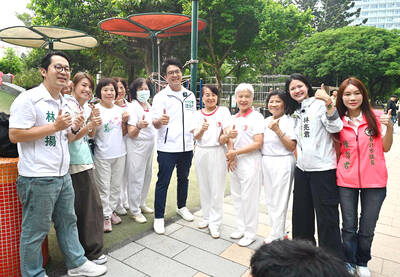
With weighty, anxiety-inducing geopolitical topics dominating the headlines, checking in on the wild and weird state of local politics can take some of the edge off. This November’s elections will determine who will be in charge of fixing potholes in your neighborhood, not the potholes in Taiwan’s complicated geopolitical space. Recently, after an online interview with a Taipei-based journalist, I commented that Taipei journalists never go further than the MRT can take them. He laughed and agreed. Naturally, the Taipei mayoral race is eating up much of the press attention. TAIPEI CITY Democratic Progressive Party (DPP) candidate Puma Shen (沈伯洋) has
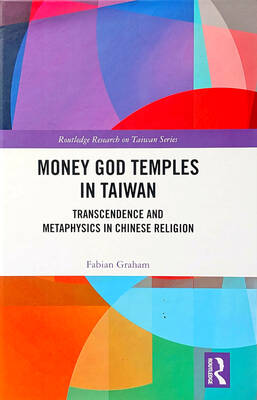
As someone who normally steers clear of books with “transcendence” or “metaphysics” in their subtitles, this reviewer — a casual observer of local belief systems since the 1990s — found Fabian Graham’s Money God Temples in Taiwan a challenging read. Those who’ve only dipped their toes into temple culture will likely need to parse several sections with special care if they’re to keep up with the author, a British ethnographic researcher whose previous books have investigated religious practices among ethnic Chinese in Southeast Asia. This scholarly volume examines a facet of Taiwan’s religious landscape that didn’t exist a century ago, and


 RSS
RSS