


For purists of the iconic Mexican dish “chile en nogada,” new ingredients and even ice cream, tortilla chip and pizza versions have them up in arms as the recipe associated with Mexican independence turns 200 years old.
The celebrated fare traditionally uses around 30 ingredients, not least the poblano chile — grown mainly in the central state of Puebla — which is stuffed and covered in walnut sauce.
“The chile contains seasonal fruits such as pear, Creole peach and panochera apple, which is different due to its hard texture,” said Olga Mendez, a member of a committee formed in Puebla to mark the bicentennial.
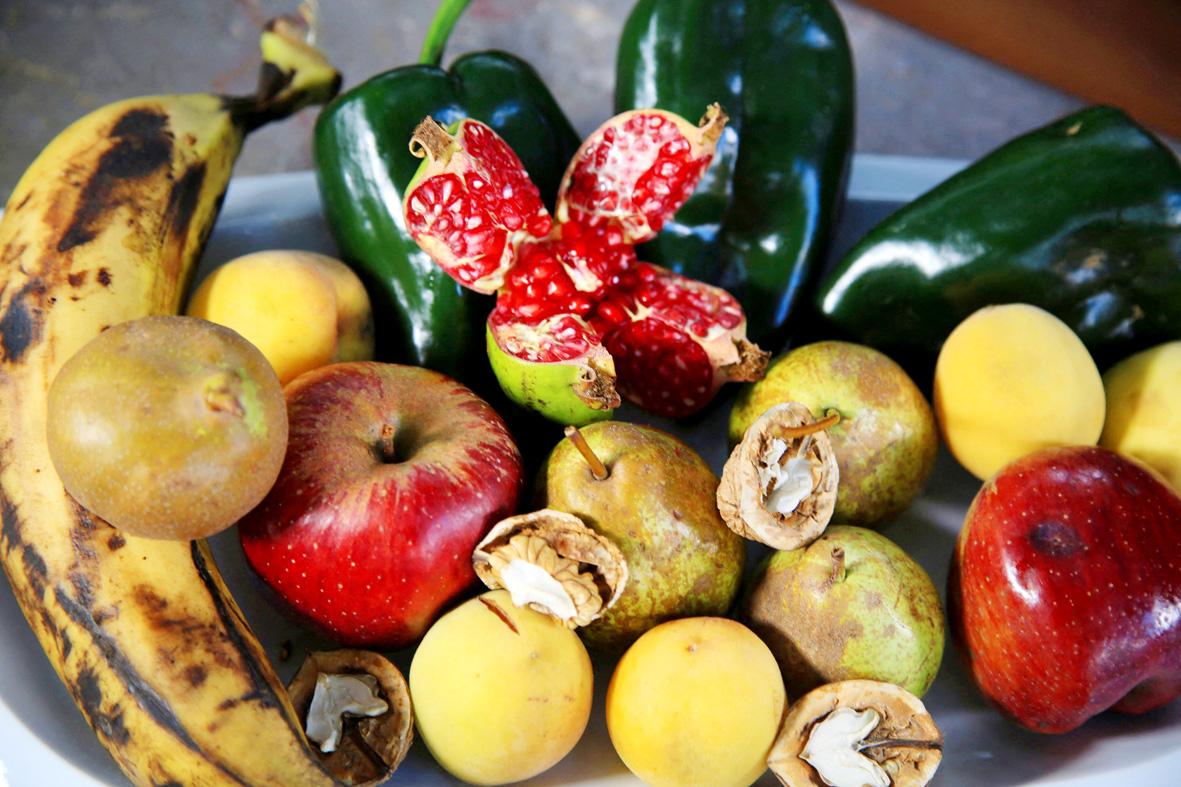
Photo: AFP
“They are combined with almonds, raisins, cinnamon, cumin, oregano and brown sugar, and ground pork and beef are added.”
The dish was born in what is known as Puebla’s “convent kitchen” — where Spanish nuns and their indigenous helpers created legendary recipes combining ingredients from both traditions.
“It’s a representative, iconic, elegant, Creole dish. We’re proud of it,” said Mendez, who also heads a restaurant union in Puebla.
With its red, white and green ingredients, the dish represents the Mexican flag.
The stuffed chile, often coated in an egg batter, is covered in a white walnut sauce and decorated with green parsley and red pomegranate seeds.
According to historical accounts, the dish was served to Agustin de Iturbide, the first ruler of independent Mexico, when he passed through Puebla after signing the Treaty of Cordoba establishing independence from Spain on Aug. 24, 1821.
It is traditionally eaten between July and September — the ideal harvest season for pomegranates, walnuts and poblano chiles.
REINVENTING A CLASSIC
Traditionalists are worried that the original ingredients are being replaced, partly due to the use of poblano chile seeds from China that are cheaper but yield less spicy peppers.
The innovators defend their efforts to give the classic dish a modern-day twist.
“I didn’t invent it. I just transformed it,” said Gerardo Morales, an artisan ice cream maker in Atlixco, Puebla, whose version has the same red, white and green colors as the original dish.
“The ice cream has everything that a chile en nogada has: pomegranate, parsley, walnut, pear, panochera apple, pork,” he said.
“Now we are in a time in which we have to innovate, not destroy,” Morales said.
There is also a chile en nogada version of chilaquiles — a popular breakfast dish of tortilla chips bathed in salsa — cooked up by Lulu Reyes and her husband Gerardo Castillo at their restaurant La Birula in Atlixco.
“It is nothing more than chile en nogada, but presented differently,” Reyes said.
In Mexico City, meanwhile, some restaurants offer vegetarian and vegan versions of the iconic dish.
Mendez accepts that some change is inevitable, but she draws the line at a sauce made from pine nuts instead of walnuts, or using other types of meat in the filling.
Not to mention the hamburger or pizza versions of chile en nogada that some have tried to create.
“We should value the dish that has given us a place in Mexican gastronomy,” she said.
Restaurateurs hope to serve up a record 3.5 million chiles en nogada for the 200th anniversary, in a welcome boost to Puebla’s pandemic-ravaged tourism industry.


Taiwan’s English education system is being pulled apart by three opposing forces. Bilingual Nation 2030 pulls students toward English and global communication. Artificial Intelligence (AI) readiness pulls them toward digital judgment, verification and AI-mediated work. But Taiwan’s old exam culture pulls them back toward memorization, grammar drills, timed reading and correct answers. If the education system keeps using old exams to define success, it risks producing graduates who are neither genuinely bilingual nor genuinely AI-ready, but trained for tasks machines can already perform. The first force is Bilingual Nation 2030. Launched in 2018, the policy aimed to “help Taiwan’s workforce connect

“Taiwan’s Opposition Leader Comes to US With a Message Straight Out of Beijing” read a May 31 headline in the Wall Street Journal. Top US administration officials and members of Congress almost certainly read the WSJ, and if there was a bullet point takeaway that people in Washington should absorb ahead of Chinese Nationalist Party (KMT) Chair Cheng Li-wun’s (鄭麗文) arrival in DC on June 9, that headline is it. The last few columns have discussed this very topic, and the timing is not coincidental. While those top officials likely do not read the Taipei Times, judging by the number

With weighty, anxiety-inducing geopolitical topics dominating the headlines, checking in on the wild and weird state of local politics can take some of the edge off. This November’s elections will determine who will be in charge of fixing potholes in your neighborhood, not the potholes in Taiwan’s complicated geopolitical space. Recently, after an online interview with a Taipei-based journalist, I commented that Taipei journalists never go further than the MRT can take them. He laughed and agreed. Naturally, the Taipei mayoral race is eating up much of the press attention. TAIPEI CITY Democratic Progressive Party (DPP) candidate Puma Shen (沈伯洋) has
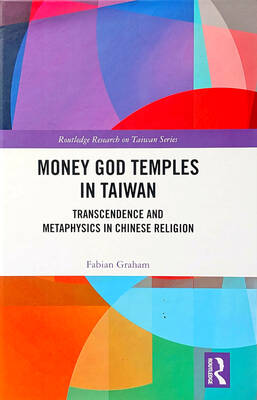
As someone who normally steers clear of books with “transcendence” or “metaphysics” in their subtitles, this reviewer — a casual observer of local belief systems since the 1990s — found Fabian Graham’s Money God Temples in Taiwan a challenging read. Those who’ve only dipped their toes into temple culture will likely need to parse several sections with special care if they’re to keep up with the author, a British ethnographic researcher whose previous books have investigated religious practices among ethnic Chinese in Southeast Asia. This scholarly volume examines a facet of Taiwan’s religious landscape that didn’t exist a century ago, and


 RSS
RSS