


Don’t expect to see anything bizarre or outlandish in the Weirdo Series (怪咖系列) — at least not yet.
The definition of a “weirdo” differs greatly in Western and Taiwanese culture. Under the local context, anyone who is different and doesn’t follow society’s prescribed values and life path qualifies as one.
Thus, this 18-part mini-documentary series produced by veteran documentary filmmaker Yang Li-chou (楊力州) is more of a celebration of ordinary Taiwanese who go against the grain and have the courage to live the way they want to.
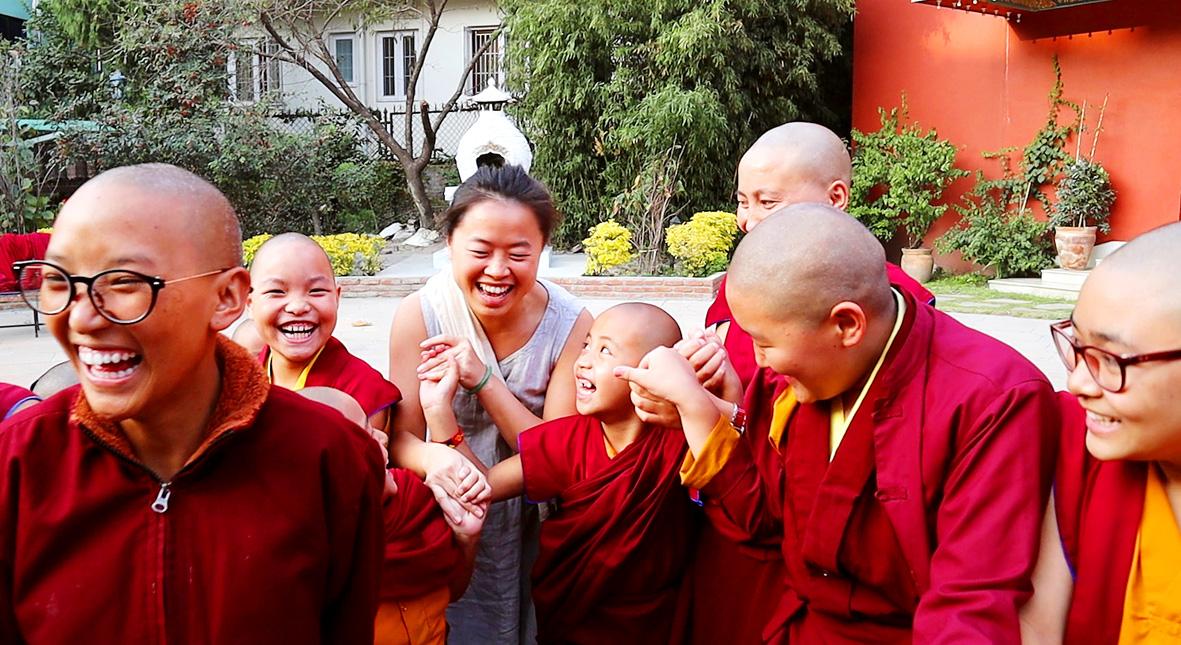
Photo courtesy of Garageplay
While more people are breaking out of cultural and societal constraints, there’s still a suffocating pressure to fit in. The featured characters can all attest to this when discussing the hardships they’ve faced. This includes things that they can’t control, such as their physical appearance and sexuality. Through their challenges and endeavors, various social issues are also highlighted.
“There is a group of people in Taiwan who have been labeled as [weirdos] throughout their lives,” Yang says in the introductory video. “We want to tell people that it’s actually a nice thing to be a weirdo. I believe that before every person became ‘normal,’ they were once a weirdo too. We must eradicate this discrimination in a progressive society.”
Launched last October, the documentaries will be released on YouTube over the course of three years, with five completed so far. The series premiered with two pieces, both under 20 minutes long: Taiwan Batman (動保蝙蝠俠) follows a burly, menacing and heavily tattooed man who has dedicated his life to ending animal abuse, while Legit Moms, Illegitimate Kid (非法母親) chronicles a lesbian couple who travel to Cambodia to get in vitro fertilization treatment since they are not permitted to do it in Taiwan.
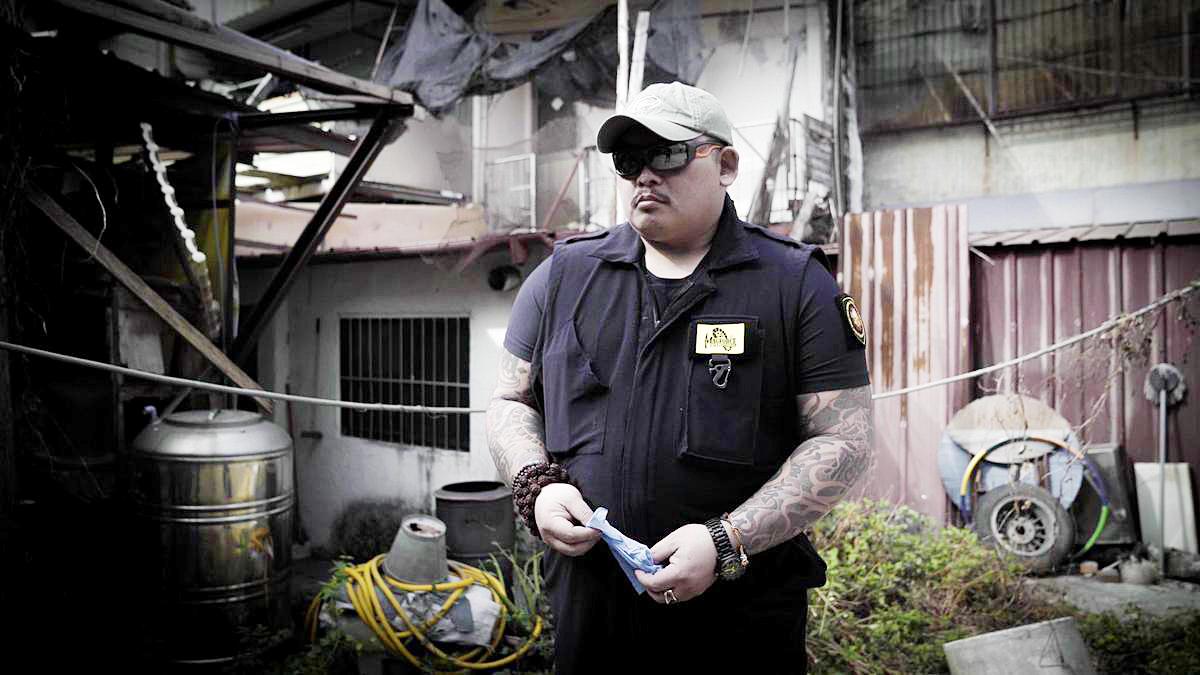
Photo courtesy of Garageplay
Three more films have been released so far: Dear Period (尼泊爾布思議) tells the story of a former office worker who is now dedicated to promoting the use of menstrual pads in rural Nepal; Fatbulous Me (多肉女子生存之道) looks at two women fighting discrimination against those who are overweight and promoting body acceptance; and The Debunker (真相地圖), which features a computer programmer who uses his skills to create information maps for the public to tackle issues ranging from face mask shortages to the illegal dumping of incinerator waste.
While these characters come from all walks of life, a common thread seems to emerge: these “weirdos” are actively trying to change society, and much focus is placed on their vision for a better future. While their stories and the social issues they’re involved in certainly deserve screen treatment, the overly inspirational tones makes one wonder why these “weirdos” must be portrayed in such a shining light.
That said, there are 13 more films and two more years to go, and it will be interesting to see if future productions can look at weirdos from a more nuanced perspective. Could there be someone who is struggling, or someone who is doing something interesting just for the sake of it?

Photo courtesy of Garageplay
Overall, it’s still a good start, and the production quality is quite impressive and uniform, despite each film being helmed by a different director. Each piece carries a unique stylistic flair, with creative touches such as poem readings, faux-superhero cartoons and other designed scenes add to the visual palette.
While some of these characters — especially Taiwan Batman — cry out for a more extensive narrative, what’s shown is enough to get a sense of why they’re different and why they do what they do. The under 20-minute, online format is ideal for the attention span of today’s Internet users, and will get Yang’s message out more effectively.
Fortunately, for those who want more, there’s plenty of other material to check out on the YouTube channel, including bonus interviews with both the directors and characters, theme song music videos and other behind-the-scenes goodies.

Photo courtesy of Garageplay
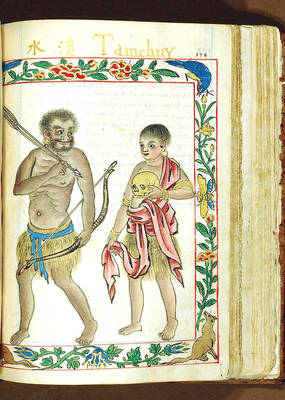
The Portuguese never established a presence on Taiwan, but they must have traded with the indigenous people because later traders reported that the locals referred to parts of deer using Portuguese words. What goods might the Portuguese have offered their indigenous trade partners? Among them must have been slaves, for the Portuguese dealt slaves across Asia. Though we often speak of “Portuguese” ships, imagining them as picturesque vessels manned by pointy-bearded Iberians, in Asia Portuguese shipping between local destinations was crewed by Asian seamen, with a handful of white or Eurasian officers. “Even the great carracks of 1,000-2,000 tons which plied
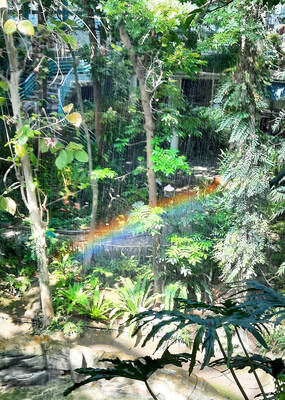
It’s only half the size of its more famous counterpart in Taipei, but the Botanical Garden of the National Museum of Nature Science (NMNS, 國立自然科學博物館植物園) is surely one of urban Taiwan’s most inviting green spaces. Covering 4.5 hectares immediately northeast of the government-run museum in Taichung’s North District (北區), the garden features more than 700 plant species, many of which are labeled in Chinese but not in English. Since its establishment in 1999, the site’s managers have done their best to replicate a number of native ecosystems, dividing the site into eight areas. The name of the Coral Atoll Zone might

On Monday morning, in quick succession, the Chinese Communist Party (CCP) and the Chinese Nationalist Party (KMT) released statements announcing “that the Central Committee of the Communist Party of China and General Secretary Xi Jinping (習近平) have invited KMT Chairwoman Cheng Li-wun (鄭麗文) to lead a delegation on a visit to the mainland” as the KMT’s press release worded it. The KMT’s press release added “Chairwoman Cheng expressed her gratitude for the invitation and has gladly accepted it.” Beijing’s official Xinhua news release described Song Tao (宋濤), head of the Taiwan Work Office of the CCP Central Committee, as
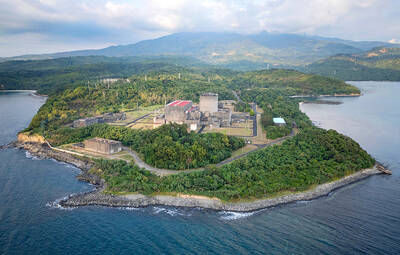
Nuclear power is getting a second look in Southeast Asia as countries prepare to meet surging energy demand as they vie for artificial intelligence-focused data centers. Several Southeast Asian nations are reviving mothballed nuclear plans and setting ambitious targets and nearly half of the region could, if they pursue those goals, have nuclear energy in the 2030s. Even countries without current plans have signaled their interest. Southeast Asia has never produced a single watt of nuclear energy, despite long-held atomic ambitions. But that may soon change as pressure mounts to reduce emissions that contribute to climate change, while meeting growing power needs. The


 RSS
RSS