


Dining restrictions brought on by the outbreak of COVID-19 infections have been an economic punch in the gut for local restaurants and bars. But what remains to be seen is exactly how deep the long-term damage will be.
Some restaurants have pared down their menu and offered steep discounts on takeout orders. Others have relied on food delivery services as a lifeline. While others have simply shuttered their doors, opting to wait out the turmoil.
“In the first three weeks I only sold 20 hamburgers,” said PJ McKenna, 54, owner of PJ’s Cafe in Taichung. “I’m just getting by.”
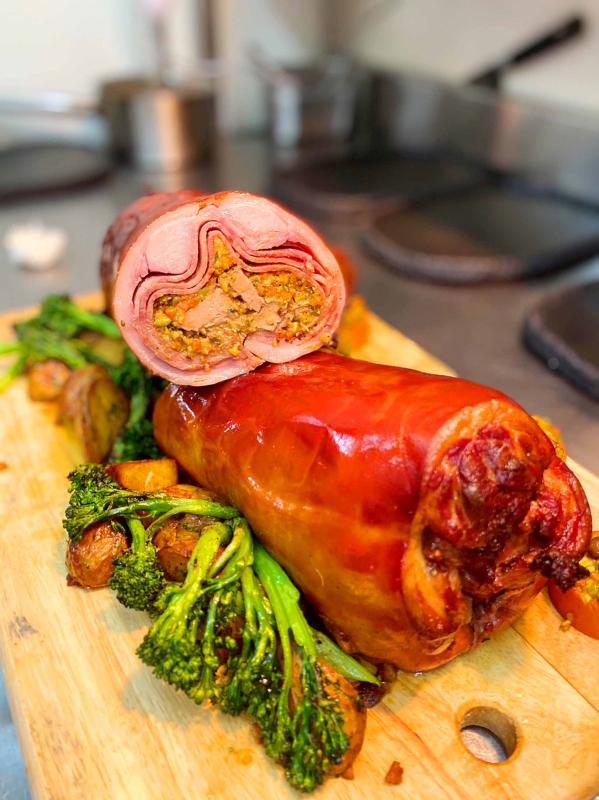
Photo courtesy of Hidden by DN
Since then, McKenna has relied mostly on to-go orders of rotisserie chicken to bring in some needed revenue.
Even before the ban on dine-in eating, the bar’s profit margins were thin. For McKenna, who opened the bar in 1997, this latest setback makes running a business even more difficult.
It’s a familiar story for most restaurateurs these days. Adjust or you won’t survive.
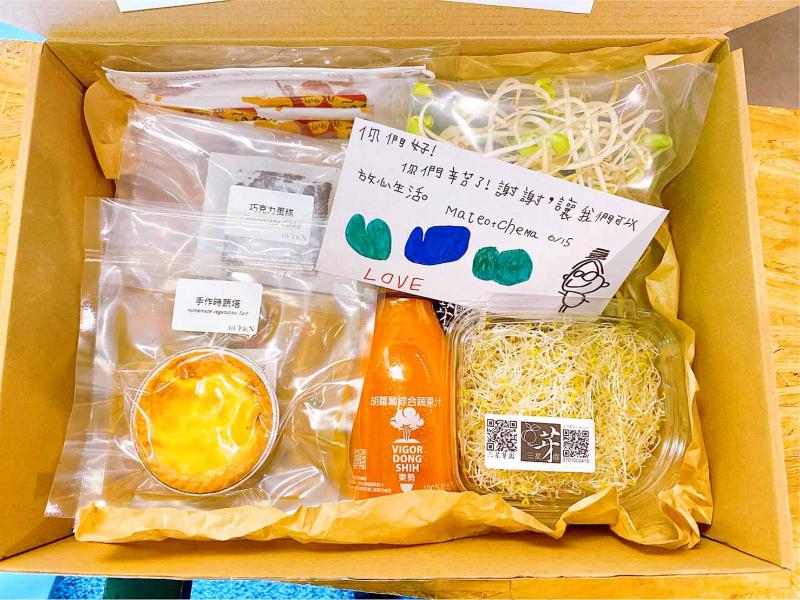
Photo courtesy of Hidden by DN
“This is decimating to the food and restaurant industry,” said Douglas Habecker, chairman of the American Chamber of Commerce in Taichung (AmCham).
HARD TIMES
Restaurant business is down by at least 70 percent, Habecker estimates. And with the addition of bars completely closed down, tens of thousands of workers are hurting.

Photo: John Evans
“It’s painful to watch because you know how difficult the restaurant business is, even in good times,” Habecker said.
On a typical Saturday night, Britannia Bistro Bar would have been filled with lively patrons eating fish and chips and drinking pints of beer. That was before the level 3 restrictions kicked in, which prohibited on-site dining.
While many restaurants have used Food Panda and Uber Eats to help stay afloat, the bar’s owner decided not to, citing the commission rates between about 25 percent to 35 percent, which he called excessive.
Laurence Howard, who has owned the cozy Taichung bar for more than five years, opted to close the restaurant’s doors and wait things out. His staff of four — mostly international college students — were laid off.
“Protecting my family, myself and my neighbors is my priority,” said Howard, who lives above the bar with his wife and step daughter.
To pay the bills, which keep coming, the 58 year old has drawn from his pension after a career as a London-based high speed train driver. As a temporary salve, Howard’s landlord agreed to reduce the rent by NT$6,000 per month, or nearly 20 percent. But its an amount he’ll have to repay in the future.
“If we’re shut down two or three months, we’re in trouble,” Howard said. “I don’t know how we’re going to pay the rent.”
Howard’s worry is shared among many restaurant owners, especially with the uncertainty of how long level 3 restrictions will remain in place.
“There’s a bit of resignation and despair among some owners,” said Habecker of AmCham, who is also co-publisher of Compass Magazine, a monthly city guide to Taichung.
Habecker called on the government to consider easing the restrictions if the current rates of infections continue to decrease across the nation. At least for Taichung, which has seen daily COVID-19 rates at zero or in the single digits, dining regulations can be relaxed, he said, adding that outdoor dining with proper spacing should return soon.
“There’s always going to be a balance between safety regulations and the livelihood of thousands of businesses,” Habecker said, noting that this was a personal opinion that he would recommend the chamber advocate for.
As for government subsidies, Habecker said he hopes the application process will not be overly burdensome so that as many as possible can get assistance.
“[The subsidies] are appreciated, but they’re not going to make the difference in survival, particularly if current restrictions keep getting extended,” he said.
REINVENTING THE WHEEL
In the meantime, some restaurants are reinventing themselves to stay afloat.
After seeing an immediate drop in business, the Taichung restaurant Mr India made quick operational changes. It updated the food pictures on its Facebook page, began using iCHEF for online ordering and started its own food delivery service.
The strategy seems to have worked. Business is down, but by only about 30 percent.
Faring better than most are restaurants that had relied heavily on delivery and takeout business beforehand.
At BeMo’s, a Taichung restaurant specializing in wraps, Uber Eats deliveries make up 70 percent of business, up about 10 percent from last month.
“We’re primarily takeout so we’re doing okay,” said owner Ben Bartlett, 44, who estimates business has dropped by about 10 percent. “Our goal is just to get through this together.”
When local infection rates increased and people were told to stay home, BeMo’s reduced the price of wraps by 20 percent in order to maintain customers and keep revenue flowing.
Bartlett said he knows he’s lucky compared to other restaurant owners. But what concerns him now though is keeping employees, many of whom may be jittery about working away from home.
Restaurants affected by the slowdown are as diverse as the food they serve, whether it’s lunchtime wraps delivered on a scooter or a charcuterie set vacuum sealed for pick up.
At Hidden by DN, a Michelin-recommended restaurant in Taipei specializing in modern Spanish cuisine, the goal was to offer the same quality food but in a safe and convenient way.
The restaurant’s signature dish, roast suckling pig, is still on the menu. But its skin may not be quite as crisp once it’s carried home in a plastic box. Gone are most of the intricately constructed desserts, such as a candle-shaped lemon pie, complete with a candlestick holder and wick.
“Our dedicated customers are understanding,” said chef and owner Daniel Negreira, 43. He estimates business is down by about 30 percent, adding, “We’re lucky it’s only that much.”
Earlier this month the restaurant started donating food boxes to healthcare workers. Among the food tucked inside each box, was a vegetable tart, a chocolate cake and a bottle of carrot juice, along with a thank-you note from Negreira’s two children.
“We are fortunate in this dark moment,” Negreira said. “We should help out as much as we can.”
The next shipment of gift boxes is set to go out on Wednesday.


Taiwan’s English education system is being pulled apart by three opposing forces. Bilingual Nation 2030 pulls students toward English and global communication. Artificial Intelligence (AI) readiness pulls them toward digital judgment, verification and AI-mediated work. But Taiwan’s old exam culture pulls them back toward memorization, grammar drills, timed reading and correct answers. If the education system keeps using old exams to define success, it risks producing graduates who are neither genuinely bilingual nor genuinely AI-ready, but trained for tasks machines can already perform. The first force is Bilingual Nation 2030. Launched in 2018, the policy aimed to “help Taiwan’s workforce connect

“Taiwan’s Opposition Leader Comes to US With a Message Straight Out of Beijing” read a May 31 headline in the Wall Street Journal. Top US administration officials and members of Congress almost certainly read the WSJ, and if there was a bullet point takeaway that people in Washington should absorb ahead of Chinese Nationalist Party (KMT) Chair Cheng Li-wun’s (鄭麗文) arrival in DC on June 9, that headline is it. The last few columns have discussed this very topic, and the timing is not coincidental. While those top officials likely do not read the Taipei Times, judging by the number

With weighty, anxiety-inducing geopolitical topics dominating the headlines, checking in on the wild and weird state of local politics can take some of the edge off. This November’s elections will determine who will be in charge of fixing potholes in your neighborhood, not the potholes in Taiwan’s complicated geopolitical space. Recently, after an online interview with a Taipei-based journalist, I commented that Taipei journalists never go further than the MRT can take them. He laughed and agreed. Naturally, the Taipei mayoral race is eating up much of the press attention. TAIPEI CITY Democratic Progressive Party (DPP) candidate Puma Shen (沈伯洋) has
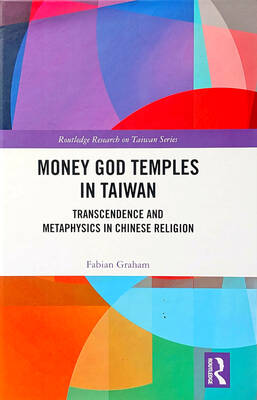
As someone who normally steers clear of books with “transcendence” or “metaphysics” in their subtitles, this reviewer — a casual observer of local belief systems since the 1990s — found Fabian Graham’s Money God Temples in Taiwan a challenging read. Those who’ve only dipped their toes into temple culture will likely need to parse several sections with special care if they’re to keep up with the author, a British ethnographic researcher whose previous books have investigated religious practices among ethnic Chinese in Southeast Asia. This scholarly volume examines a facet of Taiwan’s religious landscape that didn’t exist a century ago, and


 RSS
RSS