


Two years ago I began to hear mumblings among Taipei music fans about this festival thing with a funny name in Hong Kong. Then last year people actually flew over to the darn thing, returned and claimed, in passionate and believable gasps, to to have had an amazing time. The headliners last year included The Chemical Brothers, Yo La Tengo and Parliament-Funkadelic.
Not bad at all. But in Hong Kong? It is a little bit hard to fathom. This is after all a city that has failed for decades to put together a credible live house scene and has been lamented since pre-handover times by its own music fans as a “cultural desert.”
But now, suddenly, Hong Kong has developed what is very likely the fastest growing music festival in Asia, an event that seems to be named after some sort of thing done by a chicken — “Clockenflap.” This nonsense word is equal parts irreverence and good fun, and it is indeed the festival’s name. (The organizers also have a concert series called “YourMum,” so you can get the idea of what kind of people they are.)
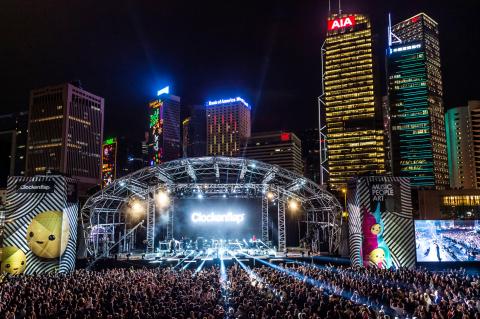
Photo Courtesy of Lusher, Clockenflap
Clockenflap’s 10th edition will take place from Nov. 17 to Nov. 19 with harborfront stages set against the backdrop of the Hong Kong skyline. The festival will bring more than 100 acts to five stages, including headliners like Massive Attack and The Prodigy that have not previously appeared at any Asian music festivals outside Japan or Korea.
Last year, Clockenflap drew 34,000 ticket holders and about 70,000 “individual visits,” or one-time entries. In terms of attendance, that substantial showing makes Clockenflap roughly half the size of Fuji Rock or Summer Sonic, Japan’s two largest international rock festivals, and in the top rank of festivals happening in Asia.
The programing is both appropriately mass-market and marvelously region-specific and eclectic. The big-stage British acts at the top of the bill suggest an extremely Hong Kong-appropriate touch of post-colonial Glastonbury, with Kaiser Chiefs, Slaves and various UK hip-hop and R&B acts (Stormzy, Young Fathers, Skream) in tow. (It will be interesting to see how, amidst the current storm of sexual harassment scandals, The Prodigy plays its big 90s raver hit, Smack My Bitch Up.)
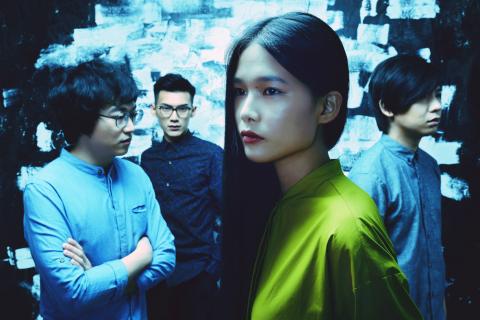
Photo courtesy of Clockenflap
There are also fantastic North American indies, like Canadian songstress Feist and the Portland and the Oregon slacker pop band The Dandy Warhols. There’s the cool psychedelic band Ponds from Australia, and weird-out math rockers Temples.
Two of Taiwan’s better drawing indie pop bands will play — Hello Nico and Cosmos People (宇宙人) — along with several regional indie acts from Hong Kong, Japan and Korea that come with whiffs of curatorial flair. If you like a bit of freak-factor, there’s an electro, dance-punk Filipino band called Pedicab that dress like aliens. One of the groups I’m most eager to see is Tinariwen, a band from the Sahara dessert that mixes droning Gnawa chants and mesmeric Fat Possum-style electric guitar blues. But really, there’s so much more than that, including even environmental installation art that the organizers discovered at Coachella. Go visit www.clockenflap.com.
FILLING A REGIONAL VOID

Photo courtesy of Clockenflap
So in short order, Clockenflap is setting Hong Kong squarely on the international music festival map.
The festival has grown to this scale in just a decade, starting out in 2008 in a small 1,500-person capacity venue, Cyberport, with a couple dozen local Hong Kong bands supporting a mildly famous UK indie band headliner, Young Knives.
“From the very beginning, the vision hasn’t changed,” said Justin Sweeting, Clockenflap’s music director and co-founder. “We’ve always wanted this to be a creative festival for art, film, music and other creative expressions. Only the scale has changed, but our goals now are exactly the same as when we started out.”

Photo Courtesy of Marie Planeille, Clockenflap
Sweeting, born and raised in Hong Kong, is a UK passport holder of mixed British-Chinese parentage. He previously worked in music-related media for Channel V and Fox, and five or six years ago was trying to piece together a Southeast Asian touring circuit that would enable North American and European acts to fill in this massive geographical suckhole that sits between Australia and Japan.
In 2012, he put together mid-level indie rock tours that for a brief, glorious moment linked up Indonesia, Singapore, Malaysia, Taiwan and Hong Kong. Two of them came through Taipei, including a showcase of the Naked and Famous, Jezebels, Bombay Bicycle Club and Metronomy, as well as the combo-show of UK buzz bands the Horrors and the Vaccines. As a business model, it didn’t quite work out, but Sweeting says it was a valuable experience.
Clockenflap’s early years were also hard going, as can perhaps be expected for a group trying to build an oasis in Hong Kong’s wasteland of bland commercialism. In 2010, Clockenflap was forced to scale down and revert to an indoor warehouse. The next year it received permission from city authorities to move to an outdoor venue in West Kowloon, but “at the last minute they told us that we could only use the venue if we didn’t sell tickets,” said Sweeting.
“It definitely wasn’t easy, but we decided to keep going,” he continued. “We made it a free festival that year. The thinking was, we’ve created this brand, and if we kill it now, it’ll be dead forever.”
Since 2012, Clockenflap’s growth has been meteoric. In 2013, the fest expanded to three days and saw around 30,000 individual visits. Then last year, it moved to the Central Harbourfront, giving it one of the best cityscape backdrops of any festival in the world. There were 70,000 individual visits, including 6,000 international ticket buyers.
Hong Kong’s government, Sweeting says, has not acted especially to either help or hinder the event. “We don’t have any special funding or support from the city. The city supports [Clockenflap] in that it still exists,” he said.
ANOTHER DIMENSION
The festival’s vision is apparently starting to click.
“My first festival experience was at Glastonbury, and what I found so amazing was the way that by walking into the festival, you enter into a completely different world,” Sweeting said.
Sweeting admits inspiration from other festivals, but says above all, Clockenflap is created with Hong Kong’s unique identity in mind. He variously refers to Clockenflap as “a festival of experience,” “a city festival” and site for film, art and creativity. He even coyly adds, “We are not a line-up driven festival.”
For him, the big question is: “How do we transport someone so that they feel they’re entering another world? I mean, you enter Clockenflap from the very standard everyday surroundings of downtown Hong Kong. So when you walk into the festival grounds, there has to be some sort of magical transformation. And that’s what we’re really trying to do.”

Ajay Verma, a consultant gastroenterologist at Kettering general hospital in Northamptonshire, says our gut is a “complex machine.” “It is constantly providing us with the nutrition we need, initially to grow and develop, and then for us to survive, thrive and repair from injury and illness.” How can we keep it functioning well? Put simply: “Make sure what you put into it is balanced, and that you clear out its waste products adequately,” Verma says. “In a general gastroenterology clinic, the most common conditions we see are irritable bowel syndrome (IBS), gastroesophageal reflux disease, inflammatory bowel disease and constipation,” says Nisha
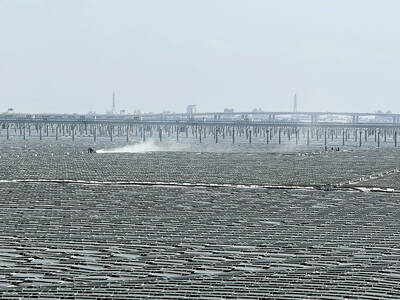
The arithmetic is straightforward and uncomfortable. By the end of 2025, Taiwan had committed itself to a 50-30-20 electricity mix — half natural gas, 30 per cent coal, 20 per cent renewables. The Ministry of Economic Affairs’s (MOEA) own monthly energy reports tell a different story. Natural gas reached 47.8 per cent of generation last year. Coal stood at 35.4 per cent, comfortably above its target ceiling. Renewables came in at 13.1 per cent, well short of the 20 per cent Taipei had pledged a decade earlier. Installed renewable capacity reached roughly half of the 12 gigawatts (GW) the government
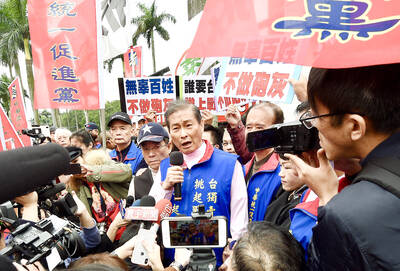
There are shadowy cabals plotting to sell out Taiwan to be annexed by China, by invasion if necessary. Fortunately, they are buffoons. In 2019, former Bamboo Union gangster and founder of the China Unification Promotion Party (CUPP), Chang An-le (張安樂, colorfully known as “White Wolf”), led a protest at the Legislative Yuan against comments made by then-premier Su Tseng-chang (蘇貞昌) that in the event of an attack by China, he would never surrender, but would protect the nation by fighting to the end, even if he only had a broom. Chang had party members bring a wooden casket that they
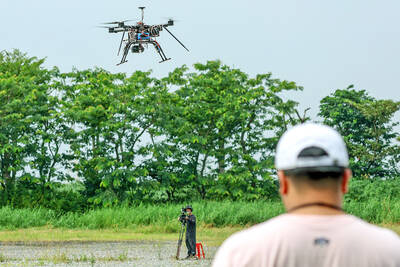
Taiwan’s drone exports are taking off, fuelled by the war in Ukraine, as Taiwanese companies seek a stake in the fast-growing global market for unmanned aerial vehicles (UAV). Low-cost drones used for reconnaissance and strikes are in high demand as governments around the world boost defense spending in the face of intensifying conflicts. A relative new player in the increasingly competitive industry, Taiwan’s pitch is to be an “Asian hub” for the production of UAVs and components free of Chinese materials, or “non-red.” That means its UAVs can be up to three times more expensive than their Chinese competitors, like the world’s biggest


 RSS
RSS