


Taipei has a gaping market niche for European-style cafe bakeries that provide decent meals and the option to segue from afternoon tea to a meal and wine. Le Coin du Pain, located in the heart of the Neihu Science Park, might be more cafe than restaurant, but it manages to fill a middle ground with above-average baked goods, a solid attempt at cooked food, drinkable coffee, the offer of a house wine and a small selection of beer, good WiFi and a big, well-lit, comfortable, casual space that is equally serviceable for the lone worker pounding out a report over coffee and a bun, or a relaxed chat over drinks, or even a casual business lunch.
The first thing that draws one into Le Coin du Pain is the invitingly big, clean space. A corner is given over to the display of patisserie, which is refreshingly free of concoctions plastered over with sweet mayonnaise, fluffy pork and corn nuggets. The selection is restrained, and while far from being at the top of what has become a highly competitive market in European-style baked goods, for those looking for a thin crisp apple Danish that is not overburdened with lumpish custard or a ciabatta with a good crust, robust crumb and an absence of sweetness, the display has a distinct appeal.
The staff is uniformed and friendly, though service is more cafe style than restaurant. Orders must be made at the counter, and customers must get their own utensils, although the food is delivered and cleared by wait staff.
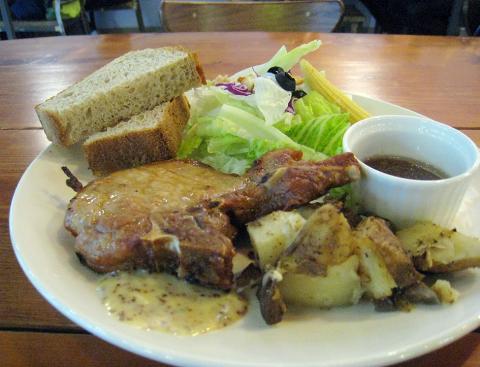
Photo: Ian Bartholomew, Taipei Times
My first plunge into the extensive menu was the grilled pork chop (法式帶骨豬排, NT$260), which I was warned entailed a wait of 10 minutes or so as it was freshly grilled. This was encouraging, as was the quick arrival of the coffee, hot and flavorful. The mushroom soup that came as part of the set menu was a superior packaged concoction (points for effort but fundamentally undrinkable), and the salad used romaine rather than iceberg, which also won brownie points. The salad was generous, and was well balanced against the respectable slab of pork on the bone, cooked well-done but not dried out. Given the cafe look of the establishment, I couldn’t help but be impressed.
When I ventured into more dangerous territory by ordering the beef bourguignon (紅酒燉牛肉, NT$350), the quality of the food did not quite keep up. Served in a mini-enamel casserole dish, it looked pretty enough, but the dish did not have the depth of flavor that is required of the robust French classic. The serving was generous, with nice big chunks of beef, but both in terms of flavor and texture, there was something slightly insipid about it.
For those heading to the office, Le Coin du Pain offers a range of breakfast options that cater to those looking for nothing more than coffee and a bun to those hankering for a full cooked breakfast. The continental breakfast (described on the menu as a Simple Bread Breakfast) includes fresh toast, butter, jam, a fried egg, juice and a choice of coffee or tea for NT$160. The porridge breakfast with nuts, fruit puree and fresh fruit, served with a choice of coffee or tea, is just NT$180 and fits the bill for cold winter mornings. A substantial holiday breakfast (weekends only), called Mr Champaign (NT$280), provides bacon and sausages as well, and is a valuable addition to weekend brunch options.
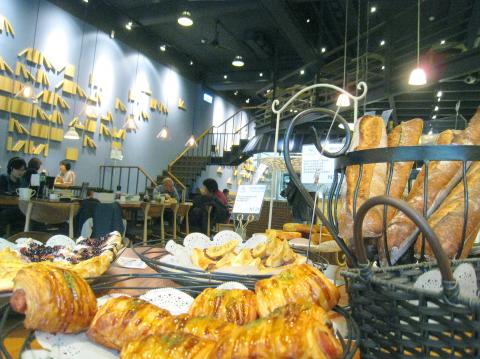
Photo: Ian Bartholomew, Taipei Times
Le Coin du Pain has a big drinks menu, with everything from a basic mug of coffee (NT$80) to premium beans freshly brewed (NT$200 and up). Among the teas, one can choose between fermented and unfermented, caffeinated and non, and a variety of soy milk and regular milk fruit drinks (NT$90 to NT$120). European beers, including Hoegaarden and Peroni (NT$150) are available, as are house wines by the glass (NT$150) and bottle (NT$790).
Baked goods, primarily bread, form the basis of most of the cuisine at Le Coin du Pain, and for the most part its offerings are of a European style. As a result, its dishes such as the Croquer Madame (NT$280) and various tartines (NT$200) and quiches (NT$220) have a flavor and texture that are likely to appeal to western palettes more than similar attempts by more locally influenced bakeries. This mixture of a stylish and welcoming space, above-average food and a wide range of dining options is an excellent addition to Taipei’s low-priced western food scene.


Taiwan’s English education system is being pulled apart by three opposing forces. Bilingual Nation 2030 pulls students toward English and global communication. Artificial Intelligence (AI) readiness pulls them toward digital judgment, verification and AI-mediated work. But Taiwan’s old exam culture pulls them back toward memorization, grammar drills, timed reading and correct answers. If the education system keeps using old exams to define success, it risks producing graduates who are neither genuinely bilingual nor genuinely AI-ready, but trained for tasks machines can already perform. The first force is Bilingual Nation 2030. Launched in 2018, the policy aimed to “help Taiwan’s workforce connect

“Taiwan’s Opposition Leader Comes to US With a Message Straight Out of Beijing” read a May 31 headline in the Wall Street Journal. Top US administration officials and members of Congress almost certainly read the WSJ, and if there was a bullet point takeaway that people in Washington should absorb ahead of Chinese Nationalist Party (KMT) Chair Cheng Li-wun’s (鄭麗文) arrival in DC on June 9, that headline is it. The last few columns have discussed this very topic, and the timing is not coincidental. While those top officials likely do not read the Taipei Times, judging by the number
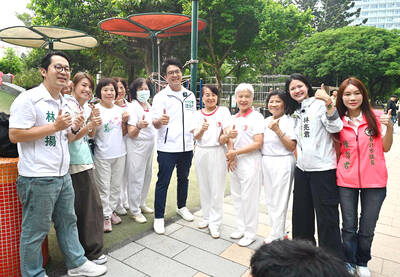
With weighty, anxiety-inducing geopolitical topics dominating the headlines, checking in on the wild and weird state of local politics can take some of the edge off. This November’s elections will determine who will be in charge of fixing potholes in your neighborhood, not the potholes in Taiwan’s complicated geopolitical space. Recently, after an online interview with a Taipei-based journalist, I commented that Taipei journalists never go further than the MRT can take them. He laughed and agreed. Naturally, the Taipei mayoral race is eating up much of the press attention. TAIPEI CITY Democratic Progressive Party (DPP) candidate Puma Shen (沈伯洋) has
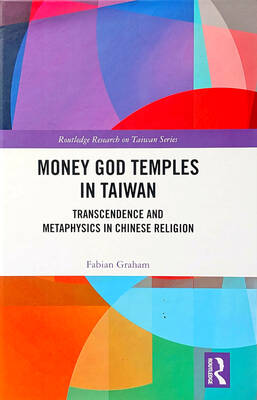
As someone who normally steers clear of books with “transcendence” or “metaphysics” in their subtitles, this reviewer — a casual observer of local belief systems since the 1990s — found Fabian Graham’s Money God Temples in Taiwan a challenging read. Those who’ve only dipped their toes into temple culture will likely need to parse several sections with special care if they’re to keep up with the author, a British ethnographic researcher whose previous books have investigated religious practices among ethnic Chinese in Southeast Asia. This scholarly volume examines a facet of Taiwan’s religious landscape that didn’t exist a century ago, and


 RSS
RSS